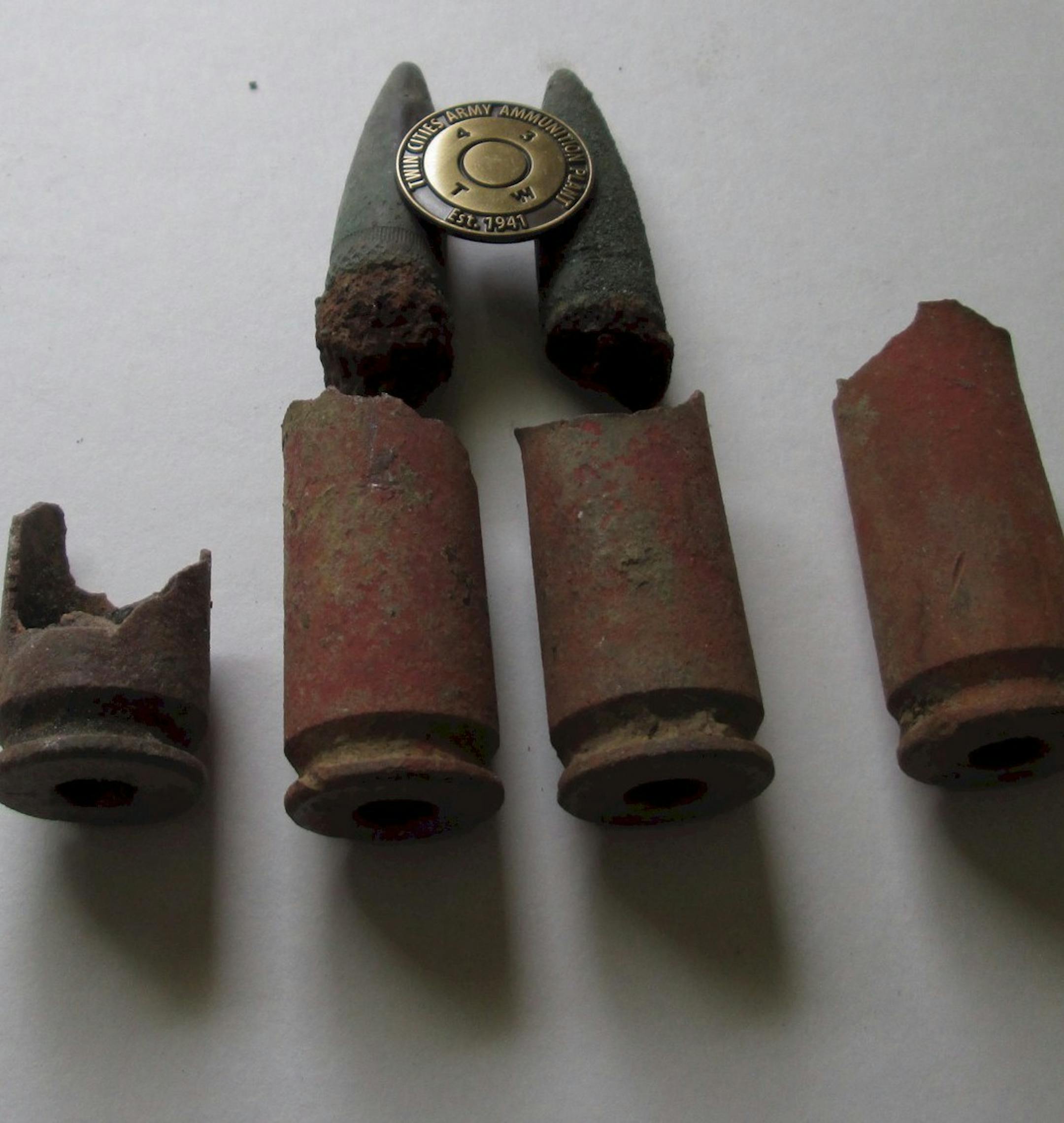
It was only a lump of molten aluminum and four rusty cartridges. But the story behind the recently unearthed debris from a U.S. bomber plane that crashed in England during World War II traces all the way back to an army ammunitions plant in Minnesota — and may help inspire a Twin Cities memorial to commemorate the plant's wartime role.
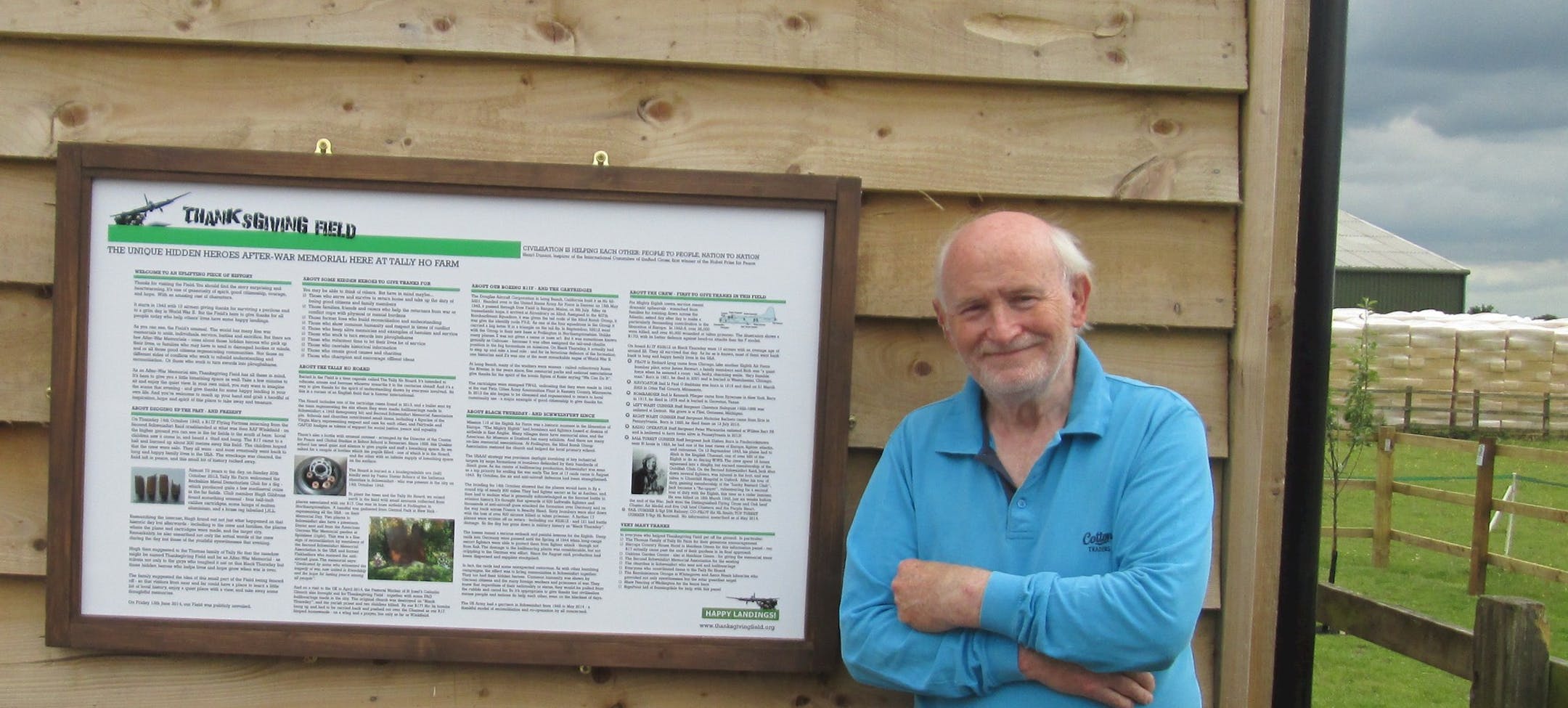
"I usually dig up horseshoes," said Hugh Gibbons, an Englishman who waved a metal detector over a long-forgotten airstrip-turned-horse pasture in England last October, unexpectedly turning up the buried pieces made at the Twin Cities Army Ammunition Plant (TCAAP) in Arden Hills in 1943.
The discovery prompted the 75-year-old former teacher and ad man to contact Ramsey County, which in turn inspired him to create a tiny memorial at the crash site. It has also energized a desire by county officials to find ways to highlight the 427-acre TCAAP site's prominence in the war years and beyond.
"I think that what he's done has reinvigorated the interest and excitement around the site, in terms of its history. And that's important," said Heather Worthington, assistant Ramsey County manager. "But what's more important is that people who have heard about it are starting to think about the site and its parallel to World War II as an economic driver. Back then, it was a driver coming out of the Great Depression. Today, it can be the economic driver coming out of the Great Recession.
"I think it shows people what's possible there," Worthington said. "They remember what it was, and it can be even better."
The TCAAP site, which was bought by Ramsey County, is expected to be ready for development in late 2015. A master plan calls for adding housing, office space, manufacturing, retail and parkland. And there is already a building being considered for an interpretive center: Building 189.
Finding a way to commemorate the plant's role in the war effort has been discussed for some time. But Gibbons' work has helped serve as a catalyst, said Jonathan Weinhagen, vice president of the St. Paul Area Chamber of Commerce who has worked on the project through the Humphrey Institute.
"Hugh fits into this," he said. "He is a present-day reality that what was manufactured at TCAAP had a worldwide impact. It would be great to share that story."