

Opinion editor's note: Star Tribune Opinion publishes a mix of national and local commentaries online and in print each day. To contribute, click here.
•••
In political writing about the federal judiciary, there is a convention to treat the partisan affiliation of a judge or justice as a mere curiosity; to pretend that it does not matter that much whether a jurist was nominated by Ronald Reagan or Bill Clinton or George W. Bush or Barack Obama so long as he or she can faithfully uphold the law.
The issue with this convention, as we've seen in the legal drama over the classified materials found in former President Donald Trump's home at Mar-a-Lago, is that it isn't equipped to deal with the problem of hyperpartisan, ideological judges who are less committed to the rule of law than to their presidential patron. In particular, this way of thinking about federal courts isn't equipped to deal with the problem of Trump judges.
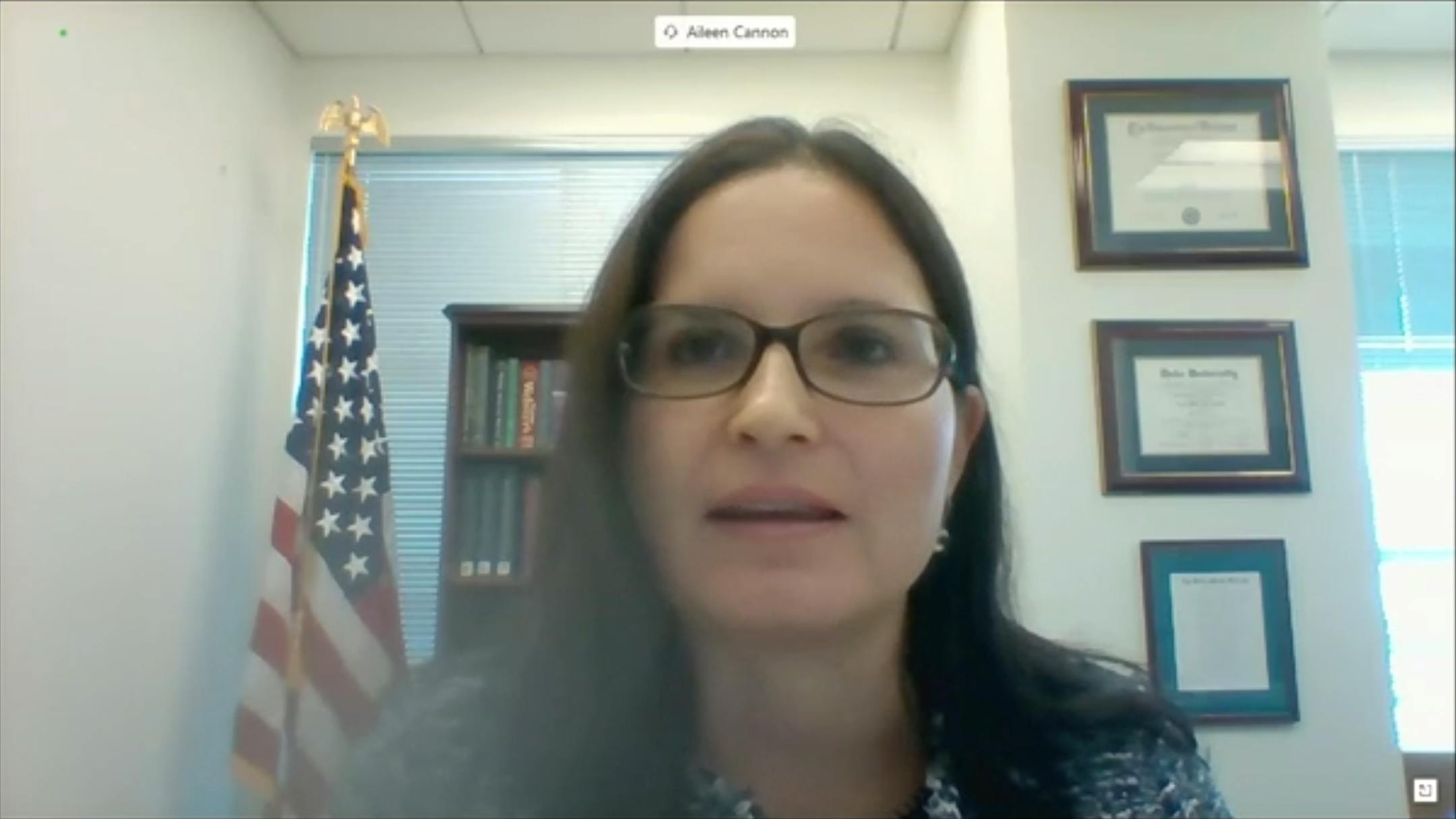
In the case of the documents the judge in question is Aileen Cannon of the U.S. District Court for the Southern District of Florida, nominated by Trump in the spring of 2020 and confirmed by the Senate (with 12 Democratic votes) after his defeat in the November election. Cannon was a federal prosecutor for seven years and had no experience as a judge before being placed on the federal bench for a lifetime appointment at age 39. What she did have to recommend her was long-standing membership in the conservative Federalist Society. That seems to have been more than enough.
In the Mar-a-Lago case, Cannon has behaved less as an impartial judge and more as an ally of Trump. On the question of whether the court would appoint an independent third party to review the documents in question, Cannon ruled in favor of the former president, despite the fact that it made no sense to do so, according to legal commentators from across the political spectrum. Not only is there no legal (or even factual) dispute about the classified nature of the documents; there's also no basis for the former president's sweeping claim of executive privilege, which would keep government documents out of the hands of, well, the government.
As Laurence Tribe and Phillip Allen Lacovara write in the Guardian, "No prior case or other authority has treated 'executive' privilege as a basis for concealing information from executive branch officials conducting executive functions, here the Justice Department's investigation and potential prosecution of federal crimes relating to the mishandling of state secrets and presidential records."
There's also the minor question of who is actually the president of the United States. Trump is a private citizen. And contrary to Cannon, he no longer has a say in whether the executive branch can have its documents back, if he ever did.


