
Would your partner pass the ‘bird test’? It’s complicated, experts say.

A TikTok experiment is sparking interest in birds, oranges and mundanity in relationships.

The Washington Post
November 18, 2025 at 4:57PM
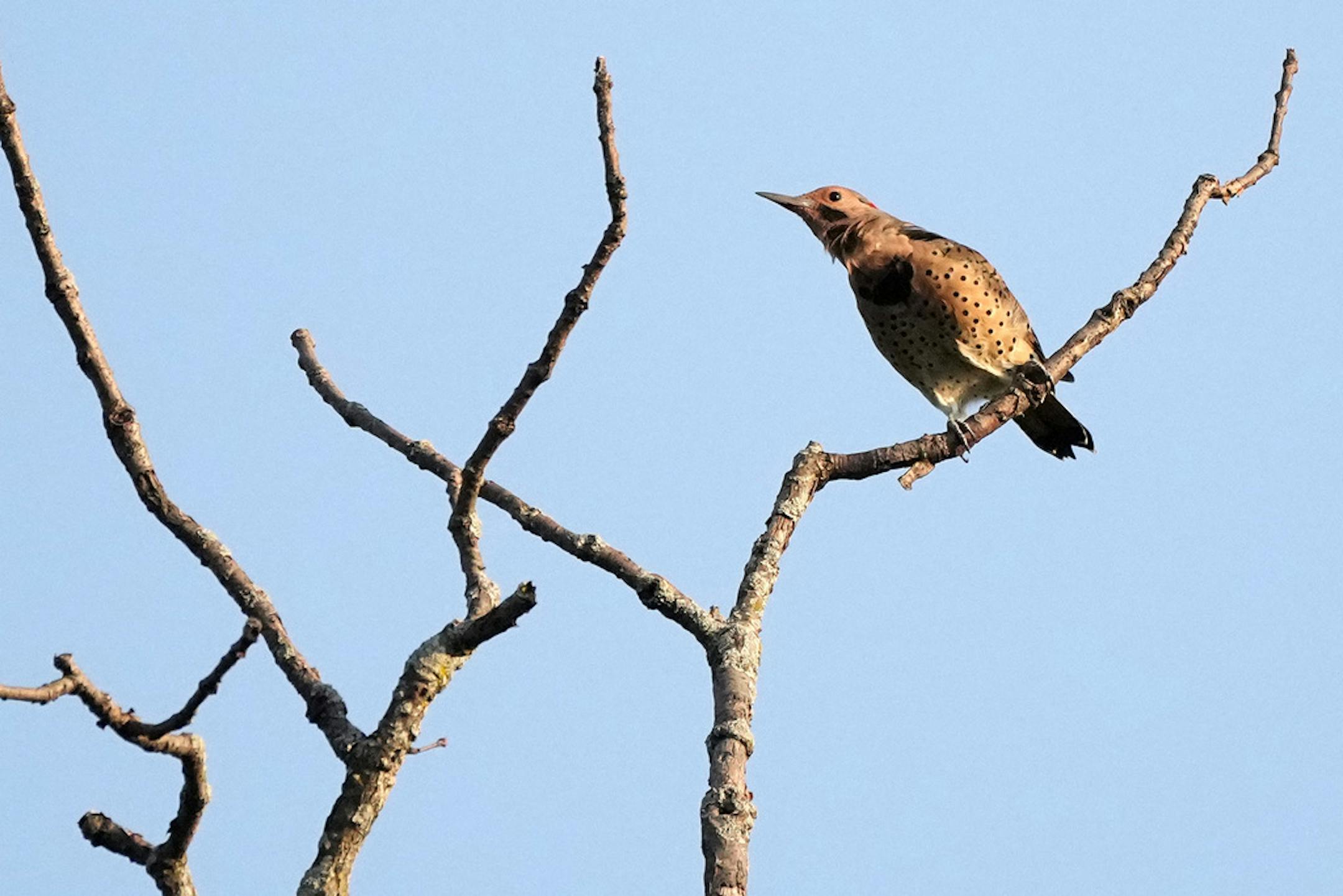
To perform the bird test, one partner mentions a seemingly insignificant occurrence — seeing a bird — to their significant other, in the hopes that they’ll express interest and maybe ask some follow-up questions. (Anthony Souffle/The Minnesota Star Tribune)

“Oh my gosh, I forgot to tell you on the phone. I saw a bird today,” Brooke Phillips chirped to her husband, Donavon. She was secretly recording their interaction as he walked around their home in his military uniform and backpack. “Wow. What kind of bird?” he replied in a monotone, adding two unenthused “hell yeah’s” before walking out of frame.

The 18-second video, which has been viewed nearly 1 million times on TikTok since Phillips uploaded it in October, convinced some commenters that Donavon had failed the “bird test” or “bird theory,” a viral relationship test that has seen a resurgence in popularity in the past month.

To perform the bird test, one partner mentions a seemingly insignificant occurrence — seeing a bird — to their significant other, in the hopes that they’ll express interest and maybe ask some follow-up questions. But if the partner seems uninterested, or dismisses their partner completely, the response is said to be a warning signal that their relationship might need some work.

That’s the theory at least. But as the research behind it shows, the test isn’t foolproof: Even partners in the most solid relationships won’t pass every time, and vice versa. Social media has also muddled the science behind the test, with waves of commenters making inaccurate assumptions based on short clips, some of which might be staged.

Some who watched Phillips’s video came to her husband’s defense: “he’s military. doesn’t count. mine is broken too,” one wrote, with others suggesting he wasn’t up for bird talk because he was running late for work.

Brooke and Donavon giggled as they scrolled through the comments of strangers trying to scrutinize their marriage and getting almost every detail wrong, she told the Washington Post. She wasn’t concerned by Donavon’s lukewarm response, she said, because her husband is used to hearing random details about her day and enduring her pranks. If the experiment taught her anything, it was to not take the internet too seriously.

“I learned so much more about how to guard my heart and my husband’s heart from the world,” she said, “as opposed to learning about what my husband thinks about me and our relationship and what he thinks about birds.”

Videos of people trying out the bird test spread widely across TikTok last year, along with the “orange peel theory,” where experimenters ask their partners to peel an orange for them. This year, the tests have reached a larger audience, even catching the attention of the Philadelphia Eagles, which had defensive tackle Jalen Carter try out the trend on his teammates.

Despite the stir some of the videos have caused online, John Gottman, a professor emeritus of psychology at the University of Washington whose research on marriage and relationships inspired the tests, has been pleased to see so many people discussing and embracing the social experiment online.

“We only think of connection in terms of dramatic things like ‘How is my partner going to respond when I get a diagnosis of breast cancer?’” Gottman said. “We think of these big moments, but it’s really in the tiny moments that that connection is built.”

The bird and orange theories are rooted in what Gottman calls a “bid for connection.” In 1992, Gottman and a team of researchers observed 130 newlywed couples for six years in a quest to determine what makes a relationship sink or soar. Through the study, the psychologists found a marked difference in how often partners engaged with, or “turned toward,” their partners after receiving low-stake questions or comments. The couples that were still married after the six years had turned toward each other an average of 86 percent of the time, whereas the couples who ended up divorcing only accepted bids for connection 33 percent of the time on average.

One failed test doesn’t necessarily mean a relationship is doomed: “Sometimes, somebody’s just involved in what they’re reading, and they literally don’t hear the bid, or they don’t pay attention to it because their attention is focused elsewhere. That’s not really a very good test,” Gottman said. “It has to be a consistent pattern, and so becoming aware of these moments is the important thing.”

As couples post their experiments, the tests have spread awareness — and helped make research findings from Gottman and his wife, Julie, common knowledge.

Audra Nuru, a professor at the University of St. Thomas, appreciates that the tests have made relationship science more accessible and shown people how intimacy is built on the mundane. But she stressed that relationships are complex, and the test doesn’t always have “a clear pass or fail,” as the internet discourse makes it seem.

And then there’s the thorny matter of turning your relationship dynamics into social media content.

“There’s something really tender and vulnerable about these videos, which is why they resonate so deeply,” Nuru said. “But when someone shares their partner’s reaction, they’re inviting the world into a genuinely intimate moment. And so what might begin as a private moment between these two people becomes culled by a much wider audience. … Others are now helping define its meaning.”

One of the most popular orange peel test videos had some viewers seeing red.

When Shelby Wilfong asked her boyfriend Tino Zach to pry open an orange for her in a January 2024 video, he went on a tirade, telling Wilfong “Tough luck buddy” and “You’re not even that special.”

“I BEG YOUR FINEST PARDON???” one commenter wrote. Others reacted with red flag emojis, while another viewer chimed in: “My husband of 30 years would be happy to peel an orange for me. And me for him! Leave now!”

Wilfong and Zach, who appear to still be together, declined to be interviewed. Interestingly enough, Zach posted a video on the same day using the orange peel theory to test his girlfriend. She too “failed” the challenge, telling him she’s “barely attracted” to him.

Real or rage bait? You be the judge. The authenticity of the videos isn’t always easy to parse.

Madison Humphrey, a content creator and actress who has grown a following of more than 4 million parodying some of the quirkiest relationship clips on the internet, said she decided against reenacting a bird theory video because she couldn’t tell whether it was a skit.

“The tricky part of social media is that it’s not reality, and you don’t see the 24/7 feed of whoever’s video you’re watching at that time,” Humphrey said. “There’s a lot of context clues that you could be missing.”

Instead of dissecting someone else’s relationship, Nuru hopes people are inspired by the videos to talk about and think of ways to “turn toward” their partners — even without birds or oranges.

“Relationships don’t really come with instruction manuals or predetermined meaning, and so partners are creating that meaning together through how they listen and how they respond and how they choose to matter to each other,” Nuru said. “That meaning isn’t handed to us. We create it together in those small moments. It’s how we communicate, and it’s how we choose to honor and the way that we show up for each other that defines that relationship. And I would really hate for people to think that one test would outweigh that.”

about the writer

about the writer

Samantha Chery

The Washington Post

More from Lifestyle

See More
card image
Alex Kormann/The Minnesota Star Tribune

Conscious consumerism is at the heart of these three latest additions to the downtown shopping scene.

card image
card image