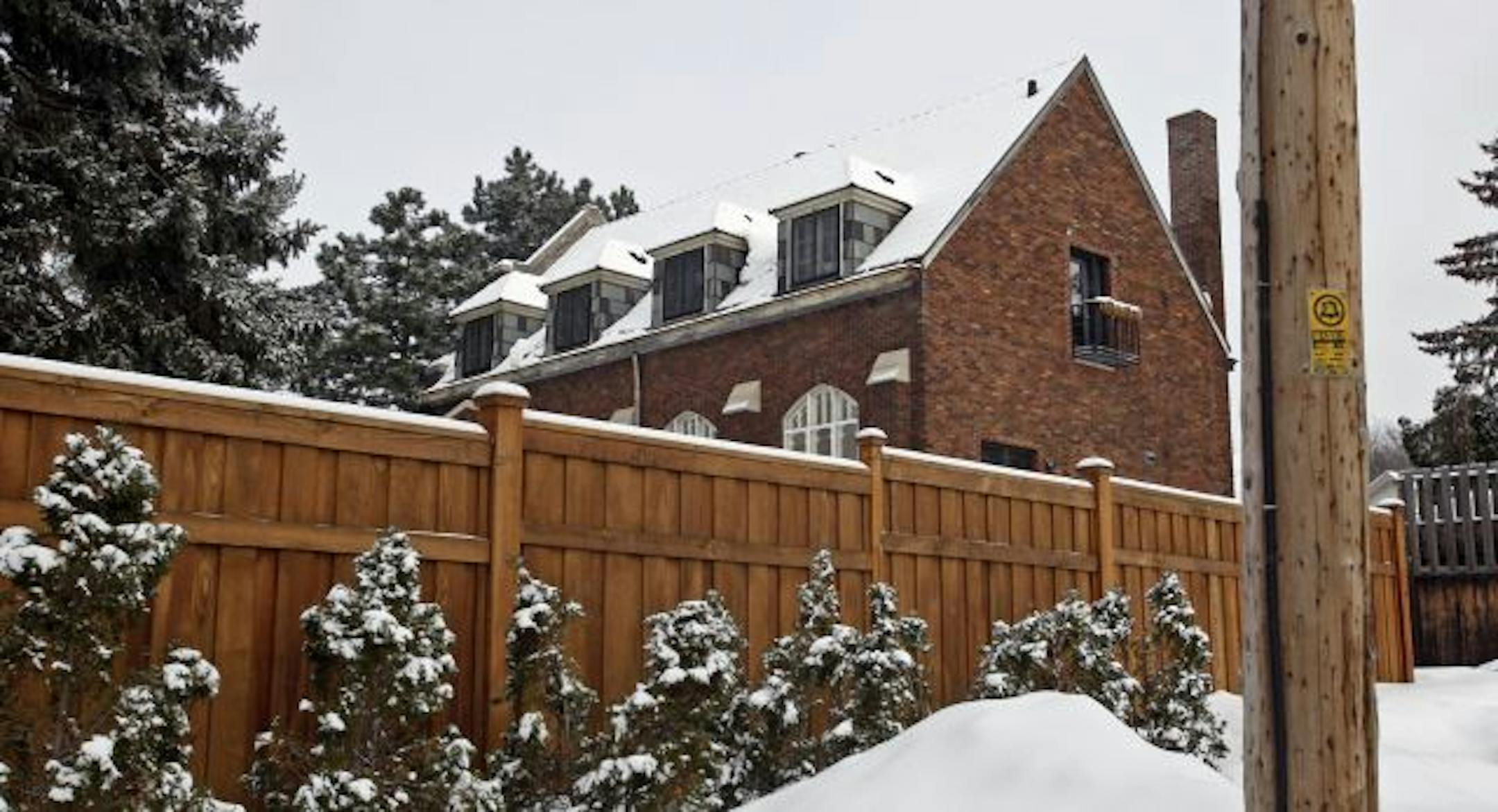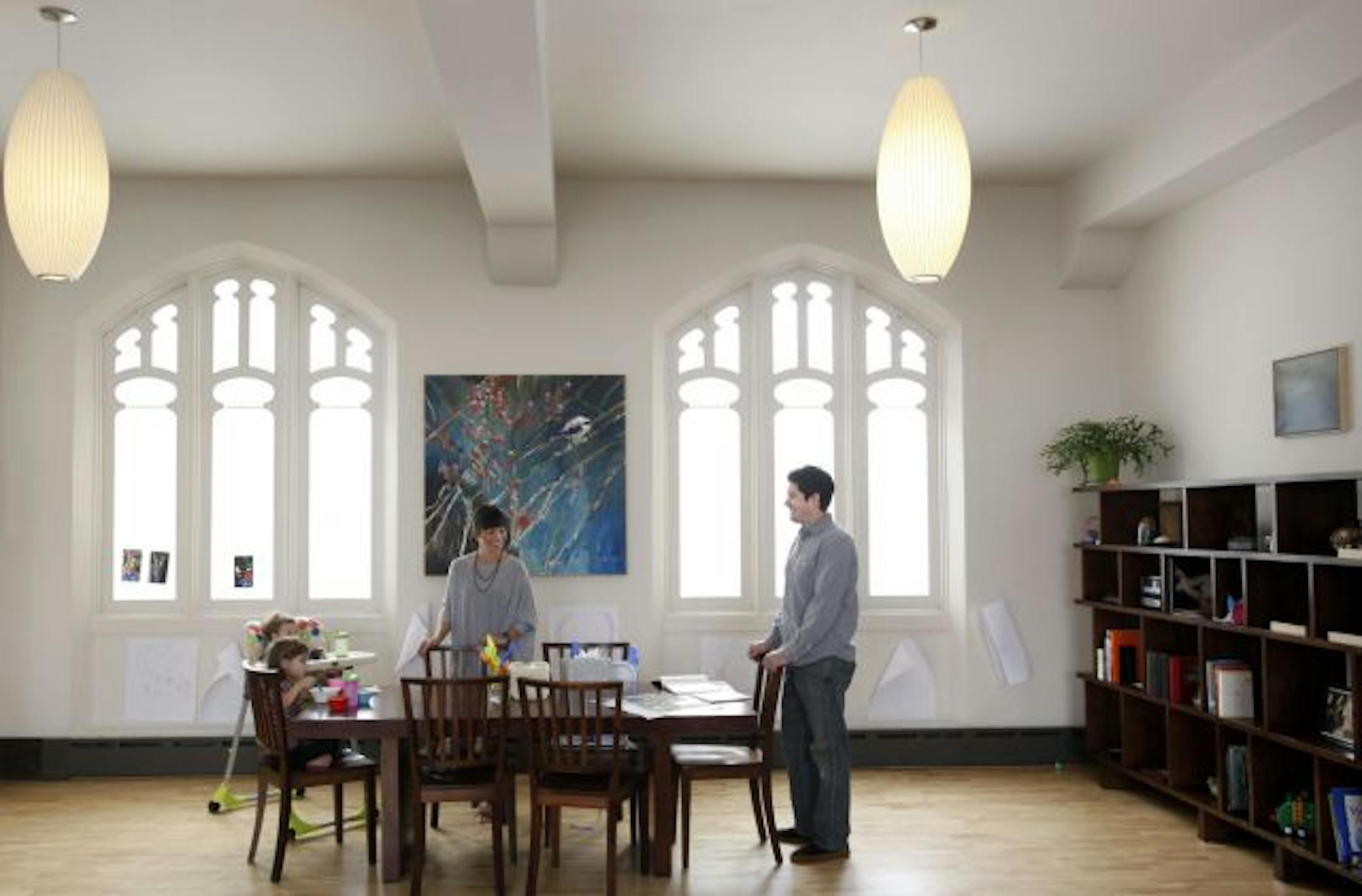
Churchgoers once knelt and prayed near Matt Kelly's living room.
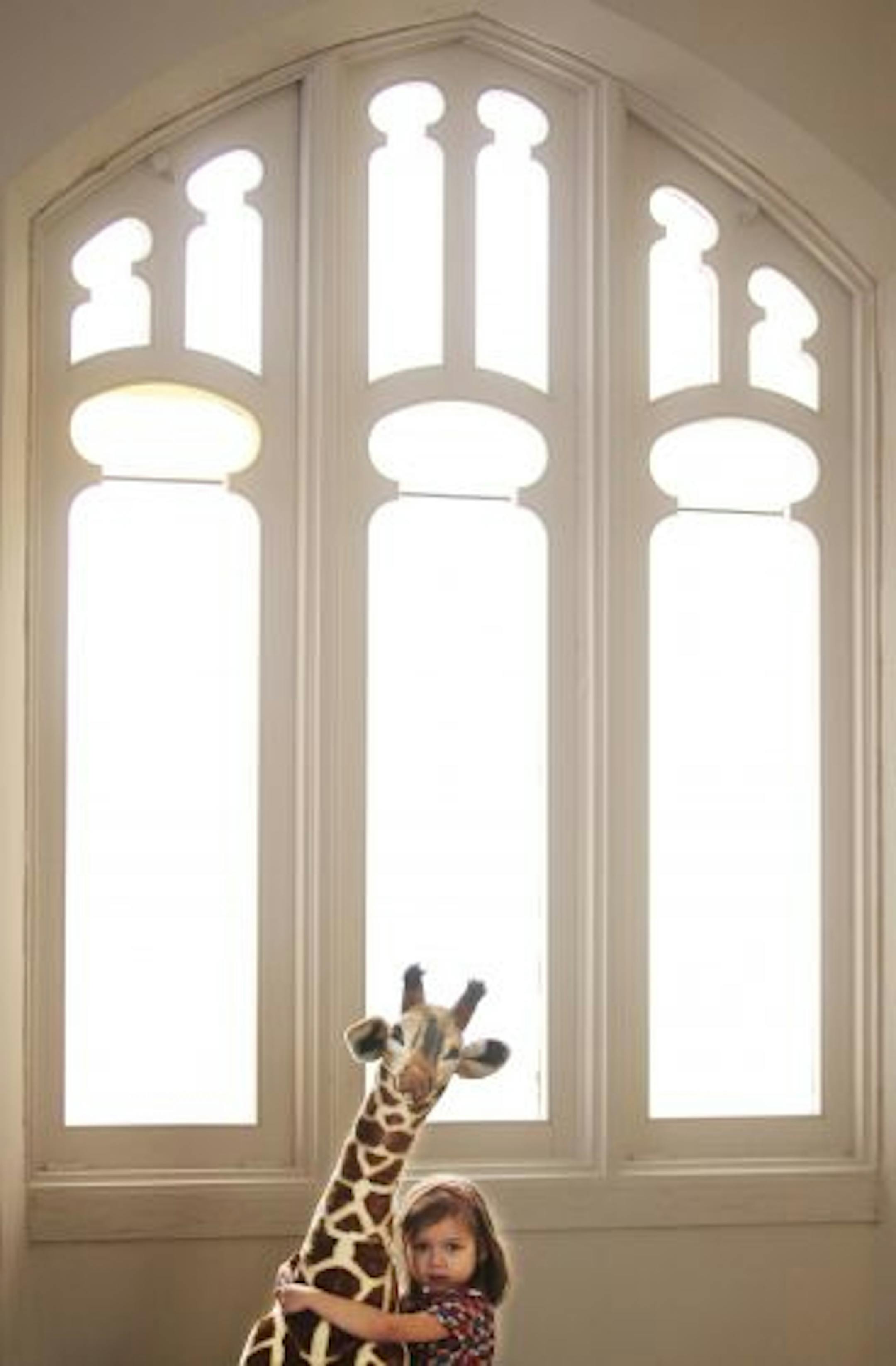
Sunlight streaming in from arched windows that once lighted people in their pews now shines on the dining room table where Kelly, his wife, Jennifer, and their two young children share family meals.
What was once Church of the Ascension in St. Paul is now a home for ordinary people, and a sign of the new life that awaits church buildings that are no longer needed as membership dwindles and budgets tighten.
The trend is poised to accelerate in the coming years in the Twin Cities with a major reorganization of the Archdiocese of Minneapolis and St. Paul that began in January. Twenty-one Catholic parishes are merging with other parishes, which means some church buildings will be in search of new missions.
Bob Jaeger, executive director of Partners for Sacred Places, a Philadelphia-based nonprofit that advocates for the reuse of religious properties, said thousands of religious structures across the United States have had to close. The ideal and still most common reuse of these worship spaces is for other religious entities to move into them, Jaeger said.
However, "the supply of willing and able congregations to buy an old vacant church is declining," he said. "Thinking about other non-religious uses is going to become more and more important."
Like the Kellys, other takers can be found. Attracted by distinct architectural features like soaring ceilings, ornate wood work and carvings, spiraling staircases and stunning stained glass windows, buyers have found a range of uses for old churches -- from restaurants and office space to theaters and community centers to condos and other residential structures.
"I think people do respond to the majesty and artistry and volume of the space," Jaeger said. "These places have a soul. Whether you're running a business or it's a cultural group, I think these places really speak to people, even if they don't share the same faith tradition."