

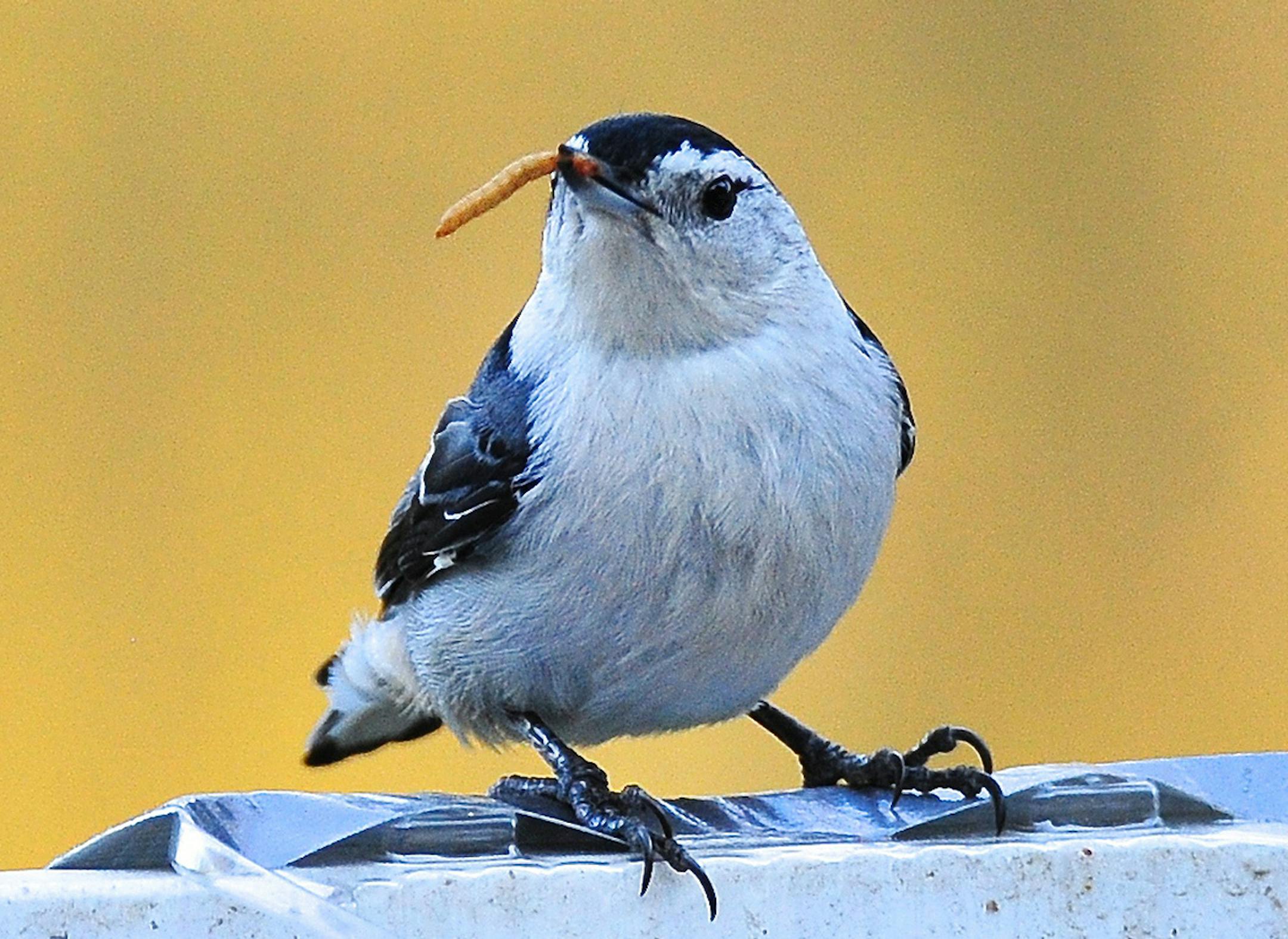
When we're talking mealworms (which is not very often), we're talking big numbers.
Mealworms are the caviar of the bird-food world. My friend Jennifer Rae babies her backyard bluebirds with daily allowances of what the birds should consider a special — and nourishing — treat.
Mealworms are a serious source of protein for buntings, chickadees, grosbeaks, nuthatches, orioles, robins, yellow-rumped warblers, house wrens, and Rae's bluebirds.
You can buy worms alive or dried. Rae's are alive, the form preferred by most users.
People have been offering these inch-long worms to birds for years. Carrol Henderson wrote about this in his 1995 book "Wild About Birds." Henderson heads the nongame wildlife division of the Minnesota Department of Natural Resources.
He was writing about feeding the worms to bluebirds, an insect-eating species. Insect availability depends on weather conditions — cold spring or heavy rain can interfere with foraging. Mealworms can help, particularly when adults are feeding chicks. Worms also simply add nutrition to a bird's daily diet in any weather.
"We buy several containers of 500-count mealworms at a time," Rae told me recently. "We store the worms in the fridge," she said, "taking them out every few days to feed them apple slices and carrots.
"The worms get big and juicy," she said.


