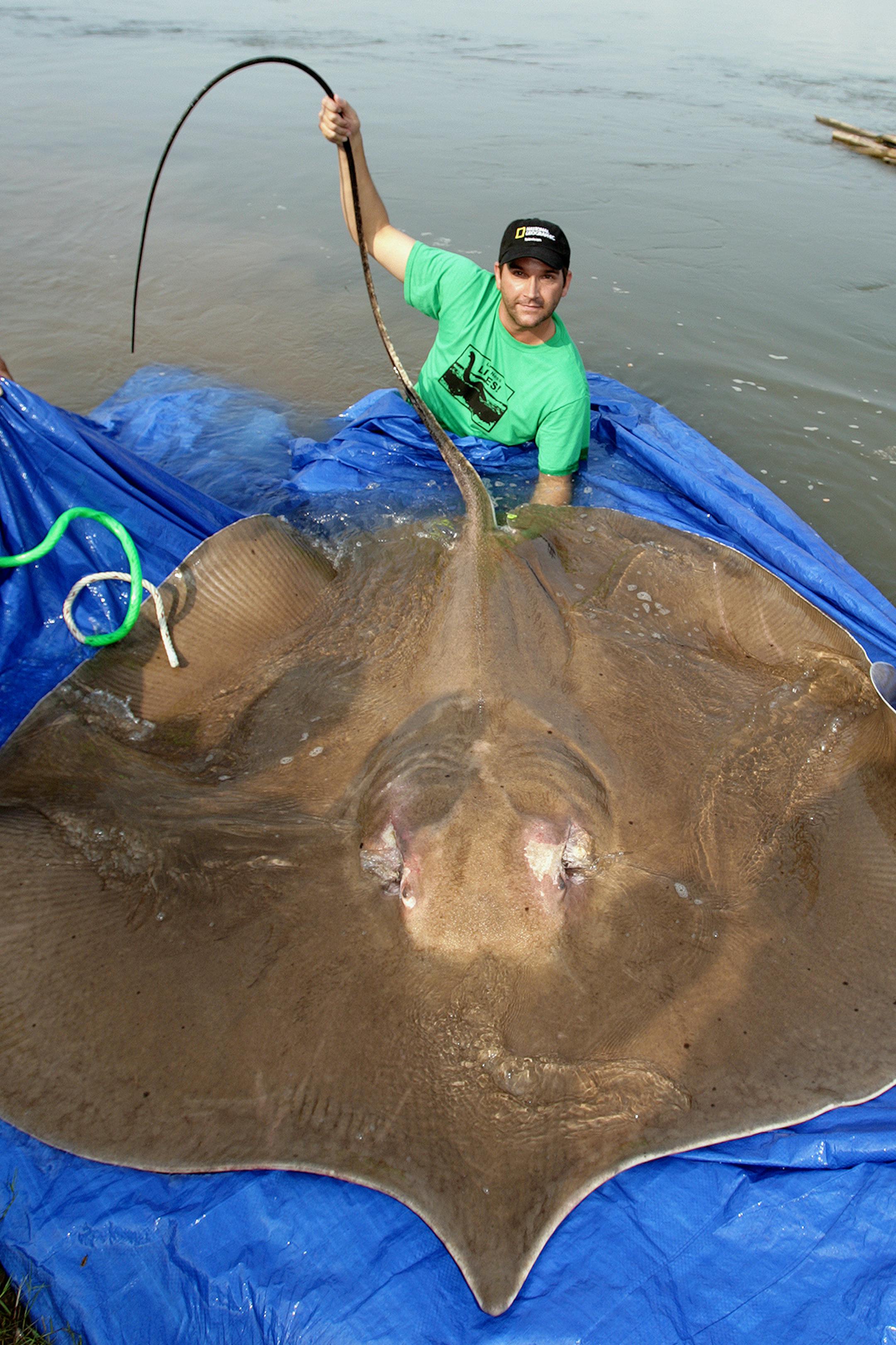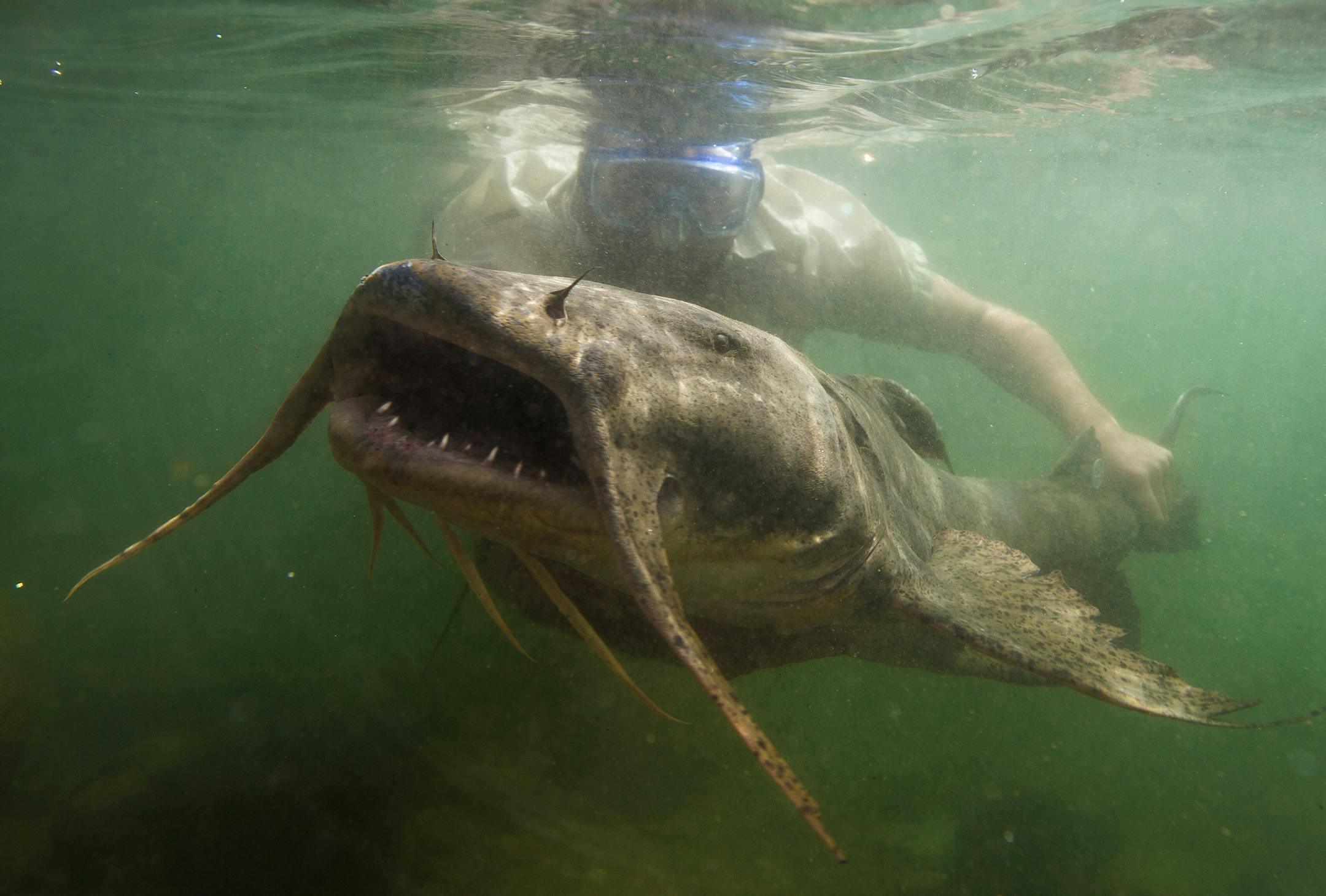
Some of the most astonishing creatures on Earth hide deep in rivers and lakes: giant catfish weighing more than 600 pounds, stingrays the length of Volkswagen Beetles, 6-foot-long trout that can swallow a mouse whole.
There are about 200 species of freshwater megafauna, but compared with their terrestrial and marine counterparts, they are poorly studied by scientists and little known to the public. And they are quietly disappearing.
After an exhaustive survey, researchers declared the Chinese paddlefish extinct. The paddlefish, last seen alive in 2003, could grow up to 23 feet long and once inhabited many of China's rivers. Overfishing and dams decimated their populations.
The paddlefish may be a harbinger. According to research published in Global Change Biology, freshwater megafauna have declined by 88% worldwide in recent years.
"This study is a first step," said Zeb Hogan, an aquatic ecologist at the University of Nevada, Reno, and a co-author of the study. "We want to go beyond just studying conservation status and look at ways to try to improve the situation for these animals."
In their paper, the researchers defined freshwater megafauna as any vertebrate animal that spends an essential part of its life in fresh or brackish water and can weigh more than 66 pounds. They identified 207 such species and combed the scientific literature for at least two population measurements for each.
According to the analysis, freshwater megafauna populations underwent an 88% global decline from 1970 to 2012. Fish were hit hardest, with a 94% decline. Fish in Southern China and South and Southeast Asia experienced the greatest overall losses, at 99%.
"Freshwater megafauna are the equivalent of tigers or pandas," said Ian Harrison, a freshwater scientist at Conservation International. "There is a powerfulness to the message that these very charismatic species are extremely threatened, and that the threats they represent are incumbent on all species in freshwater systems."