

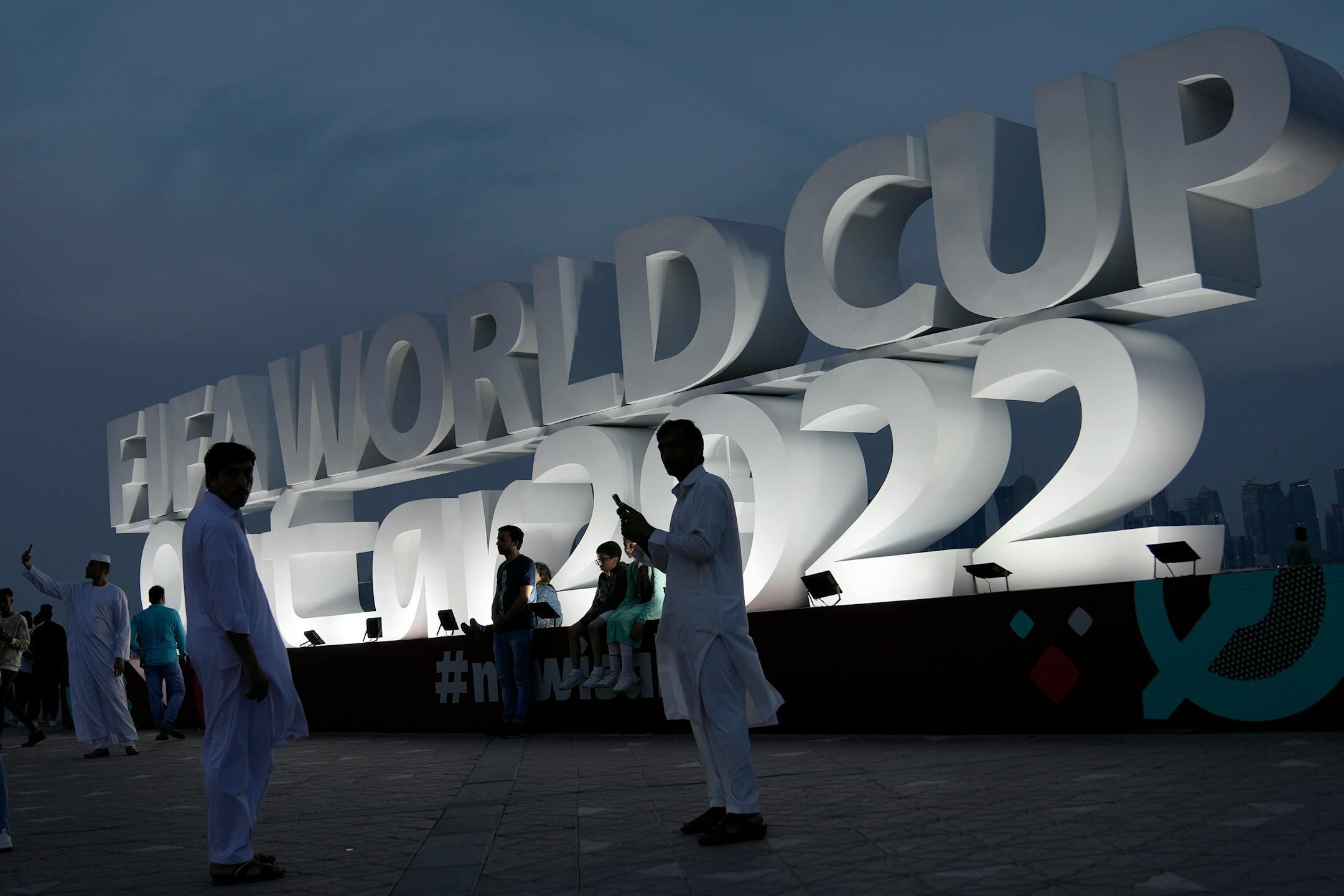
With Saturday's Gophers game against Iowa and Sunday's Vikings game against Dallas, Minnesota is nearing peak football fever.
Globally, however, it's futbol fever that's about to take hold, with the World Cup kicking off on Sunday.
In a week when it was announced that the planet now has 8 billion individuals, the fact that an estimated 5 billion will have the collective experience of watching the same event is testament to soccer's intercontinental appeal.
The World Cup "is as close to a genuinely global sporting form as we've got," said Douglas Hartmann, a University of Minnesota sociology professor whose scholarship includes sports and society. "Different sports have different levels of regional appeal, but soccer is everywhere."
Including, for the next month, somewhere once unexpected: Qatar, a Mideast monarchy with fewer than 3 million people which, at the time of its selection as host by FIFA, soccer's governing body, had no serious soccer tradition.
The choice was met with howls then — a "Qatarstrophe," headlined the German tabloid Bild — that have only grown noisier as controversies over alleged corruption and lax stances on human and labor rights, combined with hard lines on women's and LGBTQ rights, have sent some sponsors scurrying from the unparalleled platform.
Even the top soccer official in charge of FIFA at the time, the now-banned Sepp Blatter, has recently recanted, saying that "Qatar is a mistake," citing its size and, more profoundly, that the selection didn't take "social considerations and human rights" into account.
It did seem to take Qatar's bank account into account. The petrostate poured billions into infrastructure for the World Cup and has also become a major player in the global game with its sovereign wealth fund purchase of powerhouse team Paris Saint-Germain.


