

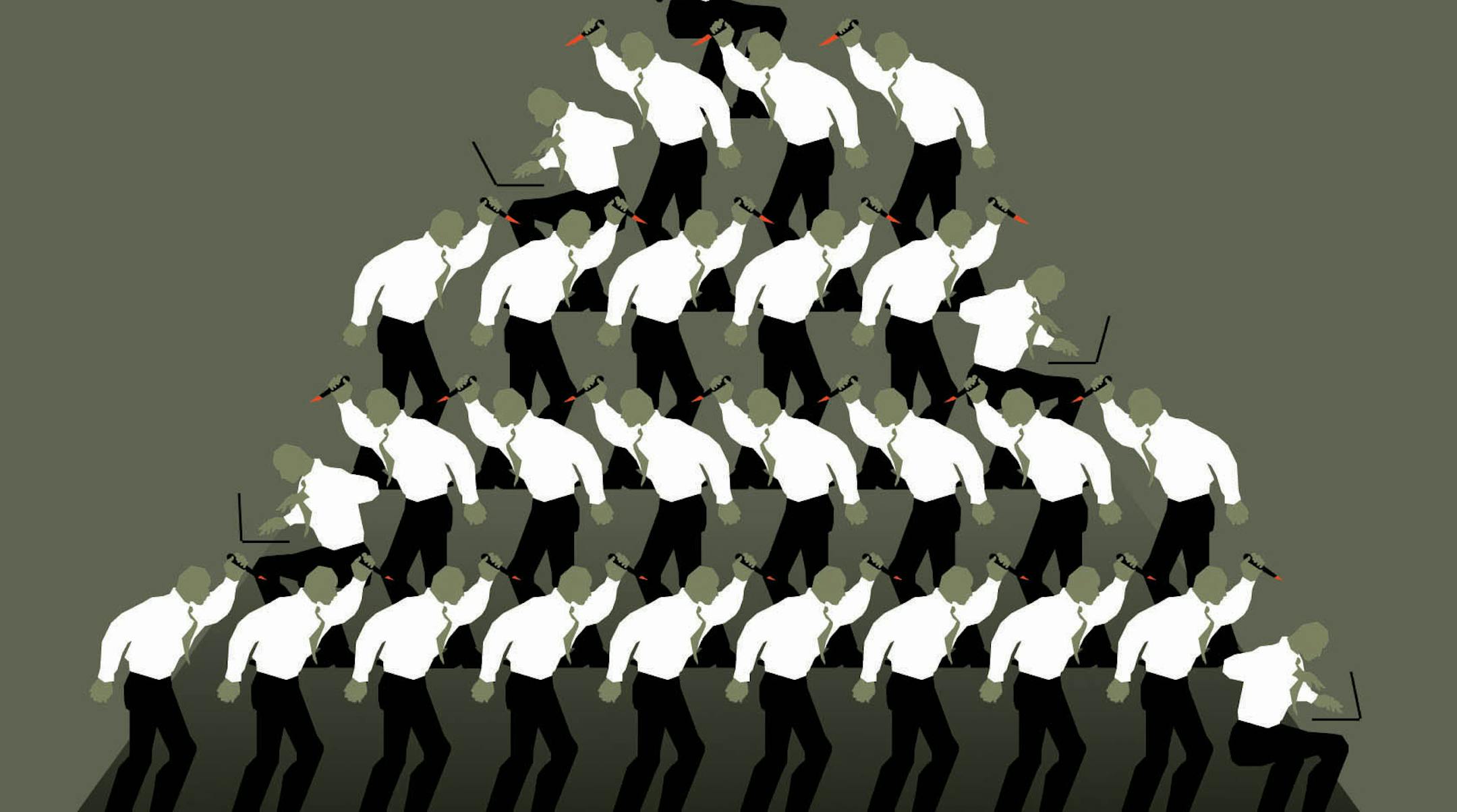
Are men fast becoming obsolete?
Are women seizing the reins of power in the nation, becoming the major breadwinners and decision-makers? Are women naturally suited for the new economy while old-fashioned males thrash about, clueless?
Today, the idea that men are fading and women rising frames the latest scary story of the sexes in newspapers, magazines, on the Web and in bestselling books.
Hanna Rosin writes in "The End of Men" that the United States is fast becoming a "middle-class matriarchy" as women become the major breadwinners. In "The Richer Sex," author Liza Mundy claims that one in four women out-earn their spouses.
A subtext of this narrative is that men lack the communications skills, flexibility and social intelligence that are the key ingredients for success in the new economy.
Men are allegedly as sensitive as bricks. Rosin refers to "cardboard" men and "plastic" women. In "The Female Brain," author Louann Brizendine claims that women "know what people are feeling, while a man can't spot an emotion unless somebody cries or threatens bodily harm." She says this female ability comes from a larger corpus callosum - the band of fibers that connect the halves of the brain - in women than in men. Anthropologist Helen Fisher claims in "The First Sex" that women's brains can integrate many sides of an argument while men are stuck with plodding linear thinking. "The future belongs to women," she argues.
After reading this, men might be tempted to just give up and leave the field to all these flexible, sensitive, wonderful, high-achieving women. The arguments seem very convincing - until you examine the facts.
In broad terms, women have indeed made enormous strides over the last 40 years, but those gains appear to be slowing. Catalyst, a nonprofit research group that seeks to further women's roles in business, has studied the gender gap at the top ranks in the U.S. and found that it's no closer to closing than it was six years ago.


