

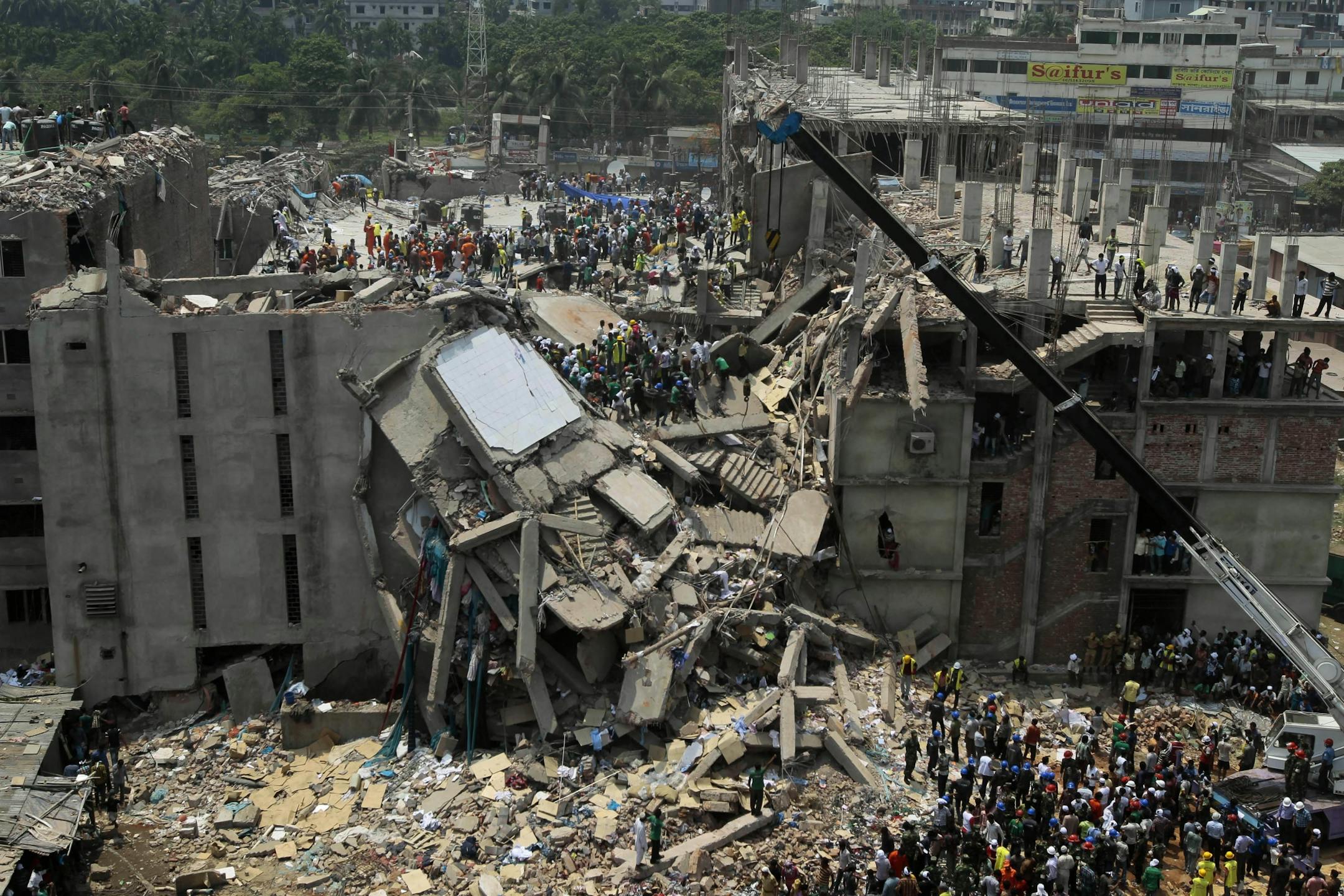
The death toll from the collapse of a building in Bangladesh that housed several garment factories now stands at more than 500, with many still missing. While staggering, this tragedy is, sadly, not rare.
Hundreds of women and men have been burned, suffocated and crushed to death in recent years as the country's garment industry has boomed, with Western clothing brands and retailers making a big shift to Bangladesh from China, where labor costs are rising. These deaths have focused attention on regulations in Bangladesh as well as the responsibility of Western companies that buy clothes from suppliers there.
At least one big brand, Disney, has said that its branded merchandise will no longer be made in Bangladesh. But a mass exodus of Western companies from Bangladesh is not the answer. What is needed is direct action by international companies to improve working conditions for the more than 3.5 million Bangladeshi workers -- 80 percent of them women -- who toil in clothing factories.
The garment industry serves as one of the few ladders out of poverty in Bangladesh. While the pay is meager -- the minimum wage is just $37 a month -- that is still far higher than wages of farmers or maids. Increased employment opportunities for women have had positive effects. One study found that the presence of garment factories was strongly correlated with higher numbers of girls going to school and delaying marriage and childbirth.
Historically, textile production has been a steppingstone in economic development. In Japan, Korea and China, garment work allowed laborers to move from agriculture into semiskilled manufacturing, and then eventually to advanced manufacturing and the services sector. This development path is not easy, but it need not be deadly.
Big garment buyers like Wal-Mart, H&M and Gap have tremendous power to improve conditions in that market. Industry officials and labor groups have been discussing a legally binding agreement requiring Western brands and retailers to conduct independent factory inspections and to help pay for factory renovations, like adding external fire exits and smoke alarms.
Some labor groups estimate it would cost $3 billion over five years to bring Bangladesh's roughly 4,500 factories into compliance with building and fire standards. That is a small price to pay given the country's $18 billion in annual clothing exports, or $90 billion over five years.
Two companies -- PVH, the parent of Calvin Klein and Tommy Hilfiger, and the German retailer Tchibo -- have signed on to such an agreement. Other companies must get on board, and the industry should, eventually, extend it to other developing countries.


