

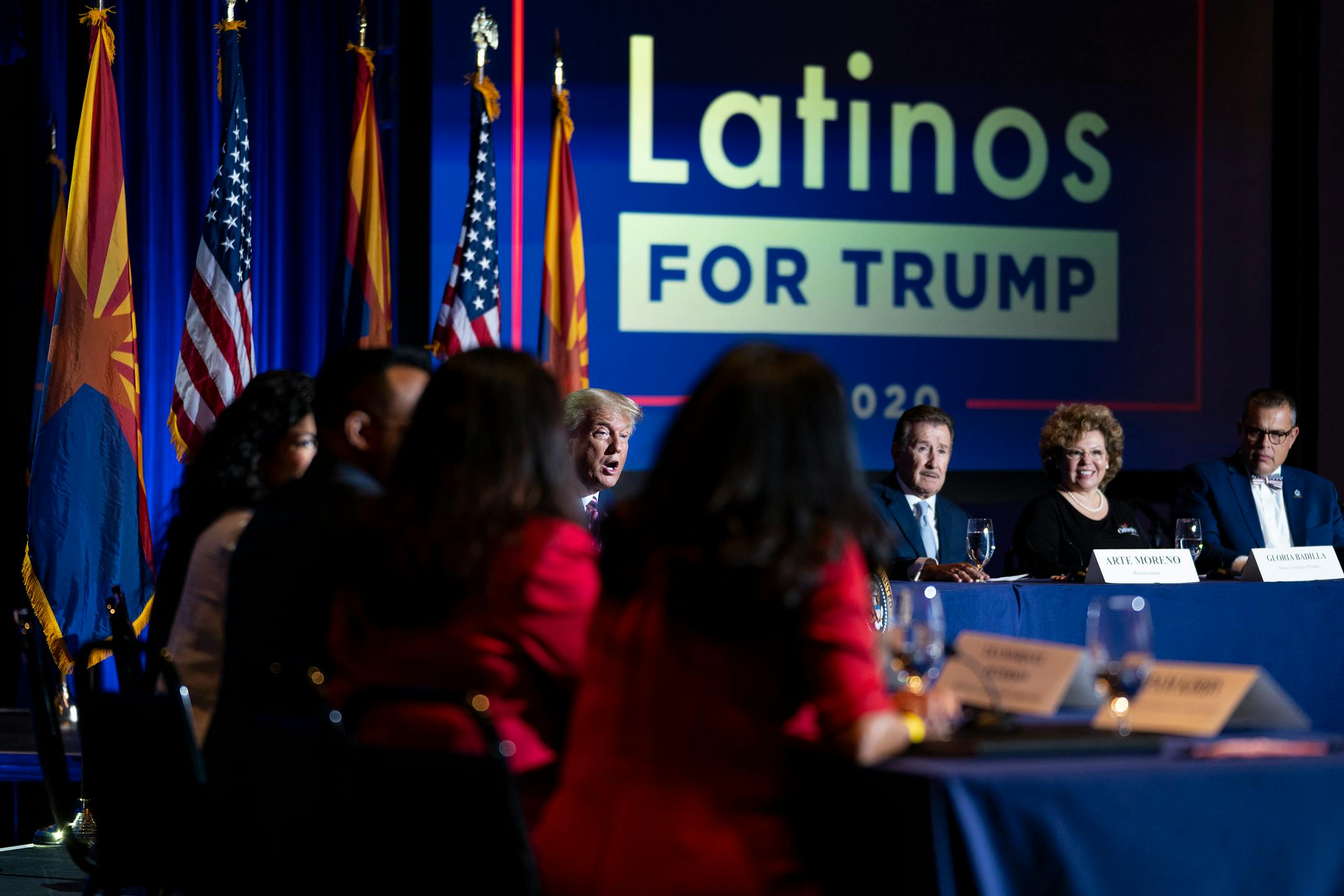
After Donald Trump and the Republican Party made gains among Black and Hispanic voters in the 2020 presidential election, a chorus of voices emerged to blame the outcome on Democratic messaging.
Democrats, went the argument, were too "woke," too preoccupied with "identity politics," too invested in slogans like "defund the police" and too eager to embrace the language of the activist left. Terms like "BIPOC" (an acronym for Black, Indigenous and People of Color) and especially "Latinx" alienated the working-class Black and Hispanic voters who shifted to Trump in key states like Florida and North Carolina.
It makes sense that this is where the conversation turned. People who work with words — journalists, commentators and political professionals — are naturally interested in the impact of messaging and language on voters.
At the same time, it is important to remember that language does not actually structure politics. Yes, a political message can persuade voters or, on the other end, help them rationalize their choices. And, yes, a political message can be effective or ineffective. But we should not mistake this for a causal relationship.
The forces that drive politics are material and ideological, and our focus — when trying to understand and explain shifts in the electorate — should be on the social and economic transformations that shape life for most Americans.
With that in mind, let's return to the debate over the Democratic Party's declining fortunes with Hispanic voters. (In all of this, it is important to remember that even with the significant shift to Trump, who improved on his 2016 total in 2020 by 10 percentage points, according to Pew, Joe Biden still won 59% of the Hispanic voters who cast ballots.)
Does a term like "Latinx" alienate some portion of the Hispanic voting public? A recent survey says yes. According to a new national poll of Hispanic voters, only 2% chose the term to describe their ethnic background, and 40% said it offends them either "a lot" (20%), "somewhat" (11%) or "a little" (9%). To the extent that Democratic politicians and affiliated voices used the term — demonstrating their distance from the communities in question — that may have left a bad taste in the mouths of some Hispanic voters. But it does not follow from there that use of the term explains anything about electoral trends among Hispanics. For those, we have to look at the material and ideological shifts I mentioned earlier.
It would be too much for a single column to give a full inventory of those changes. But I can point to a few. First, there is the economy. In areas like the Rio Grande Valley of Texas — where Republicans made major inroads with Mexican American voters in 2020 — rising wages for workers in the region's oil and gas industry helped shift some voters to the right. Nationally, there's evidence that some Hispanic voters credited Trump with wage growth and rewarded him with additional support. In general, upward mobility and a greater sense of integration into the mainstream of American society has made a significant number of Hispanic voters more open to Republican appeals.


