

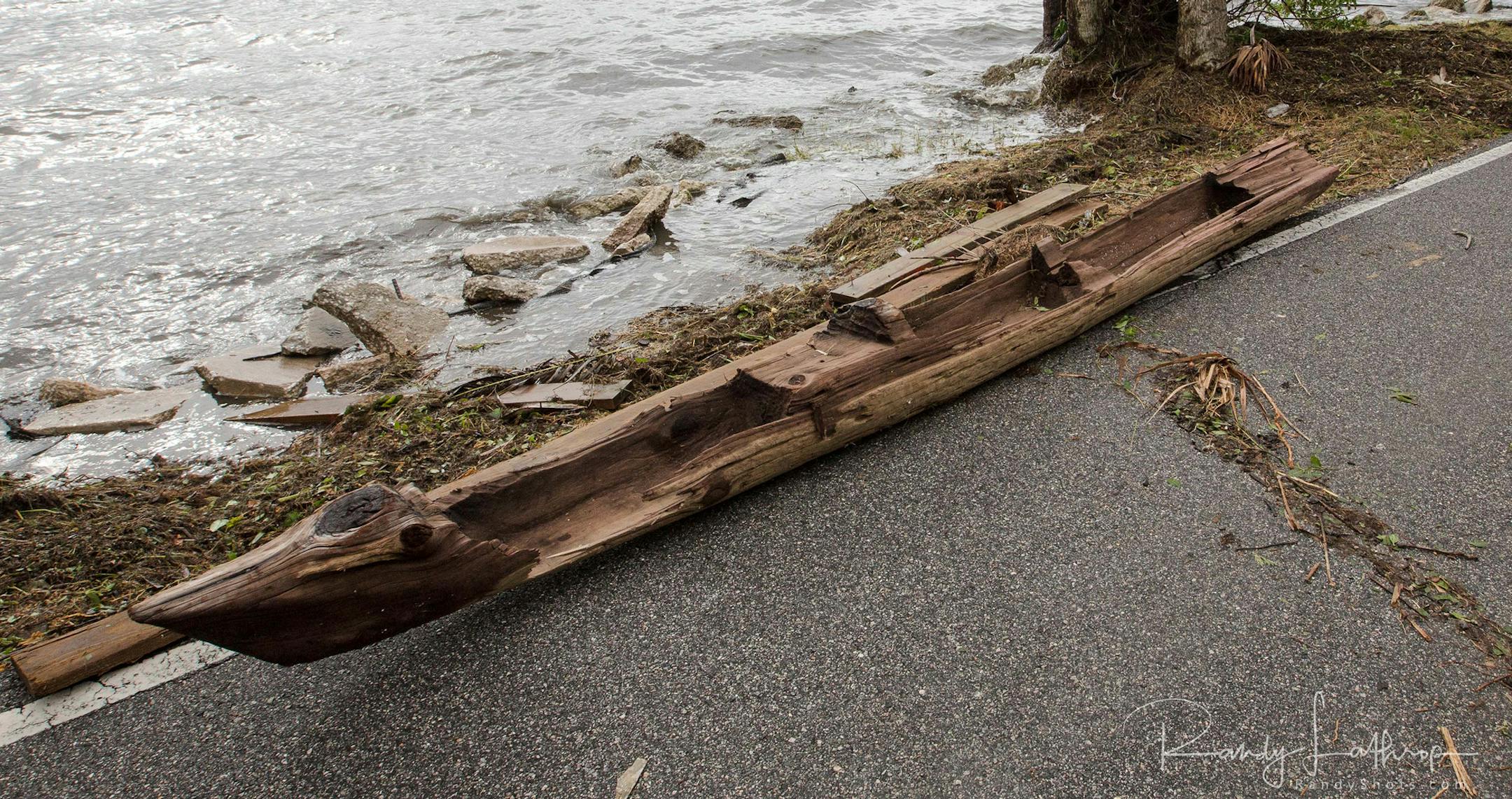
FORT LAUDERDALE, Fla. – Florida researchers may be closer to figuring out the mysterious origin of an old canoe that surfaced after Hurricane Irma.
Using a technique known as radiocarbon dating, archaeologists recently determined the wood used to create the vessel could date to the 1600s.
"A find like this is always exciting, especially when it represents something completely unlike the types of canoes previously discovered," said Paul N. Backhouse, director of the Ah-Tah-Thi-Ki Museum at the Big Cypress Seminole Indian Reservation, and Tribal Historic Preservation Office.
The canoe likely "had quite a biography during its life span," he said.
A photographer scouting for damage after Irma made the discovery in the city of Cocoa, about 35 miles east of Orlando, near the Kennedy Space Center.
Randy "Shots" Lathrop said he snapped a photo of the vessel with his phone and texted it to his friend, an underwater archaeologist, to make sure he found something of value.
On Thursday, state officials loaded it onto a truck, "tucked it in" safely and took it to Tallahassee. Officials are beginning a process to make sure the canoe doesn't deteriorate before it is memorialized in a museum.
State officials said radiocarbon dating showed there's a 50 percent chance that the wood used to make the canoe dates to the 1600s. Meanwhile, the paint and wire nails found on it might indicate that the canoe itself wasn't built — and used — until the 1800s or 1900s.


