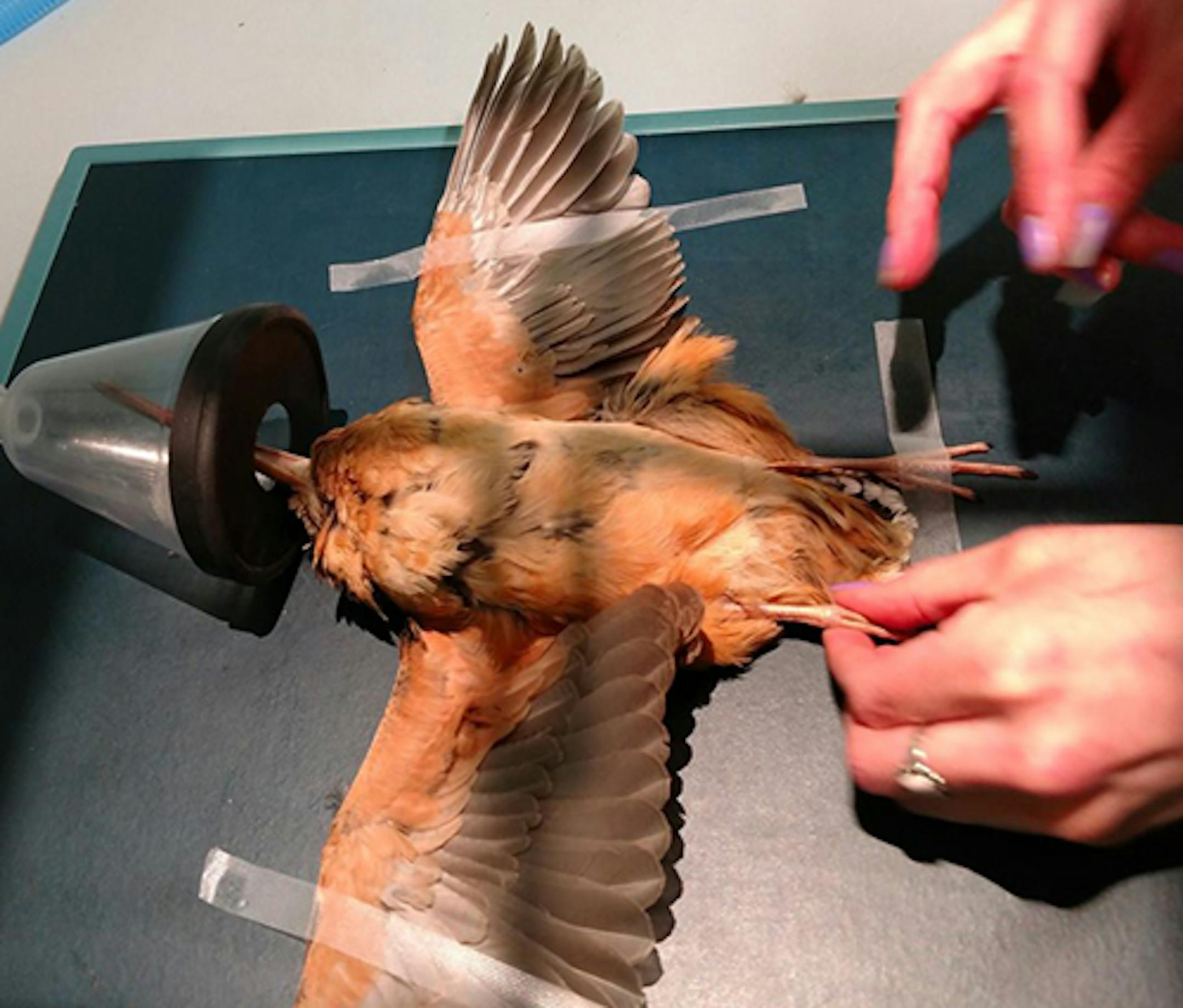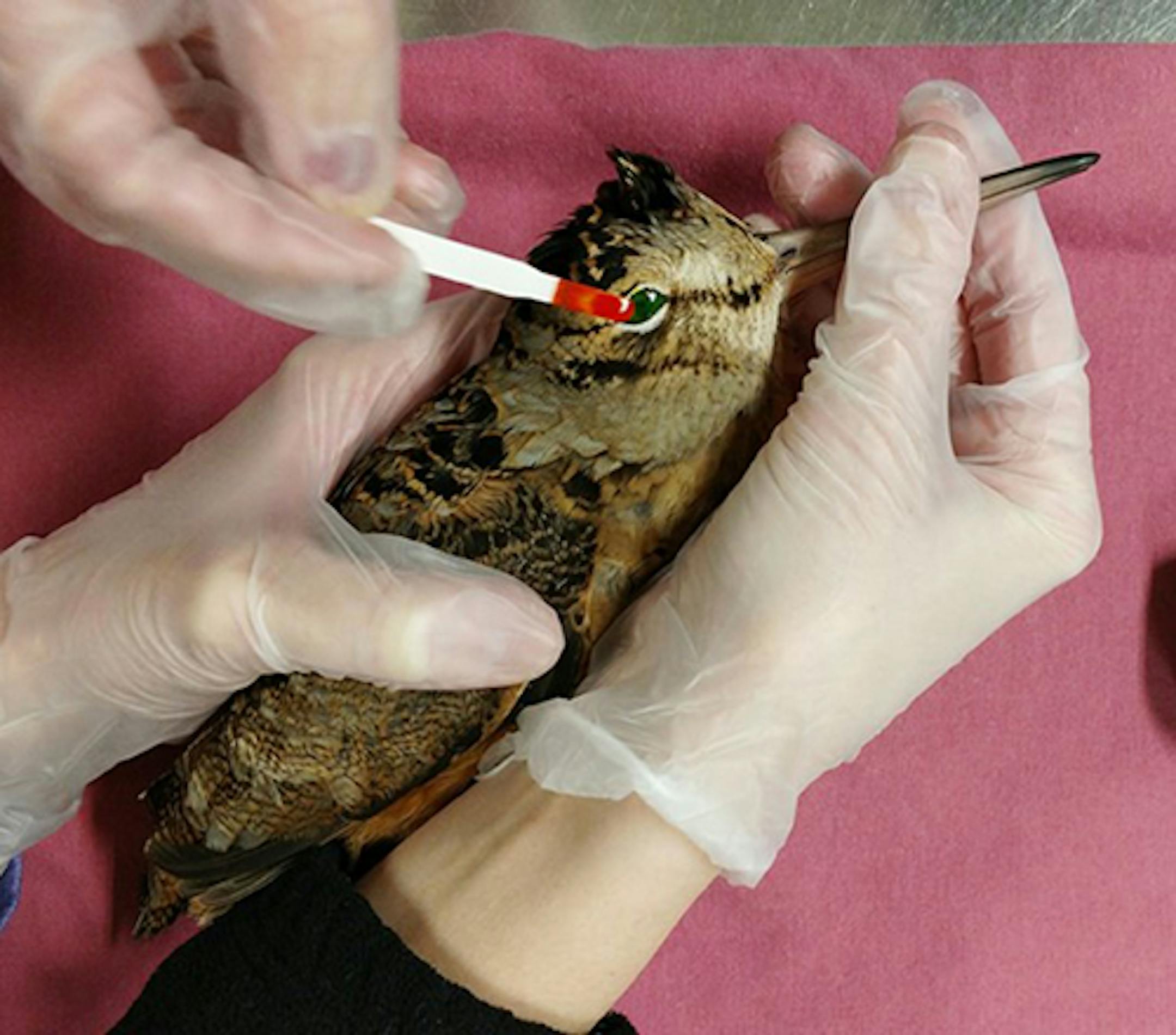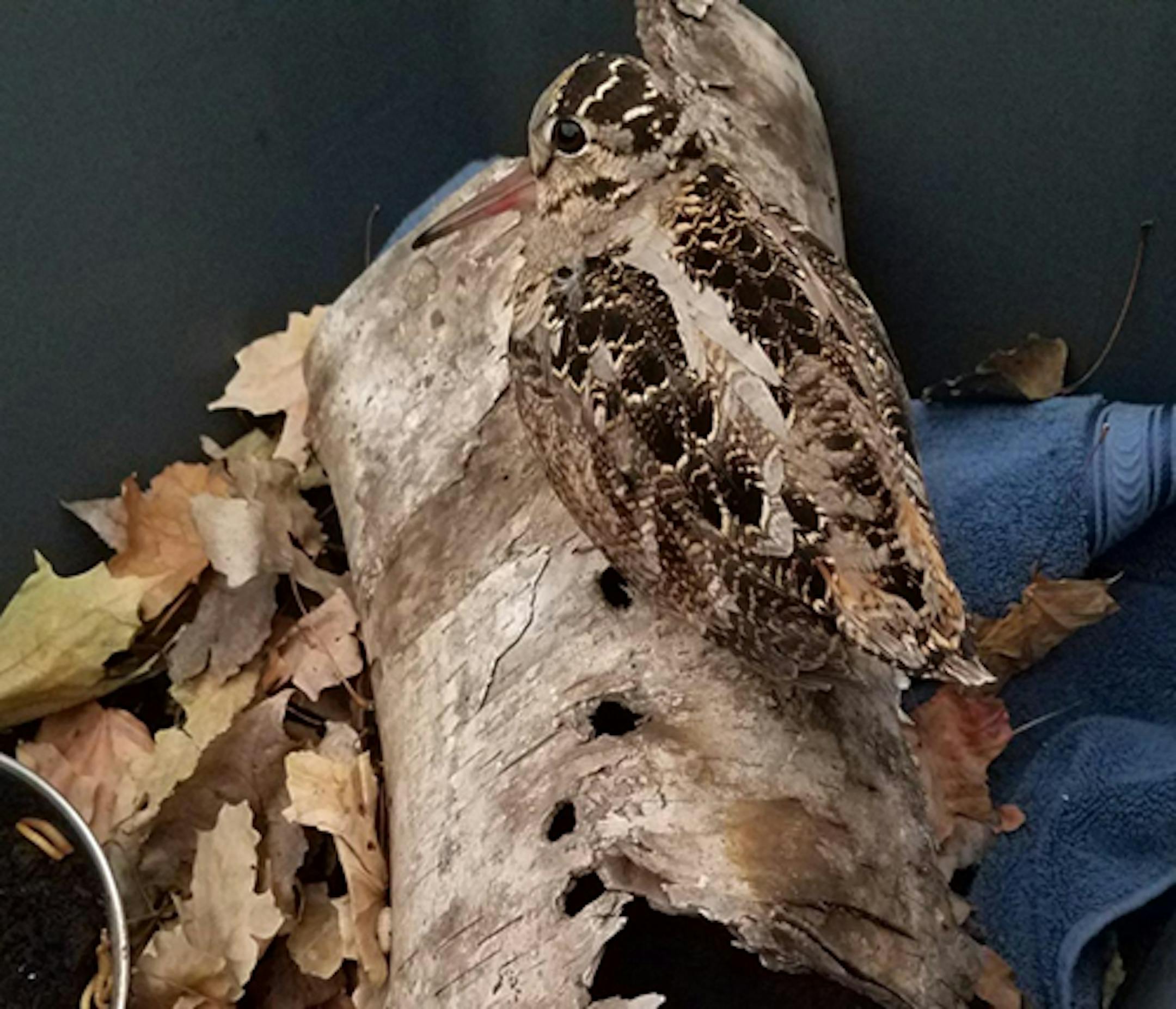
One of the woodcock in treatment. This species blends well with in on-the-ground habitat.
There is a pied-billed grebe with road rash. Woodcock with eye injuries. A killdeer that arrived completely emaciated and hypothermic. A cormorant with a fractured jaw.
Business is a bit unusual at the Minnesota Animal Rehabilitation Center in Roseville. First, our delayed spring caused problems for birds. Second, it also has significantly reduced the usual springtime number of baby squirrels and rabbits delivered for care.
Ten woodcock were admitted in the first few days of this month. Woodcock are early migrants.
All were injured in collisions with buildings, some in residential neighborhood, others downtown. One was DOA, six died after admission. Three were being treated for head trauma.
The surviving woodcocks were being kept in a large trays filled with purchased dirt stocked with purchased earthworms. Worms are the major part of the woodcock's usual diet.
Woodcock migration is driven by hormones regardless of weather. They have already begun their courtship displays. They also eat insects and berries, so can survive until worms are available to their probing bills.
The killdeer had not been eating, mostly likely because this shorebird could not find food. It died after treatment with medication, fluids, and the warmth of an incubator.