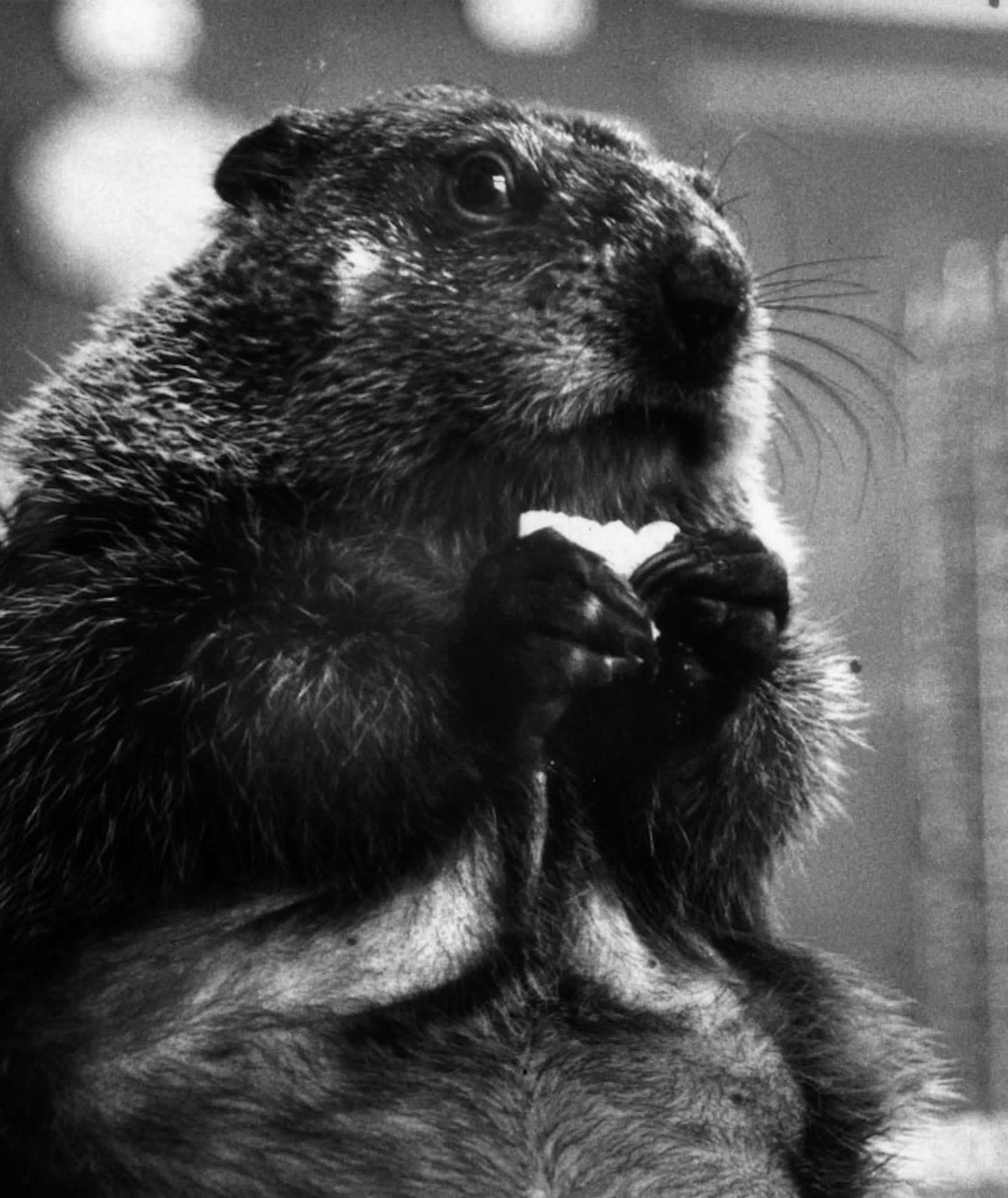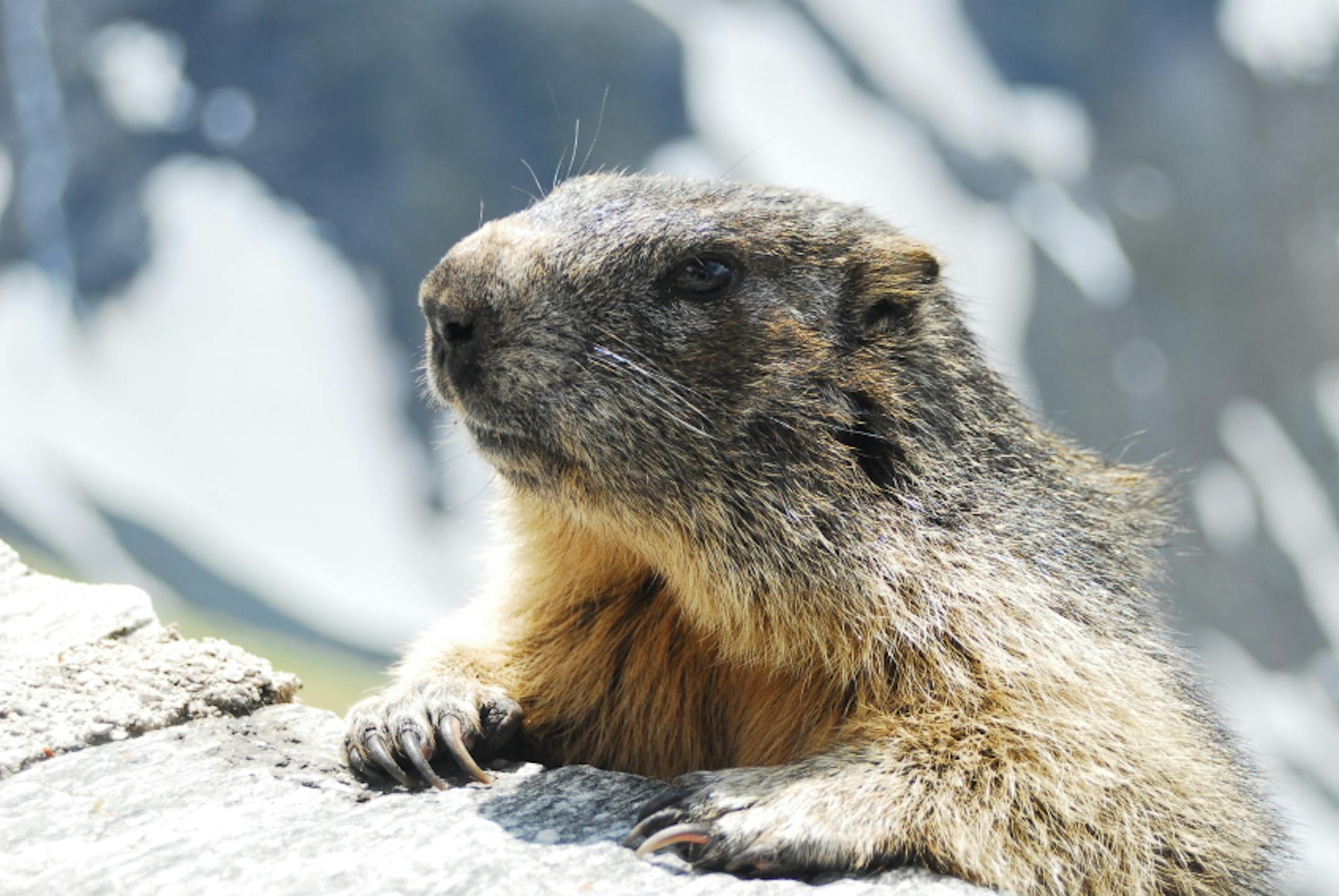
The woodchuck is the largest member of the squirrel family — yes, squirrel — in Minnesota.
It can weigh up to 14 pounds and measure nearly 2 feet. The first ones emerge from hibernation in March, and they're commonly seen this month throughout a good share of Minnesota. This year the first one I heard about in our home area, just west of Lake Minnetonka, emerged March 12, a sunny, record-breaking 70-degree day.
Studies suggest that in typical farm country every 6 acres of land has at least one woodchuck. They can live up to about 6 years and spend close to half their life in hibernation. Woodchucks are fat when they begin hibernation in September. The stored body fat keeps them alive for six months, but they lose about 40 percent of their weight before spring. Their body temperatures drop as low as 38 degrees, and they take a breath only once every six minutes. Too, their heartbeat drops from 75 to four per minute.
Woodchucks are herbivores, feeding on green vegetation and other plant material. They eat as much as a pound of food each day. Favorite foods include grasses, dandelions, plantains, clovers, goldenrods, asters, and some farm-grown food, such as alfalfa, peas and corn. Woodchucks do not eat wood but will climb small trees in spring to eat green buds. They are solitary except for mating and when raising their young.
Individuals have elaborate underground burrows that run as long as 50 feet, with several exits and chambers. About 700 pounds of soil may be removed by a woodchuck while excavating a single burrow system — a process that helps to aerate and mix the soil. Their burrow systems can also provide homes and refuges for foxes, rabbits, weasels, white-footed mice, short-tailed shrews, pheasants and ruffed grouse.
Jim Gilbert's Nature Notes are heard on WCCO Radio at 7:15 a.m. Sundays. His observations have been part of the Minnesota Weatherguide Environment Calendars since 1977, and he is the author of five books on nature in Minnesota. He taught and worked as a naturalist for 50 years.