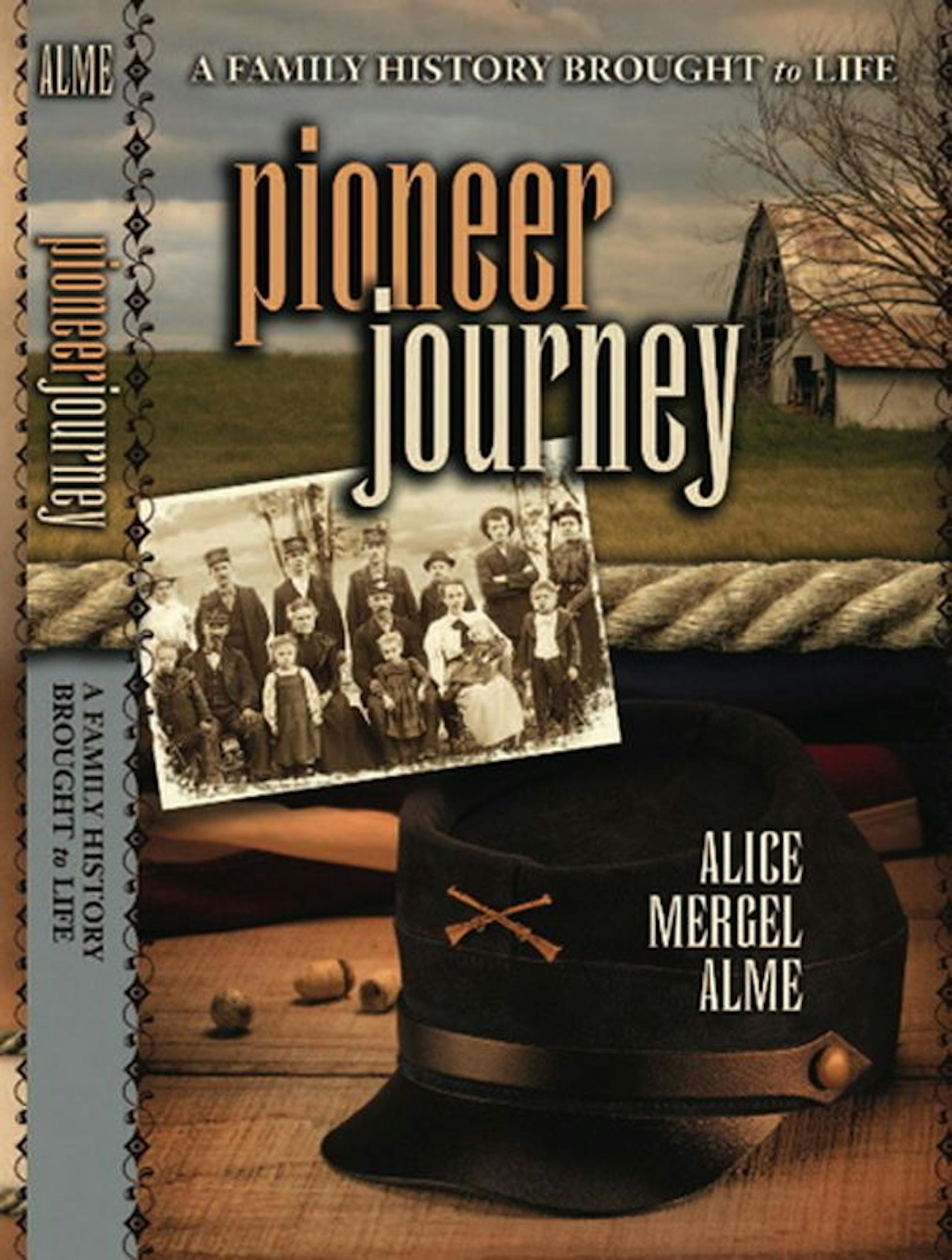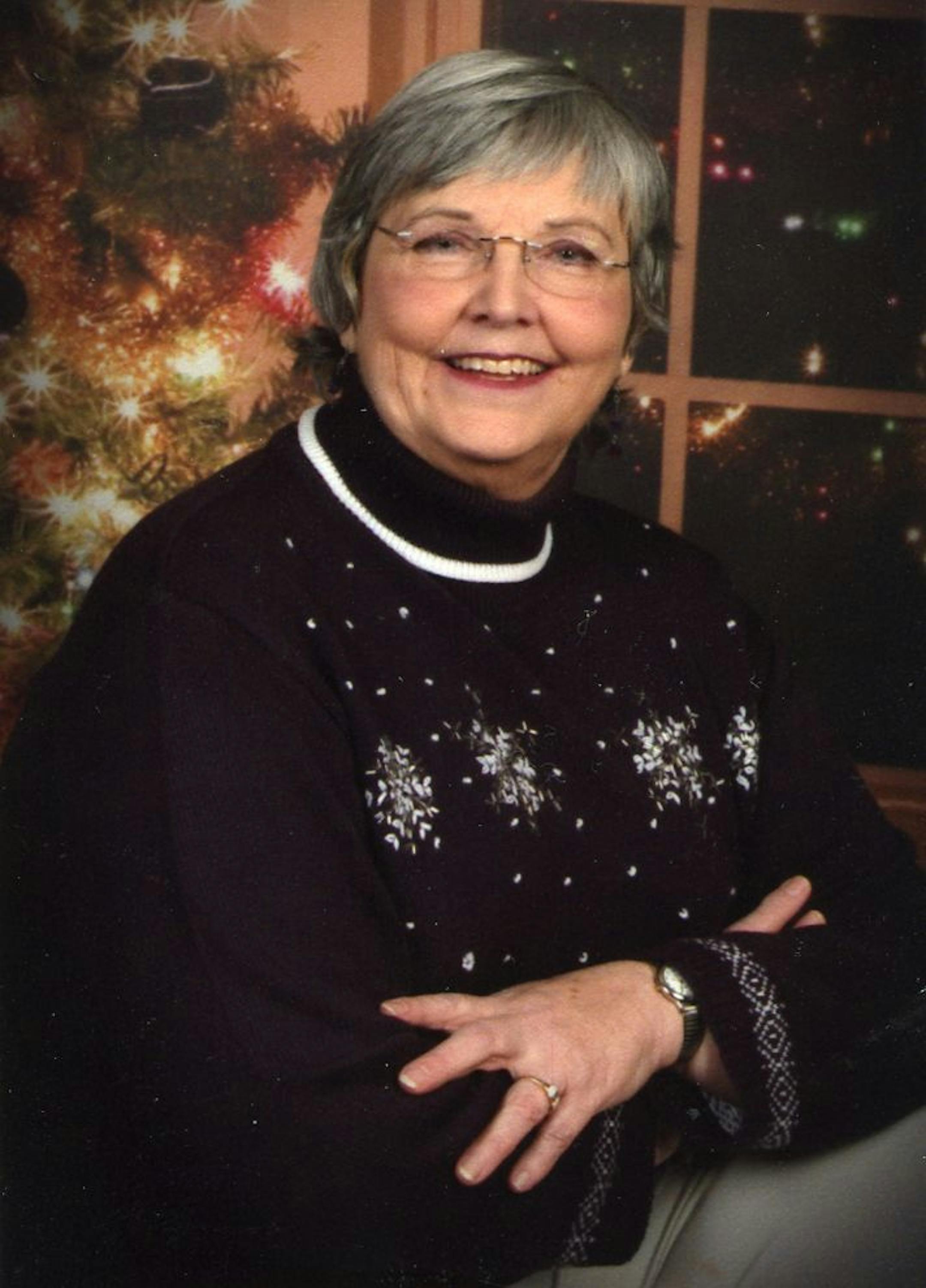
Alice Mergel Alme admits that she never had much of an interest in knowing her family history. But that changed three years ago when she attended a family reunion.
It was there that she volunteered to update the family registry, something that had not been done in nearly 40 years.
Alme, of Woodbury, is still trying to complete the family tree, but she has now produced "Pioneer Journey: A Family History Brought to Life," a book chronicling the early days of the Mergel family.
The book has a special focus on the lives of Alme's great-grandfather Henry, who served in the Army during the Sioux Uprising in 1862 and the Civil War, and her great-grandmother Georgeanna.
"I never thought of myself as being an author," said Alme, 71, whose self-published book was released on Aug. 5 by Jadestone Press. "I got on ancestry.com and saw a message from someone asking about the William Mergel family. I started talking to people who remembered Henry and Georgeanna, and I saw a picture and that enticed me to do more research."
Intrigued, she set out to learn everything she could about Henry and Georgeanna. For more than two years, she camped out in libraries, courthouses and historical societies, pouring through documents, journals, newspaper articles and novels on Minnesota and Civil War history. She collected volumes of information about the Seventh Minnesota Regiment, of which Henry was a member, to track him during the war. She studied family records and the Internet to learn about the family's past, then wove that information into a tale that vividly captures the war and the deep impact it had on family members who settled near Benton and Sherburne counties in central Minnesota.
"This is about my family, but it could be any family who lived in that time frame," Alme said. "This is for anybody who is interested in Minnesota history and the pioneers moving west."
The book has two sections, one devoted to Henry and the other to Georgeanna. Each section is penned from the letters and journals they wrote to their children, with historical details and scenes taken from novels and historical documents used to fill in the gaps. At one point, Alme advises readers who don't care for violence to skip chapters relating to the Civil War, but she makes no apologies for its inclusion.