

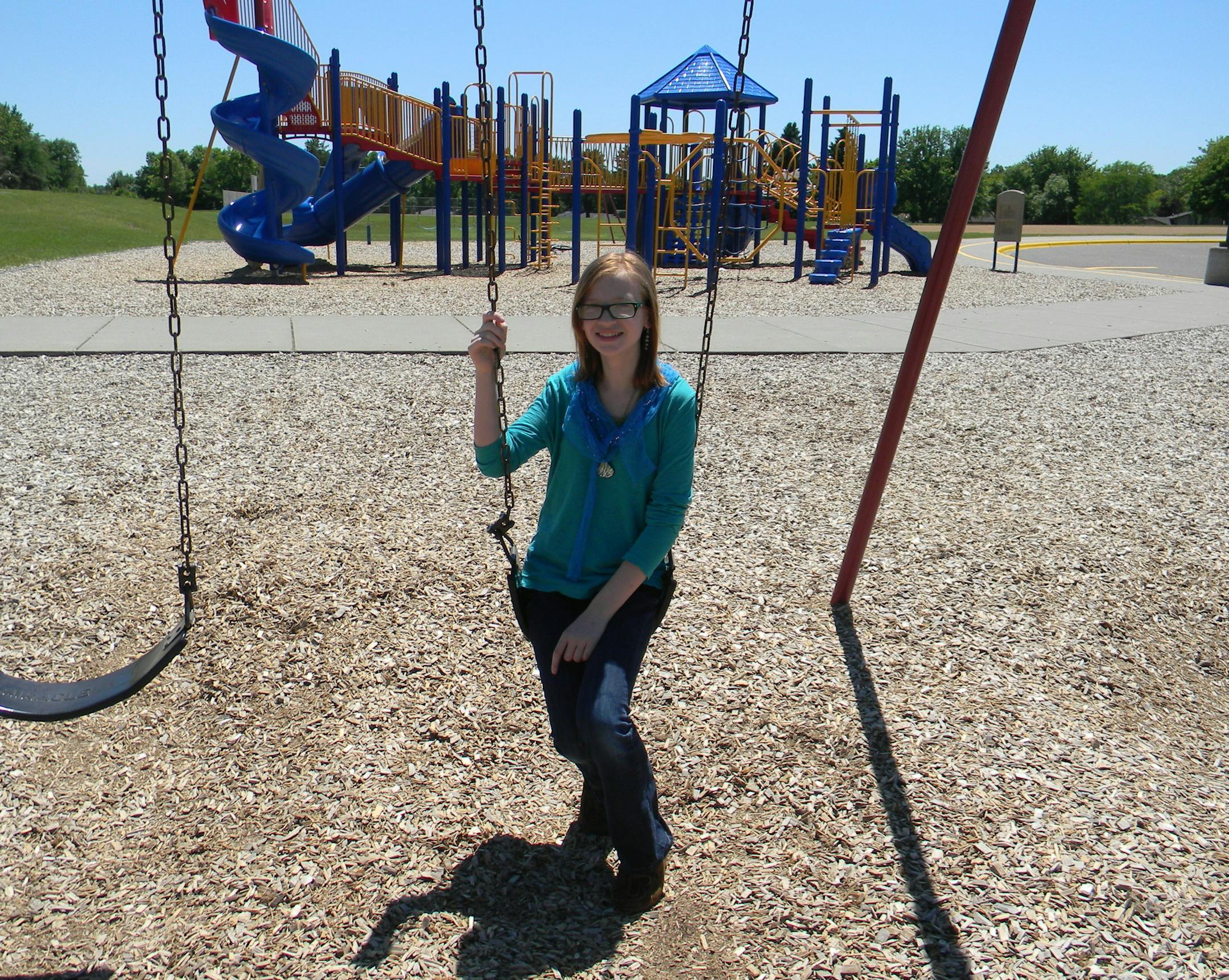
When Emily Weinlick first volunteered at a children's home in East Africa, she brought several suitcases stuffed with toys to share and clothes that her 12-year-old body had outgrown. The next time she visits, she could bring an entire playground.
Last summer, Emily traveled with her mother, Elizabeth Weinlick, from their Woodbury home to Arusha in northern Tanzania. They volunteered for two weeks at Living Water Children's Centre, a home that provides care and education for children whose lives have been affected by malaria and HIV.
What started as a short trip that Elizabeth thought would give her "special bonding time" with her daughter sparked a deep desire to help others. Now, Emily is working with Kids Around the World, a charitable organization that refurbishes old playgrounds for communities in need, to raise $20,000 to purchase a playground for her friends in Tanzania.
While Elizabeth worked alongside the center's nurse, Emily, now 13, played with the children and taught classes, even substituting for a teacher who had become ill.
"As a child myself teaching, I thought maybe I could get them to a place an adult couldn't," Emily said.
Despite a lack of textbooks and basic school supplies, the teachers do their best with the materials they have, Emily said. In math class, for example, the teacher must hand-write every assignment for each student. Because there aren't enough pencils for every student, the children complete their schoolwork by sharing.
But what bothered Emily the most was the school's lack of play equipment.
"Yes, school books and pencils and clothing are important, but if a child can't play or imagine, they're not really a child," Emily said. Play is so crucial to the development of a child, she pointed out, that the United Nations recognized it as a child's right.


