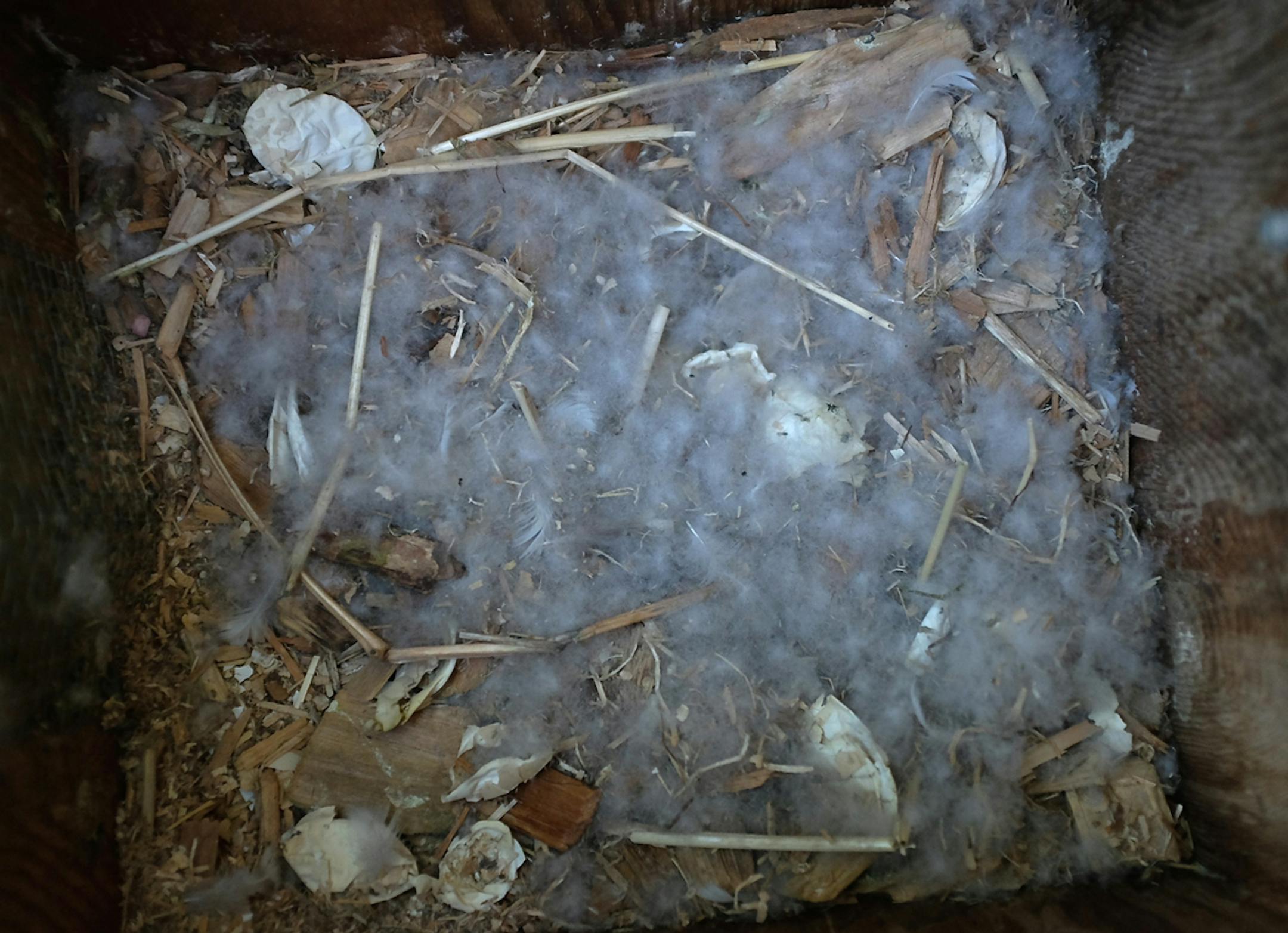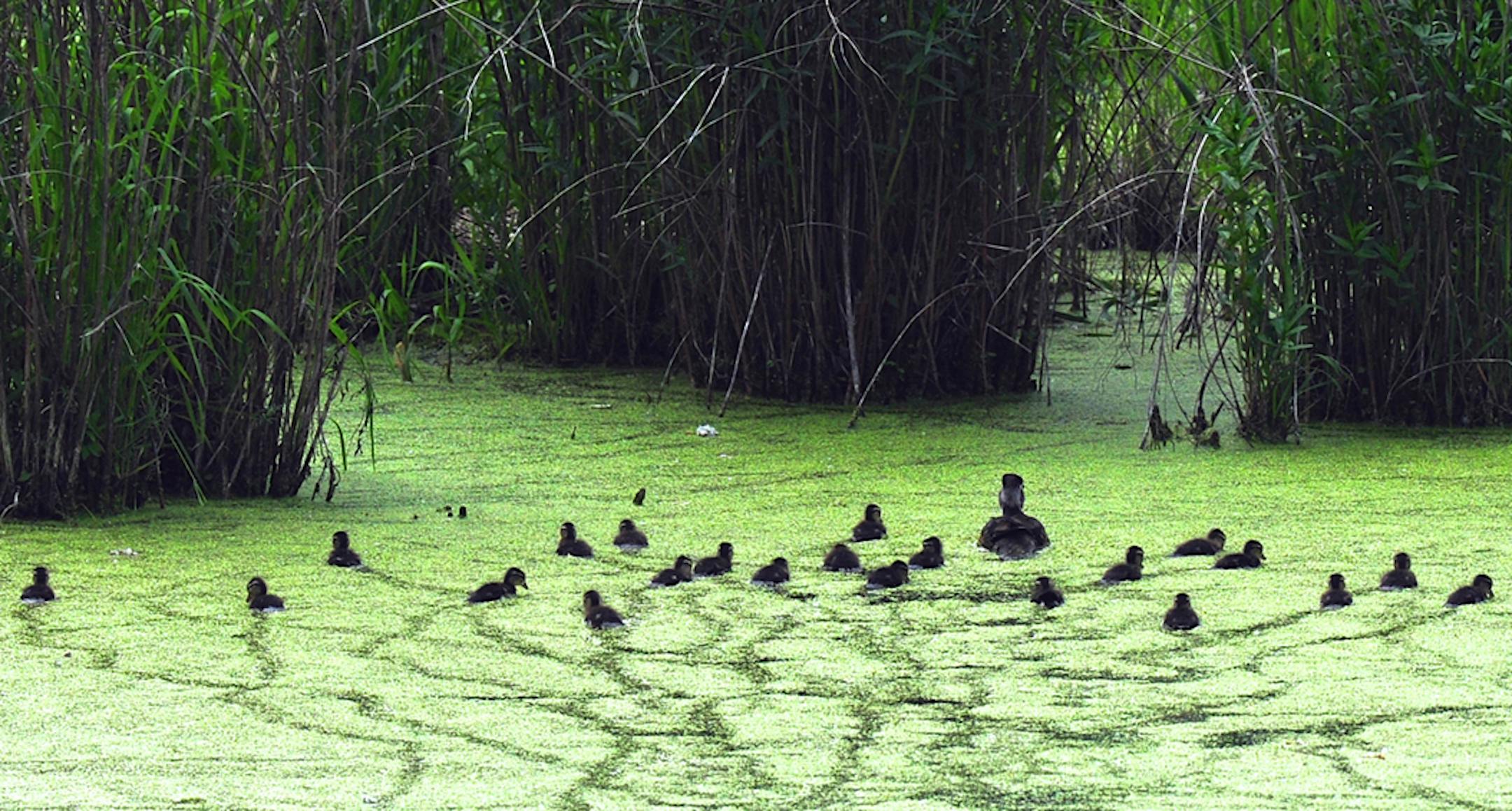
And then there were three: three half-grown wood ducks, survivors from a hatch of 25 eggs. The hen began motherhood with a flotilla of ducklings swimming behind her.
Prior to nesting season, we had five pairs of wood ducks on our little pond. A hen occupied one of our six nest boxes. That left five boxes for the other hens, which initially seemed like a fair division.
But wood ducks are notorious for what is called "dumping." Females mate, then use another hen's nest for laying. They skip nest-building and incubation, letting the designated hen take responsibility.
I think that happened to us — and to one unsuspecting hen.
Survival odds
The other ducks are long gone to places unknown, the parasitic hen(s) leaving her genetic future tucked beneath the chosen mom.
Future for little ducks, however, is an iffy proposition, certainly around here. Twenty-two of those babies disappeared, most likely down a fox or coyote gullet. We saw fox in our yard twice in the weeks after the hatch.
Predators, rough weather, temperature and food supply dictate duckling survival rates. Success varies, but it's commonly estimated that 30 to 40 percent of the brood will survive the first 90 days. We missed that mark widely.
Was dumping a bad survival strategy? If two or three other hens had raised their own ducklings, would the survival rate have been higher? Not necessarily. A study in Massachusetts found similar hatch rates for dump nests and normal nests — 26 percent for the former, 24-27 percent for the latter.