Women composers remain almost entirely unrepresented in the concert programs of major U.S. orchestras, including the Minnesota Orchestra.
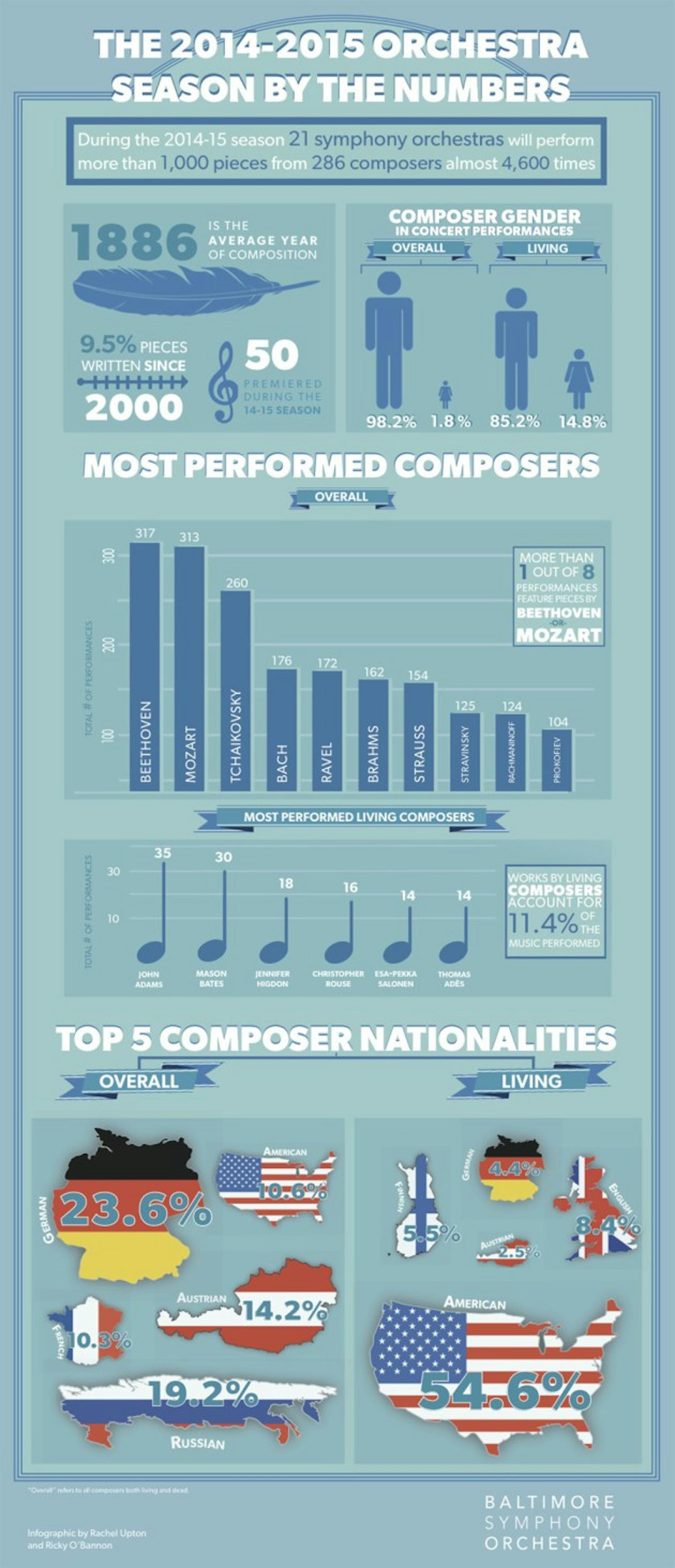
That is among findings of a new study by a writer attached to the Baltimore Symphony Orchestra. Ricky O'Bannon pooled the 2014-15 classical concert seasons of 21 orchestras and looked at ages of composers, whether composers were living or dead, and the countries of origin of composers being played.
Female composers represent 1.8 percent of the works performed. When looking at works by living composers, those by women increases to 14.8 percent. The current season at Minnesota Orchestra includes one work by a woman composer in its regular subscription season (Polina Nazaykinskaya's "Winter Bells," Nov. 13-15 ). Two women composers will be played in the Jan. 16 Future Classics program.
The BSO study determined that the average date of all compositions performed is 1886, and that 9.5 percent of all music performed was composed since 2000. American composers made up less than 11 percent of pieces performed. Additional details are illustrated below.