

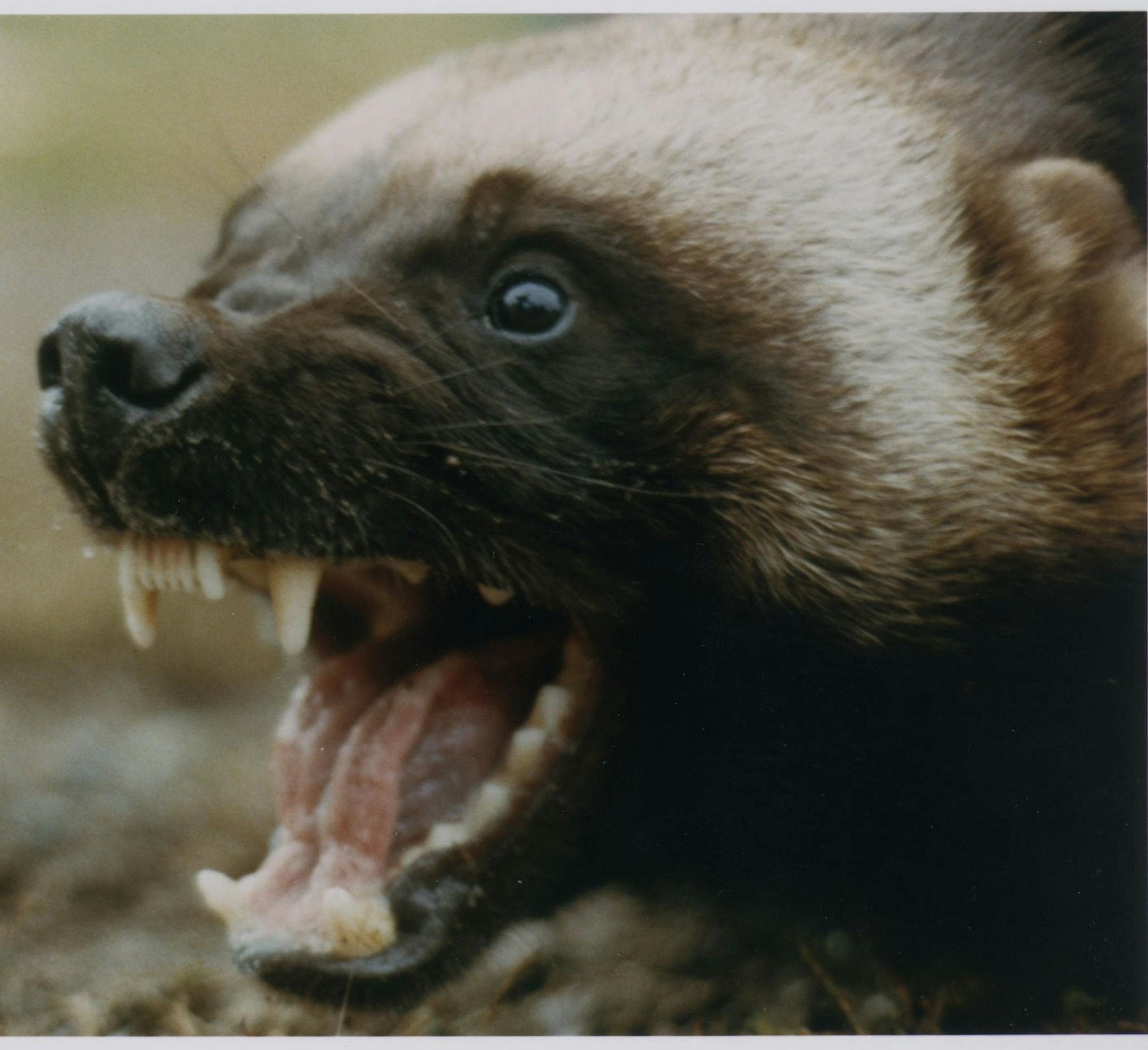
A U.S. Fish and Wildlife Service official has ordered federal biologists to withdraw their conclusion that the last 300 wolverines in the continental United States deserve threatened species status.
The biologists had recommended the protection on grounds that climate change is destined to destroy the near arctic conditions of the remaining animals' habitat — even though the population of about 300 has shown signs of slight growth in recent years.
Officials in three states where most of the animals are found — Wyoming, Montana and Idaho — vigorously objected. They argued that conclusions about the effects climate change will have on wolverine habitat are premature.
The states also warned that safeguarding the animals could have dire economic effects on recreational activities, development and trapping on large swaths of alpine terrain already locally managed for wolverines in their states. Noreen Walsh, a biologist and Fish and Wildlife director for the region that includes Wyoming and Montana, initially praised the biologists' recommendation after it was issued in early 2013.
But the three states then raised questions about the degree to which wolverines are dependent on deep snow in the spring for security and a thermal buffer for kits. The states also were skeptical that scientists could accurately measure the impact of warming temperatures on wolverine behavior and habitat.
A listing as threatened under the Endangered Species Act would protect U.S. wolverines as a population segment geographically separated from those in Canada and Alaska.
Fish and Wildlife Director Dan Ashe is expected to make a final determination on the matter by Aug. 4.
Los Angeles Times


