

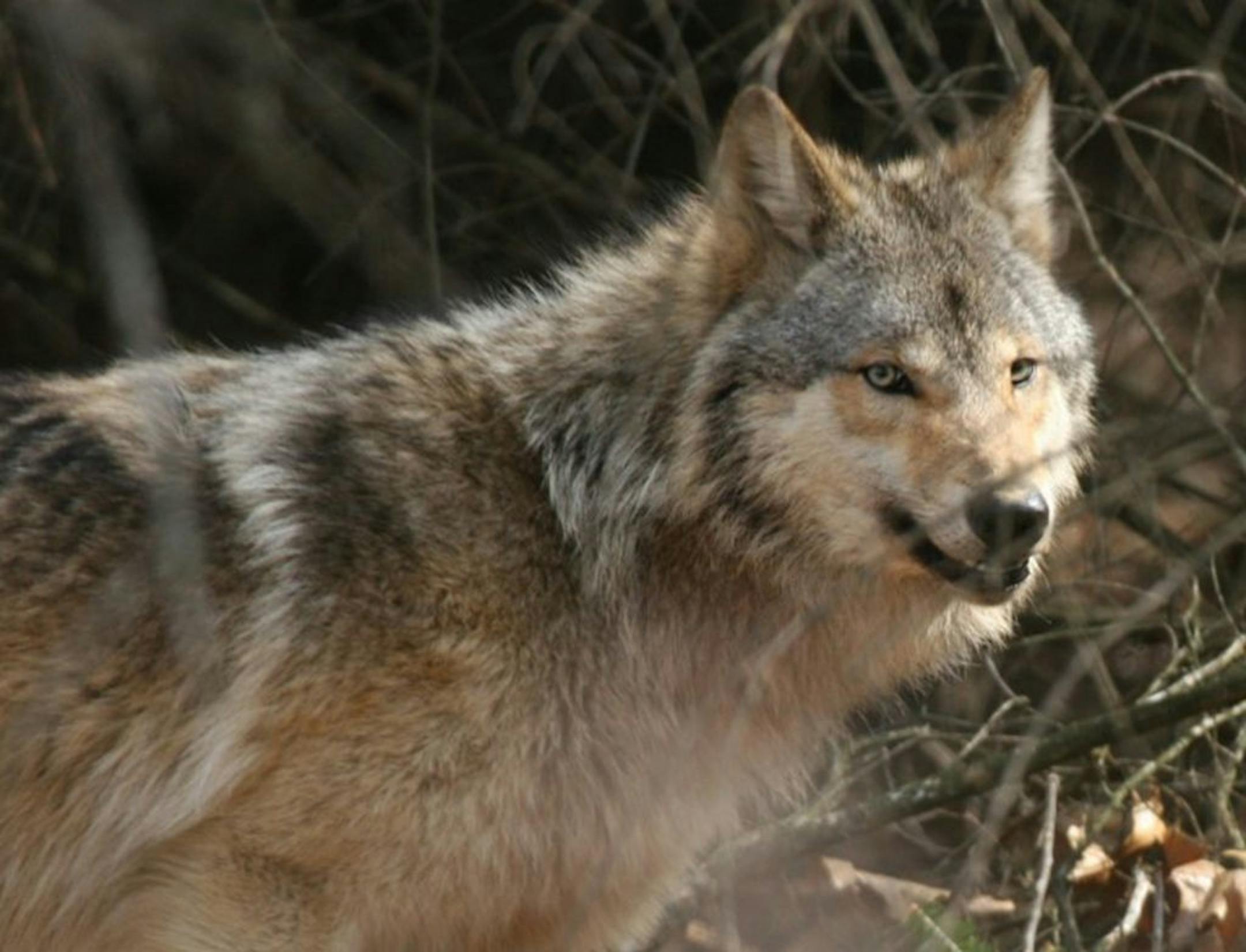
Minnesota's statewide target harvest of wolves will be 220 this fall -- 180 fewer than last season, the Department of Natural Resources announced Monday.
A smaller Minnesota wolf population means fewer hunting and trapping licenses will be available when the wolf season opens Nov. 9.
Starting Thursday, hunters and trappers can apply for 2,000 early-season and 1,300 late-season licenses. That's a reduction from 3,600 early-season and 2,400 late-season licenses in 2012. The deadline to apply for the hunting and trapping license lottery is Thursday, Sept. 5.
Here's more from the DNR's news release.
"The changes are a management response to the most-recent wolf population estimate," said Dan Stark, the DNR's large carnivore specialist. "As with other game species DNR manages, adjustments are made to regulate hunting pressure and harvest to ensure long-term population sustainability and provide hunting and trapping opportunities."
Minnesota continues to have the largest wolf population in the lower 48 states. The DNR's 2013 wolf population survey estimated 2,211 wolves last winter compared to 2,921 in the winter of 2008. The most-recent estimate does not include the birth of as many as 2,600 wolf pups this spring, some of which will survive into winter and be counted in next year's population.
"DNR's population survey confirmed Minnesota's wolf population remains firmly established on the landscape," Stark said. "We can manage seasons for a sustainable population of wolves like we do for dozens of other game species."
The DNR manages wolf harvest, in part, through a system of hunting zones. The target harvest in the northwest zone is 145, down from 265 in 2012. The target harvest in the northeast zone is 65, down from 133. The east-central zone target harvest is 10, down from 18. With the possible exception of the east-central zone, those harvest targets will be split between the early and late seasons.


