
With voter ID, state would be in compliance

Constitution requires an eligibility check -- and it's not happening now.

September 4, 2012 at 3:56PM
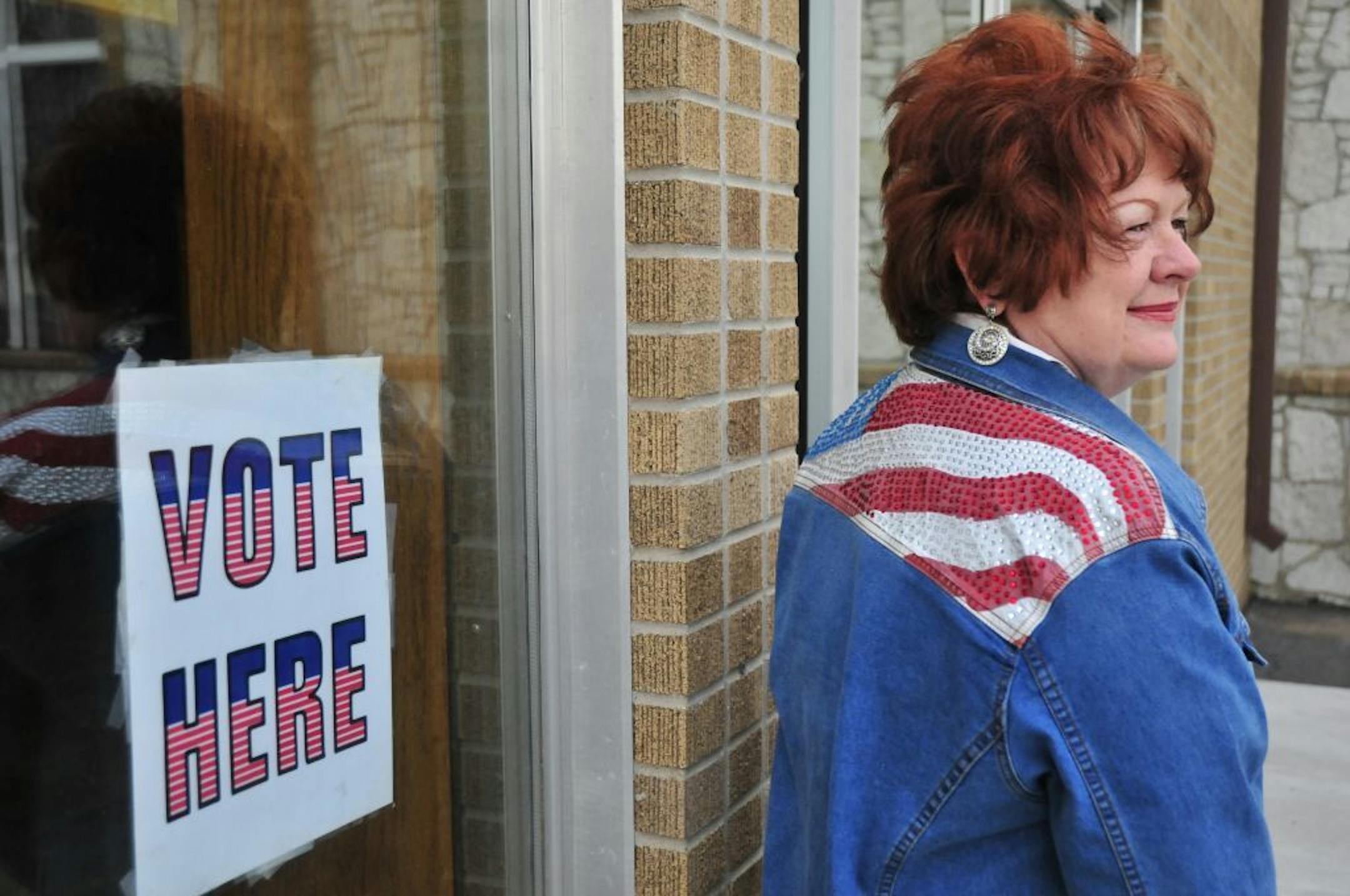
Barbara White outside a polling station at The First Church of the Nazarene in Shawnee, Okla., March 6, 2012. Republicans cast their votes in 10 states on Tuesday to help decide how to award the biggest batch of delegates so far in the party's presidential nominating contest, with Mitt Romney and Rick Santorum engaged in a particularly competitive fight in Ohio.
Barbara White outside a polling station at The First Church of the Nazarene in Shawnee, Okla., March 6, 2012. Republicans cast their votes in 10 states on Tuesday to help decide how to award the biggest batch of delegates so far in the party's presidential nominating contest, with Mitt Romney and Rick Santorum engaged in a particularly competitive fight in Ohio. (Associated Press/NYT/The Minnesota Star Tribune)

Counterpoint

Lori Sturdevant, in her recent assessment of the photo ID debate ("Same-day registration for voters is on the block," March 25), joins Gov. Mark Dayton, Secretary of State Mark Ritchie and other critics of the proposed constitutional amendment in especially bemoaning the provision requiring that all voters be checked for eligibility before their votes are counted.

As amazing as it may seem, this November the state of Minnesota is set up to do what it has done since 1974. Namely, it will stop accepting and checking the validity of new voter registrations 20 days before the election and then, on Election Day, allow more than 500,000 people to register and vote without doing any checking of their eligibility beforehand.

A lawsuit was filed in federal court on Feb. 28 by the Minnesota Voters Alliance. The suit makes the case, among other arguments, that the Minnesota Constitution already requires the state to confirm the eligibility of all voters prior to counting their votes. Article VII, Section 1 says that ineligible persons "shall not be entitled or permitted to vote at any election in this state."

That language burdens the state with the duty to affirmatively determine which citizens are eligible and which are not, and to "permit" only eligible persons to vote.

Under current law, the state does not meet this duty. It effectively waives the constitutional eligibility requirements for hundreds of thousands of voters who register on the day of the election by counting their ballots, whether eligible or not. The destructive flaw is that the state will never be able to confirm the eligibility of thousands of election-day registrants.

This breach of constitutional duty undermines the integrity and certainty of election results in a state with a long history of close elections. Citizen groups such as Minnesota Majority have estimated that more than 1,500 ineligible felons voted in the 2008 election. In 2010, the Minnesota Freedom Council found court records revealing ineligible persons under guardianship court orders in Crow Wing County who were assisted in registering and voting even though the state never should have permitted them to do so.

And recently, the Minnesota Voters Alliance analyzed voting records obtained through a Data Practices Act request and found that thousands of people who registered to vote on Election Day in 2008 cannot be confirmed as eligible voters, even as late as today.

If large numbers of those people were ineligible, that severely undermines public confidence that eligible voters actually elected their candidates into office in 2008, a year that saw a U.S. Senate seat decided by 312 votes and two state House and one state Senate seat decided by less than 100 votes each.

Election-day registration (EDR) will not be eliminated by complying with the Minnesota Constitution and confirming voter eligibility prior to counting ballots. Eligibility of new registrants can be confirmed from the precinct polling place using today's technology -- or, as other states have done, with provisional ballots.

Taking such measures will protect all eligible voters and, more important, the integrity of the election results. Everyone eligible to vote will have their vote counted.

While no policy -- including the one providing the convenience of registering on an election day -- can trump the Minnesota Constitution, it is comforting that in this day and age there is no conflict between the two. Minnesotans can have both election-day registration and election integrity.

Finally, we point out there is no evidence for saying that EDR is responsible for Minnesota's high national standing with regard to voter turnout percentage.

Looking at Minnesota elections since 1950, the two highest turnout years (1952 and 1960) occurred before EDR; the four lowest turnout years (1974, 1986, 1994 and 2010) occurred after it. In fact, the average turnout since EDR is about 3.7 percent lower than prior to EDR.

Our continued national ranking for election participation has less to do with government policy than with Minnesotans' laudable commitment to civic involvement.

---------------------

Andy Cilek is president of the Minnesota Voters Alliance.

about the writer

about the writer

ANDY CILEK

More from Commentaries

See More
card image
Carlos Gonzalez/The Minnesota Star Tribune

It seems like we’re now heading in the right direction under the leadership of White House border czar Tom Homan.

Opinion | What happens after our shock fades?

card image
card image