

Times have changed, and they've changed quickly. A few weeks ago, if you were hungry, you could go out and eat. Now, while you can (and should) still support your favorite restaurants by getting takeout, you're much more likely to be cooking most of your own meals.
Since many of us are also working from home, the opportunity to make dishes that require more time, and a little more attention, is now an option. I'm sure that's not news to most, as the baking section of most grocery stores is almost as empty as the toilet paper aisle.
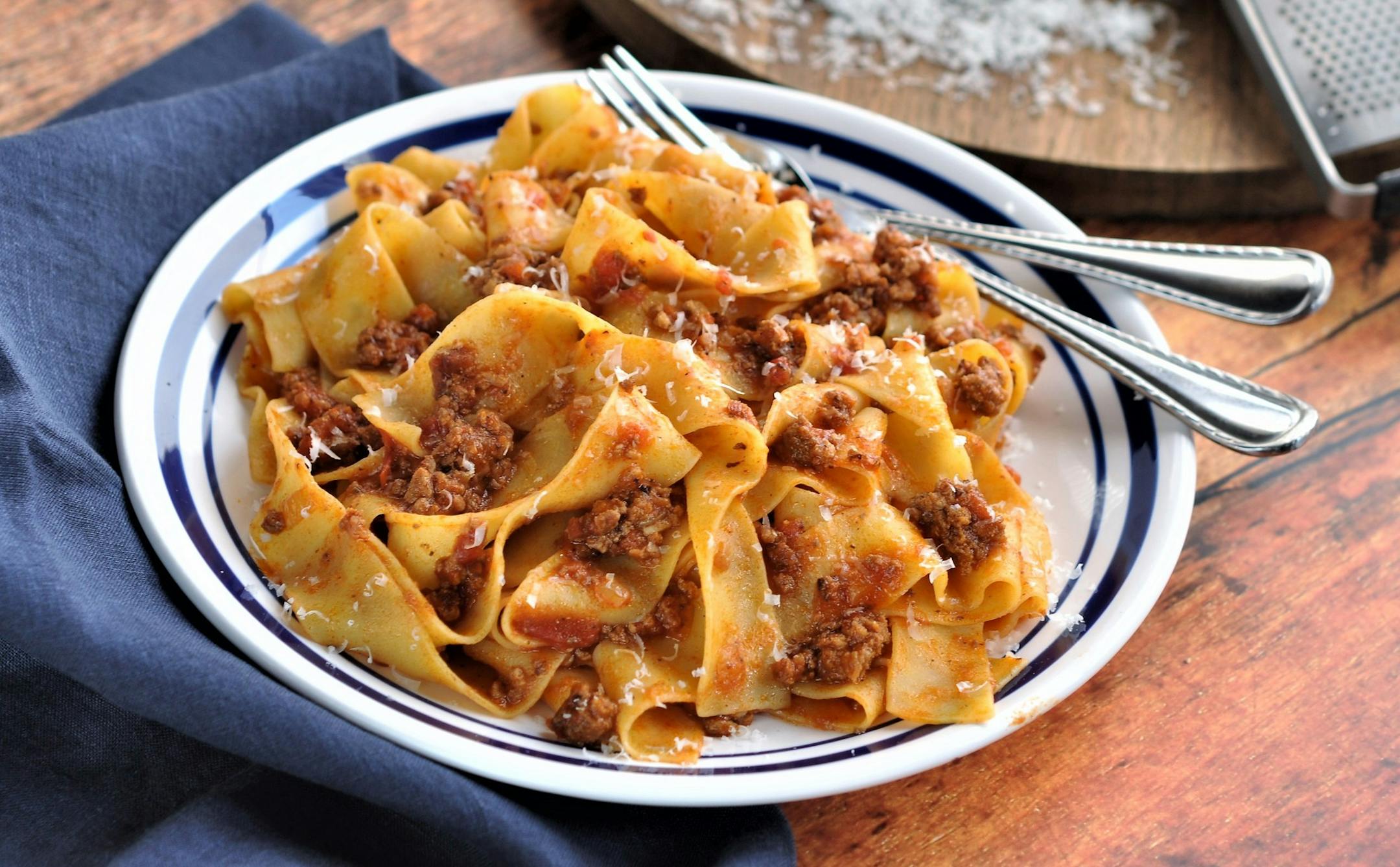
So, in order to offer inspiration to your inner chef, over the next few weeks I'll focus on recipes that benefit from a longer cooking time, but don't take so much babysitting that you can't get your work done, too. These recipes will be relatively inexpensive and family-friendly. This week's recipe, Slow-Cooked Bolognese, fits the bill perfectly.
Yes, you can make a solid marinara in under 30 minutes, but if you have the time to let a big pot full of meat and tomatoes, along with onions, garlic, wine and stock, simmer away, you'll be rewarded with a flavorful sauce that's perfect when tossed with a favorite pasta or layered into lasagna.
I start by lightly browning ground beef, pork and pancetta in a Dutch oven. Browning the meat too much creates a less tender result. If you don't have ground pork, you can use all beef. If you can't find pancetta, Italian cured pork belly, you can use its smoked American cousin, bacon. It's not as authentic, but the underlying smokiness is not a bad thing.
To the meat, a mélange of chopped vegetables is added and sautéed until softened. Then tomato paste is stirred in and cooked until its dark red color turns into a rusty brown. The color change indicates caramelization has happened, and that process results in much bigger flavor.
One ingredient that's standard in a classic Bolognese is milk. While that may seem like a strange choice for a tomato sauce, it adds an element of creaminess, and is thought to make the meat more tender. Finally, dry white wine (preferably one that's not oaky) is added and reduced. I've made it with red wine, too, and that's also good, as long as it's dry.
Canned whole tomatoes, satisfyingly crushed with your fingers as they're being plopped into the pot, and chicken stock are the final ingredients added before the long simmer begins. It only needs to be stirred occasionally, so feel free to finish whatever spreadsheet or report you're working on.

