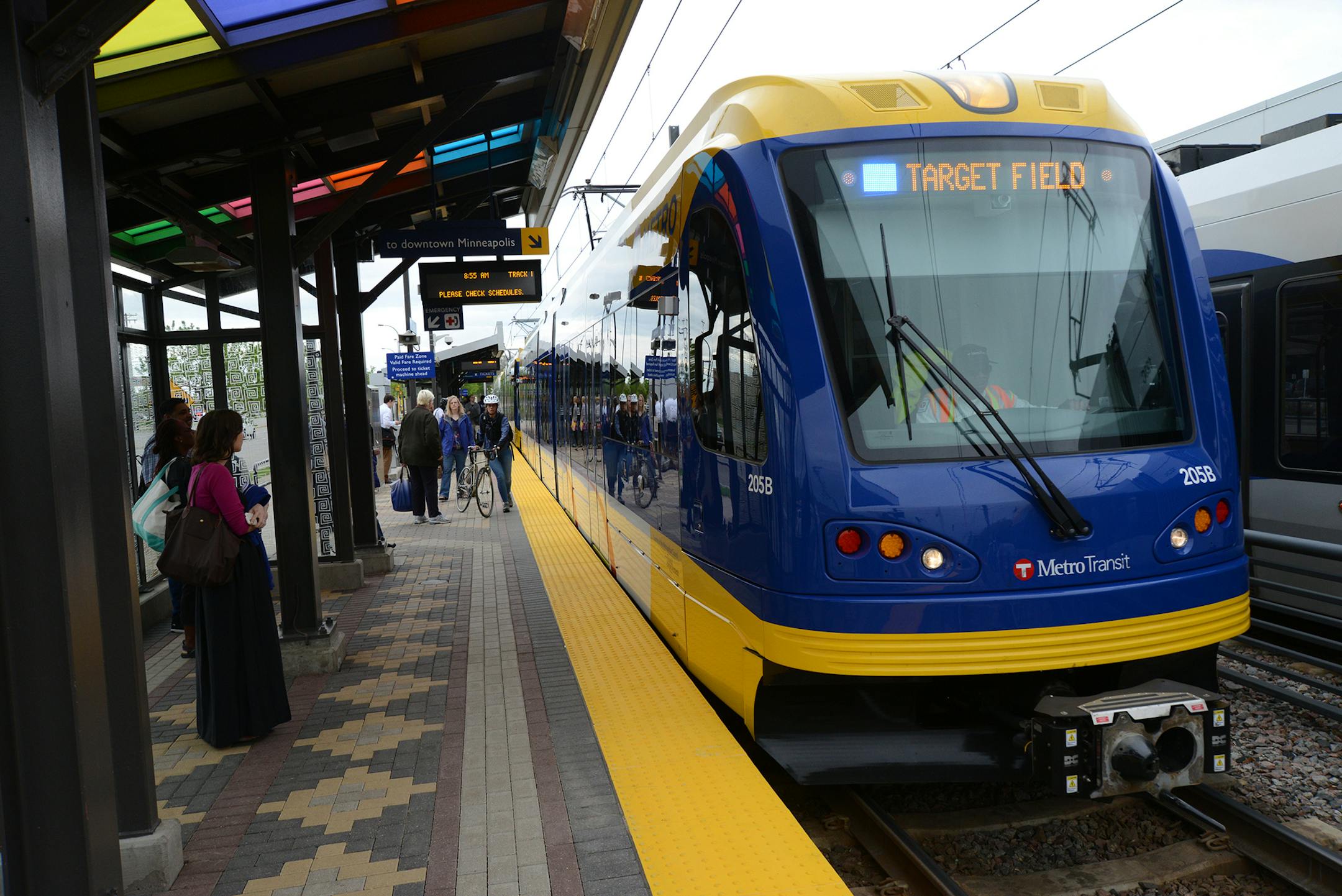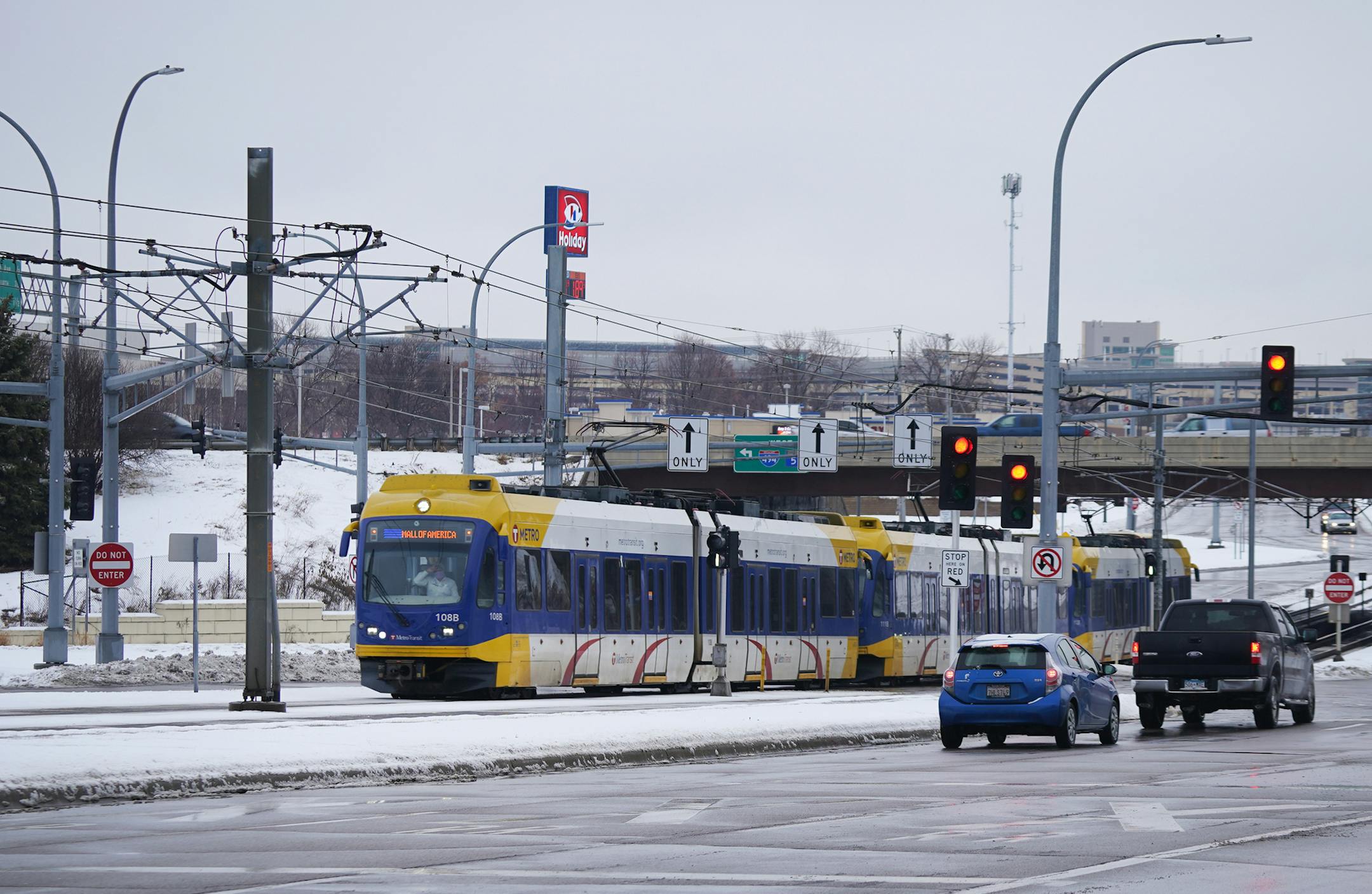
Signal upgrades that give Blue Line trains more time to get through intersections without having to stop are boosting on-time performance and making for more reliable trip times.
Metro Transit replaced outdated equipment at 10 intersections in Bloomington with new technology that improves communication between traffic lights for motor vehicles and the system that controls trains. The technology can detect when a train is approaching an intersection and give it a longer green light to keep trains rolling, said Metro Transit engineer and project manager Ryan Heath.
Motorists and pedestrians are benefiting, too, with fewer delays and a more consistent traffic flow, said Kirk Roberts, a traffic engineer with the city of Bloomington, which along with the Metropolitan Airports Commission partnered with Metro Transit to carry out the three-year project.
"Drivers will notice more predictable operations and better safety," Roberts said.
Blue Line trains, which run from downtown Minneapolis to the Mall of America, have been making it between the American Boulevard and Terminal 2-Humphrey stations about 15 seconds faster since late last year when Metro Transit completed the work. That may not seem like much of a difference, but "when we save time, [riders] save time," Heath said.
A holdup on the south end of the 12-mile line directly impacts what happens upstream. A northbound Blue Line train arriving in downtown Minneapolis even just a tad late, for example, could interfere with the arrival of a westbound Green Line train and cause a delay. The two lines share tracks from the east end of downtown near U.S. Bank Stadium to Target Field on the west end.
Technology dating to the early 2000s when the Blue Line was built — it started running in 2004 — made it hard to predict when trains would arrive at any particular point. Variability in stoplight timing sequences made it difficult to make a schedule, keep trains running on time and provide riders with any certainty of how long their trips would take, Heath said.
The new technology sends a traffic light a notification that a train is coming and determines how long it will take for the train to get through the intersection. The system can hold a red light for motorists to allow the train to pass — but only for a specified time, say a minute or less, not indefinitely, Heath said.