

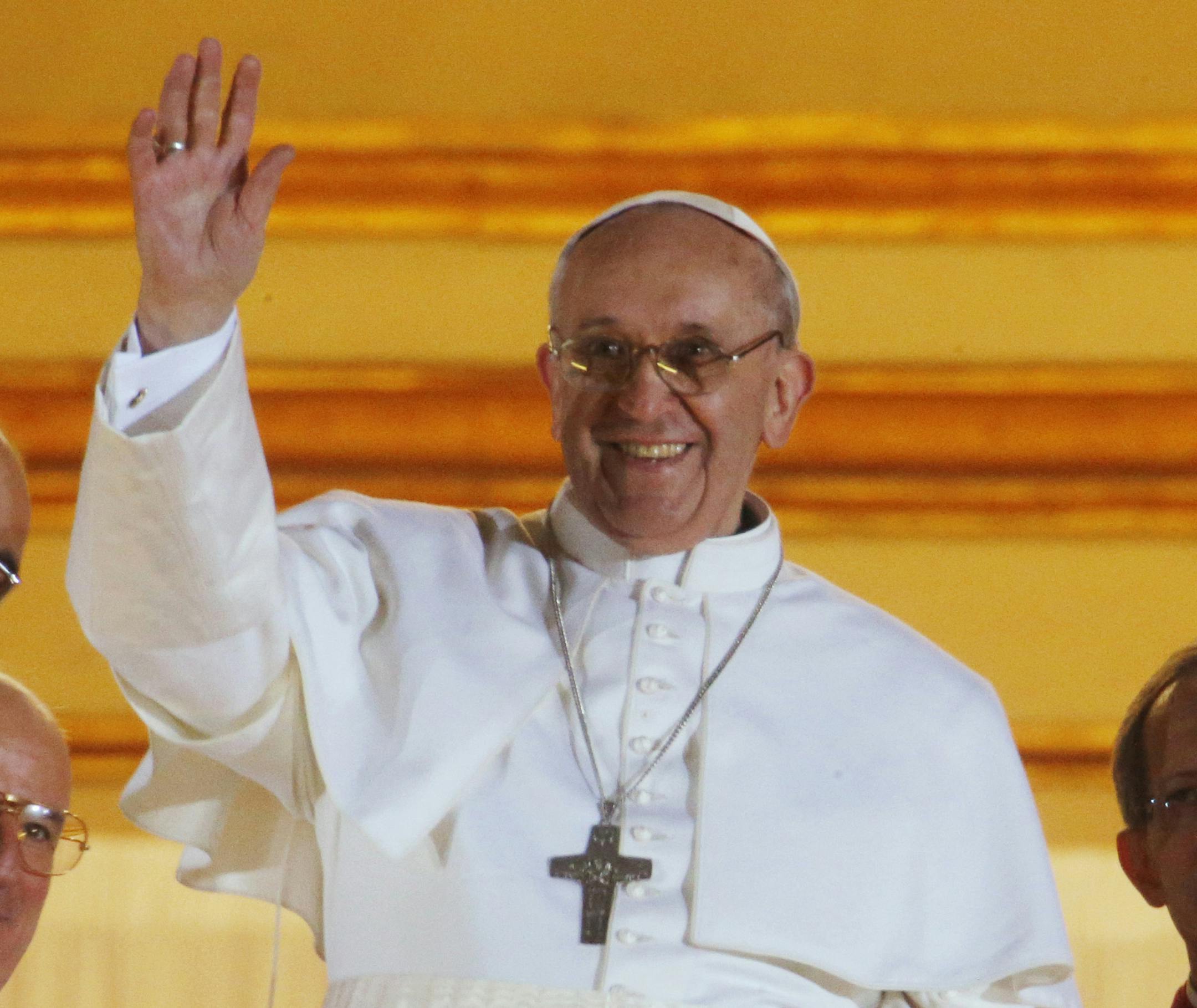
The choice of Argentine Cardinal Jorge Mario Bergoglio as the 266th pope is a bold embrace of the wide multiculturalism and global reach of the 1.2-billion-member Catholic Church, with nearly 40 percent of its members in Latin America and the Caribbean.
Pope Francis, 76, succeeds Pope Benedict XVI, who retired last month after a tumultuous eight years of leadership. Francis, a son of Italian immigrants, is the first South American pope and the first non-European pope in more than 1,200 years, signaling the church's recognition that its future is closely tied to the Southern Hemisphere.
Early in his papacy, Benedict's damaging gaffes regarding Muslims and Jews hurt the Vatican's image. Pope Francis brings the broader sensitivities needed in building bridges with Jews, Muslims and others to promote peace and reduce global conflict. But on social issues, such as homosexuality and abortion, he echoes Benedict's staunch opposition.
The new papal name possibly honors Francis Xavier, a Jesuit missionary, or Francis of Assisi, a beloved Catholic saint who renounced a life of luxury to live simply and prayerfully in service to others. That's powerful symbolism at a time the Vatican is under pressure from the European Union and others to reform its scandal-ridden bank.
But it's not just the bank that needs modernizing. Several U.S. cardinals rightly said Vatican operations need updating, including creating ways to penalize church leaders who shielded predatory priests. In recent Pew polls, clergy abuse scandals remain a leading concern of U.S. Catholics, the fourth-largest segment of the church.
Like any new pope, Francis will be challenged to foster unity in a church where Catholics aren't of one mind on theological or social issues. He'll need to walk that tightrope with political leaders, too.
His background suggests a conventional approach. As leader of the Jesuit religious order in Argentina in the 1970s, then-Cardinal Bergoglio steered priests away from political activism to more traditional spirituality, which is the path the Vatican has rigorously emphasized since the 1970s.
The fact that Bergoglio was widely thought to have received the second-highest number of votes in the 2005 conclave means the cardinals have likely chosen a pope who reflects the vision of his predecessors, Benedict XVI and John Paul II. All signs are that he's up to task bestowed on him.


