

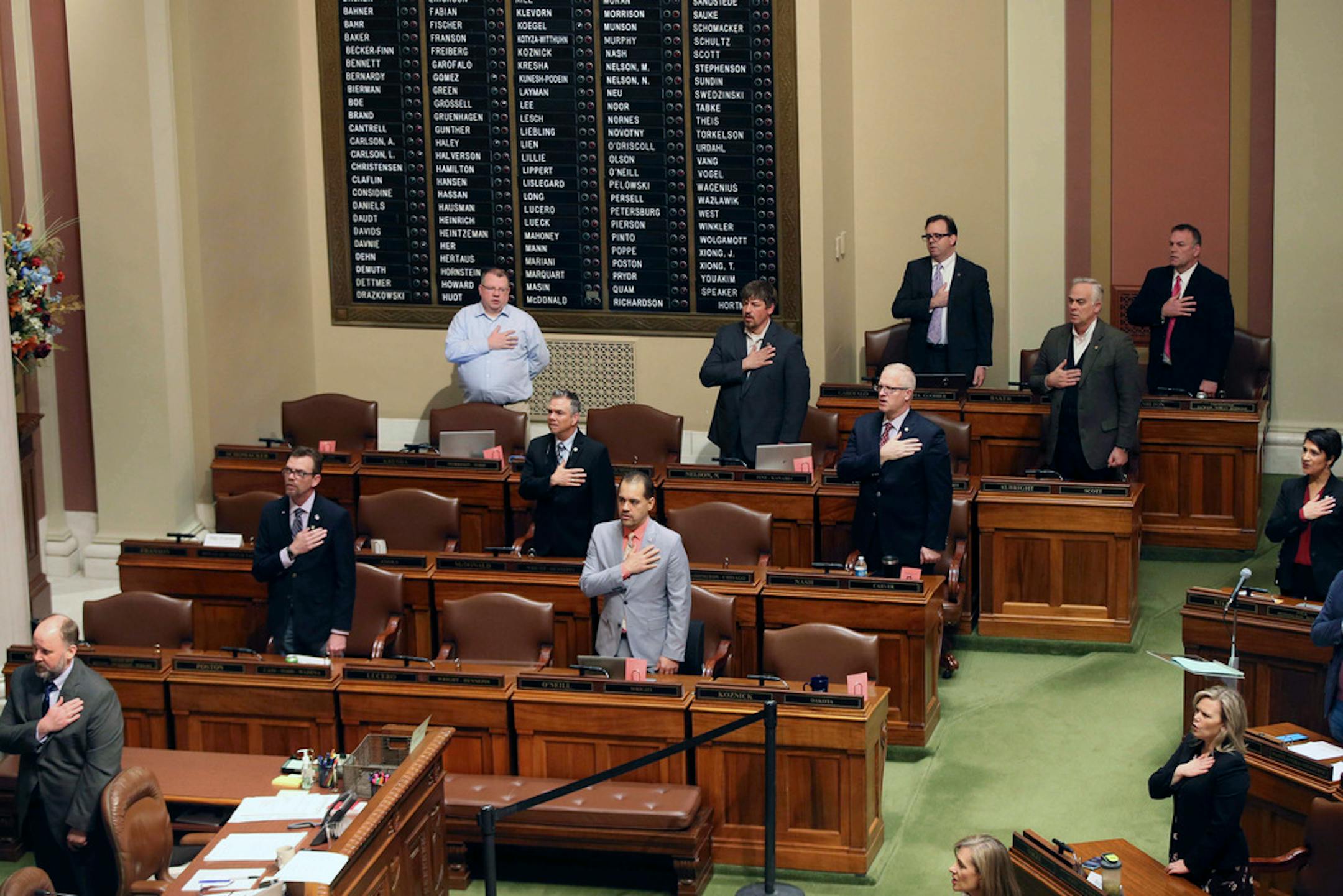
Even as the White House is up for grabs, the outcome of a handful of Minnesota legislative seats in November could change the state's political map for the next decade.
Minnesota's political boundaries will be redrawn next year, as they are every 10 years, using the 2020 population count as of Wednesday, April 1, known as Census Day. The process will likely be a central focus of the next Legislature.
Political parties and outside groups are gearing up to spend big on a small number of competitive state legislative races, especially in the Senate, where Republicans hold a three-seat majority. The DFL holds a 16-seat advantage in the state House and the governor's office.
Given the partisan redistricting battles of the past, which have often landed in the courts, both sides are girding for tough campaigns that could have implications for how legislative and congressional seats are carved up until 2030.
"The Senate has a narrow margin to begin with and it is the odd-one-out partywise with the governor and the House," said Gina Countryman, a longtime GOP strategist. "So I do think you'll see a lot of attention at making sure the [Republicans] stay in the Senate majority so there are guaranteed two parties at the table in these discussions."
Adding to the frisson of partisan feeling in 2020 is the possibility that Minnesota could lose one of its eight congressional seats, requiring a realignment of the remaining seven. Recent population estimates show the state could lose a seat because population growth in the region has lagged Sun Belt states such as Florida that are poised to gain clout in the 435-member U.S. House.
"Because we are on the bubble right now of losing a congressional seat, whether you're a Democrat or a Republican or an Independent, all Minnesotans should care about having representation in Washington," DFL Party Chair Ken Martin said. "If we don't have an accurate count, we could lose power or clout in Washington."
The results of the census also will influence how much federal funding the state gets, underscoring the importance of a full count in Minnesota, particularly in hard-to-count rural, immigrant and minority communities.
![The voting booths of Edison High School in northeast Minneapolis were full at one point during an evening rush Tuesday night. ] AARON LAVINSKY ¥ aaron.lavinsky@startribune.com
Primary elections were held Tuesday, August 14, 2018 in Minneapolis, Minn. We photograph DFL gubernatorial candidate Lori Swanson at her primary night party at Jax Cafe in Minneapolis.](https://arc.stimg.co/startribunemedia/MSLMT2UXJTVFCEQMY3WHYAOD6I.jpg?&w=1080)


