

LONDON - It's not that British athletes were unexcited about competing for Queen and country. It's just that doing so in one's own backyard -- and in the Olympics, no less -- can be rather daunting.
"Utterly terrifying," rower Andrew Triggs Hodge said Saturday, when he was asked about racing in the world's most high-profile sporting event on home turf. In true British style, Triggs Hodge maintained a stiff upper lip and did his utmost, winning a gold medal in the men's four at Eton Dorney. It has been no less a challenge for his countrymen to stage this global five-ring circus for the past nine days, but they are prevailing as well.
The Brits faced skepticism and doubt from within and without in the weeks before the Olympics began on July 27. Their overloaded transport system would crumble, their dreary weather would spoil the mood, their security plan would prove inadequate, their citizens would be indifferent. Those concerns turned out to be overblown during the Games' first week, and the problems they have endured -- empty seats, a slow start by the home team and a badminton scandal, of all things -- have not overshadowed a good show.
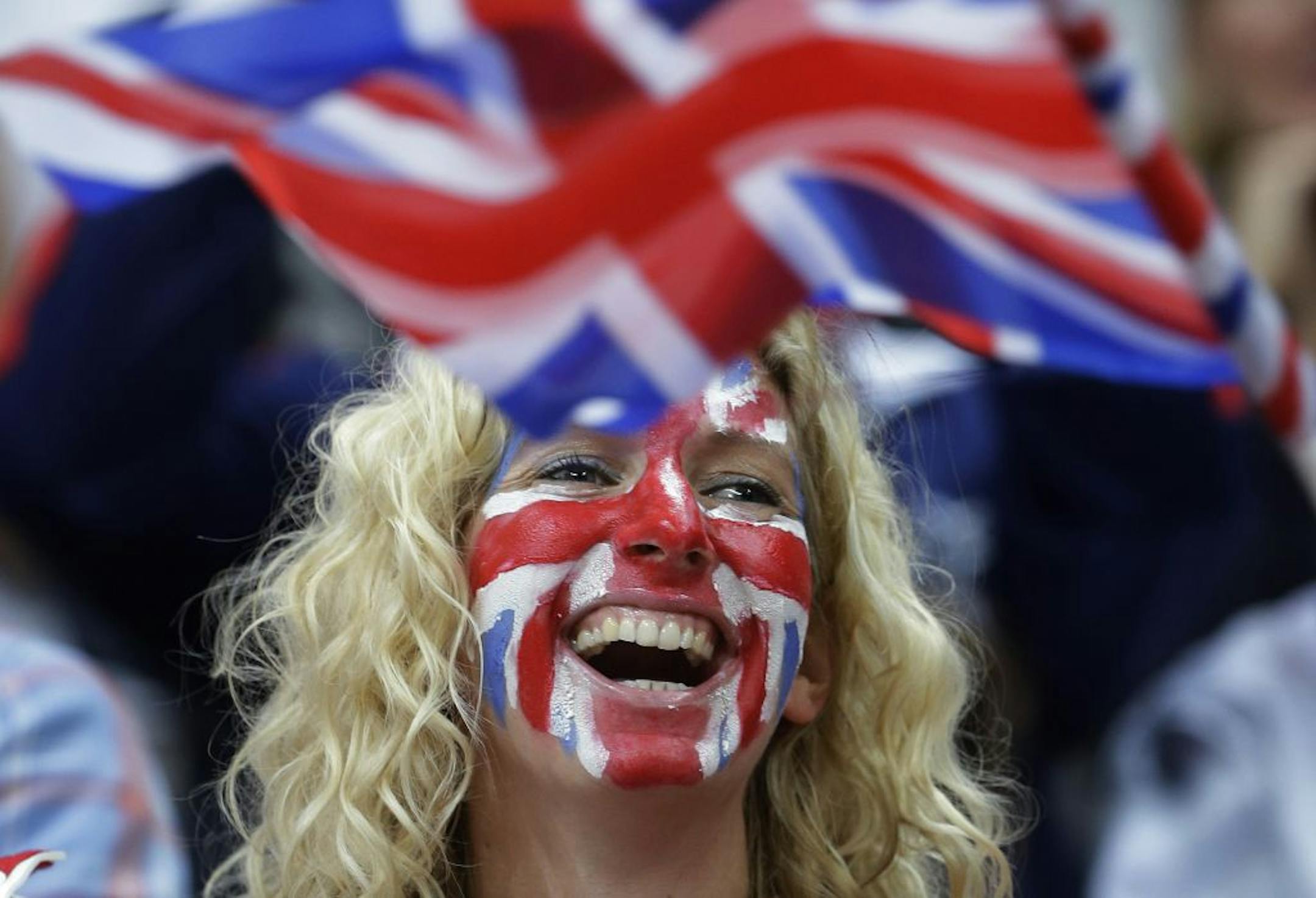
The famed British reserve has melted away to reveal endless good cheer, from organizers, volunteers and fans who have overwhelmed athletes with their enthusiasm. Michael Phelps' farewell tour -- and the American tsunami that produced 30 swimming medals, including 16 gold -- rocked the Aquatic Centre. Gymnast Gabby Douglas charmed, runner Oscar Pistorius made history and Team Great Britain roared to life, moving to third in the medals table behind the U.S. and China.
It all began with an Opening Ceremony that some foreigners decried as "too British." A huge hit inside the United Kingdom, the celebration of Britain in all its proud eccentricity shifted the mood of a public that seemed to approach the Games with some of the same trepidation Triggs Hodge felt.
Things were much different Saturday night, when track athletes Jessica Ennis and Mo Farah received their gold medals while thousands sang "God Save The Queen" in Olympic Stadium and in front of televisions all over London.
"I think people talk about the brave heart and the great lion heart of the British public, and I think people have seen that," said Jackie Brock-Doyle, director of communications for the London Organizing Committee of the Olympic Games. "We talk about the generosity of the spirit of the British, and I think that has really come to the fore over this first week."
The blocks of empty seats at some venues have caused the greatest furor. Despite a perception that Britons were not swept up in the Olympic spirit, their irritation that those tickets are not being made available to the public demonstrates otherwise.


