

The U.S. military destroyed a mock intercontinental ballistic missile thousands of miles over the Pacific for the first time Tuesday, a step forward for a missile-defense program that has taken on new significance in light of North Korean threats.
The ground-based midcourse defense (GMD) system used a 5-foot "kill vehicle" released from a larger ground-based interceptor missile to obliterate the mock ICBM, defense officials said. The mock threat was launched from the Ronald Reagan Ballistic Missile Defense Test Site in the Marshall Islands, and met by an interceptor launched from a silo at Vandenberg Air Force Base in California.
"The intercept of a complex, threat-representative ICBM target is an incredible accomplishment for the GMD system and a critical milestone for this program," said Navy Vice Adm. James Syring, director of the Missile Defense Agency. "This system is vitally important to the defense of our homeland, and this test demonstrates that we have a capable, credible deterrent against a very real threat."
The test was scheduled for last year, but pushed back as the Missile Defense Agency made engineering changes to the interceptor, according to a report from the Government Accountability Office released Tuesday. The problems prompted the Pentagon's top weapons tester, the Directorate of Operational Test and Evaluation, to assess last year that the ground-based midcourse system had demonstrated only limited ability to defend the country in part due to its low reliability.
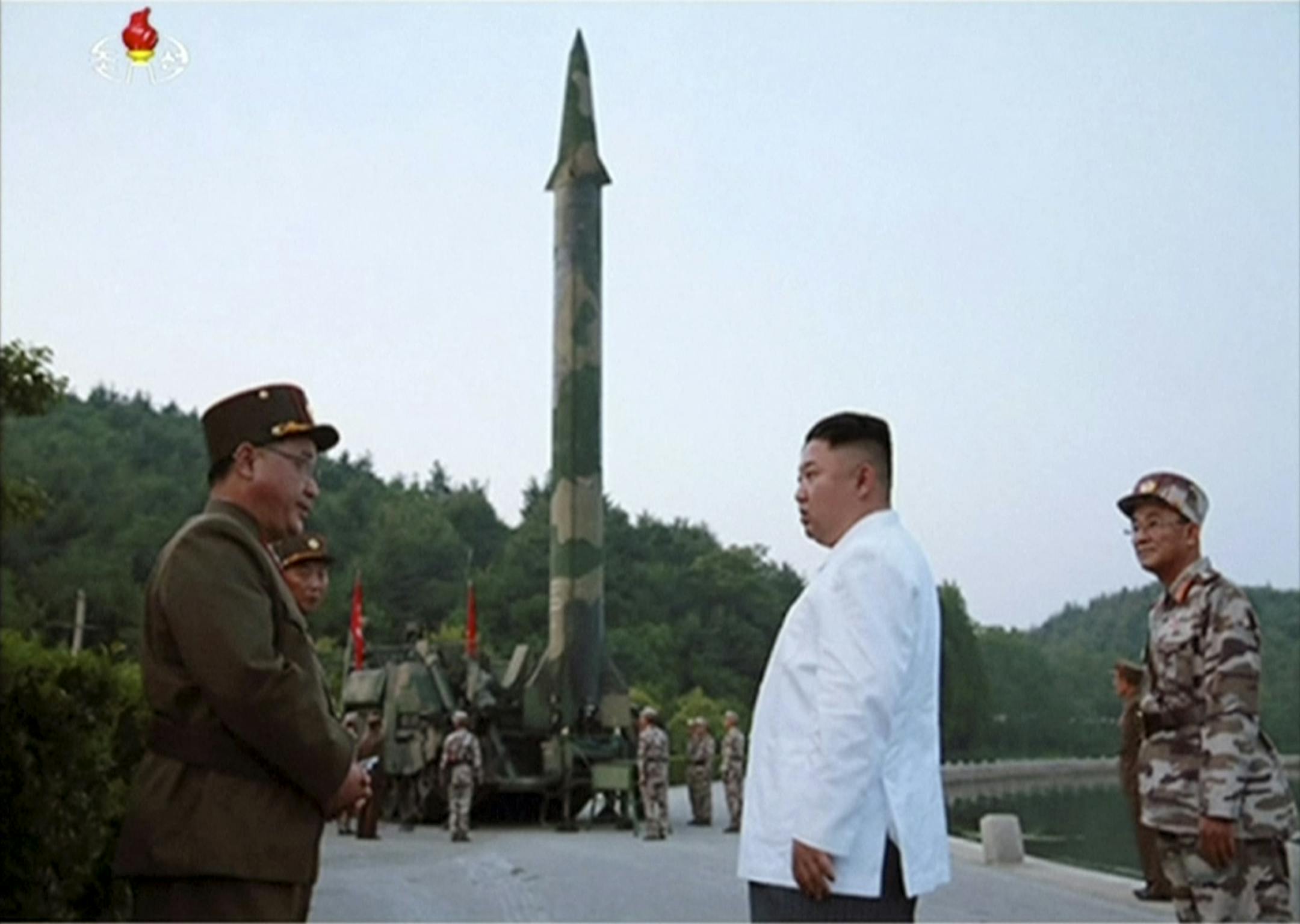
Navy Capt. Jeff Davis, a Pentagon spokesman, said before the test Tuesday morning that its timing is not tied directly to recent tensions with North Korea, which include Pyongyang continuing to carry out nuclear and ballistic missile tests and threatening to attack both U.S. bases abroad and the continental United States.
But "in a more broad sense," Davis said, "North Korea is obviously one of the reasons why we have this capability."
Davis played down the need for a successful test ahead of time.
"We improve and learn from each test, regardless of the outcome," he said. "That's the reasons we conduct them."


