

SAN DIEGO — The image of two charred American bodies hanging from a bridge as a jubilant crowd pelted them with shoes seared the name Fallujah into the American psyche. The brutal house-to-house battle to tame the Iraqi insurgent stronghold cemented its place in U.S. military history.
So it is no surprise that the city's recent fall to al-Qaida-linked forces has touched a nerve for the service members who fought and bled there.
Some call the news "disheartening," saying it revives painful memories of their sacrifice, while others try to place it in the context of Iraq's history of internal struggle since the ouster of dictator Saddam Hussein in 2003. As difficult as it is to see Islamist banners flying from government buildings they secured, they refuse to accept this as a permanent reversal.
"I'm very disappointed right now, very frustrated," says retired Marine Col. Mike Shupp, who was commanding officer of the regimental combat team that secured the city in late 2004. "But this is part of this long war, and this is just another fight, another battle in this long struggle against terrorism and oppression."
"I do not see this as the culmination of the failure of all of our efforts — yet," agrees Earl J. Catagnus Jr., who was wounded by an improvised explosive device in Fallujah and now teaches at a military college. "This is just one battlefield, one city in a host of battles that has been happening since 2003. It's just for us as Americans, because we've elevated that battle to such high standards ... that it becomes turned into the 'lost cause,' the Vietnam War syndrome."
In the annals of the Marine Corps, the battle over that ancient trading and cultural center on the Euphrates River certainly does loom large.
The fighting there began in April 2004 after four security contractors from Blackwater USA were killed and the desecrated bodies of two were hung from a bridge. The so-called second battle of Fallujah — code-named Operation Phantom Fury — came seven months later.
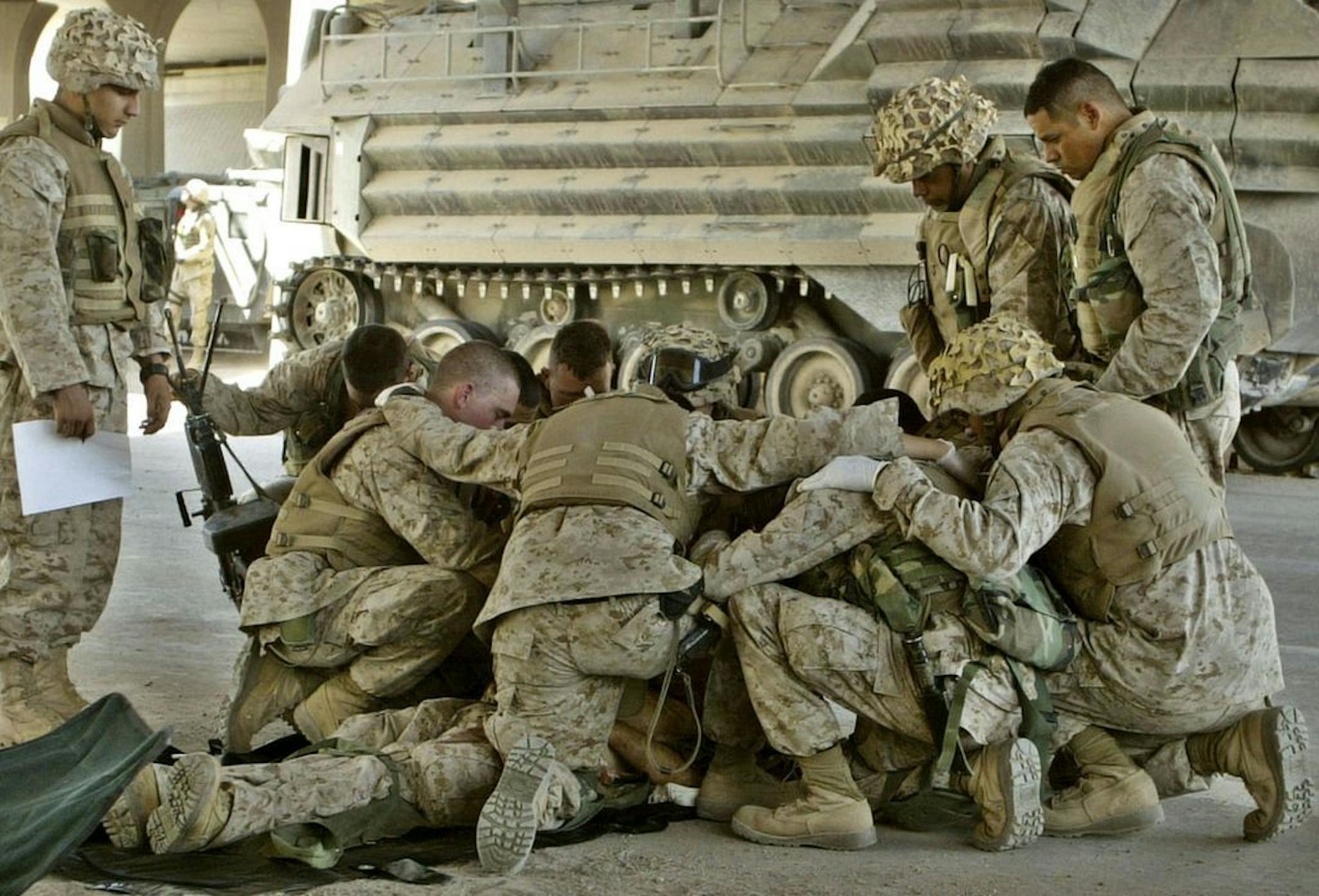
For several bloody weeks, the Marines went house-to-house, room-to-room in what has been called some of the heaviest urban combat involving the Corps since the Battle of Hue City, Vietnam, in 1968. Historian Richard Lowry, who interviewed nearly 200 veterans of the battle, likens it to "a thousand SWAT teams going through the city, clearing criminals out."


