
Wisconsin gears up for legendary bike race

North­west Wis­con­sin has be­come an in­ter­na­tion­al des­ti­na­tion for moun­tain bik­ers, thanks in large part to this week­end's Chequamegon Fat Tire Festival.

September 11, 2014 at 8:12PM
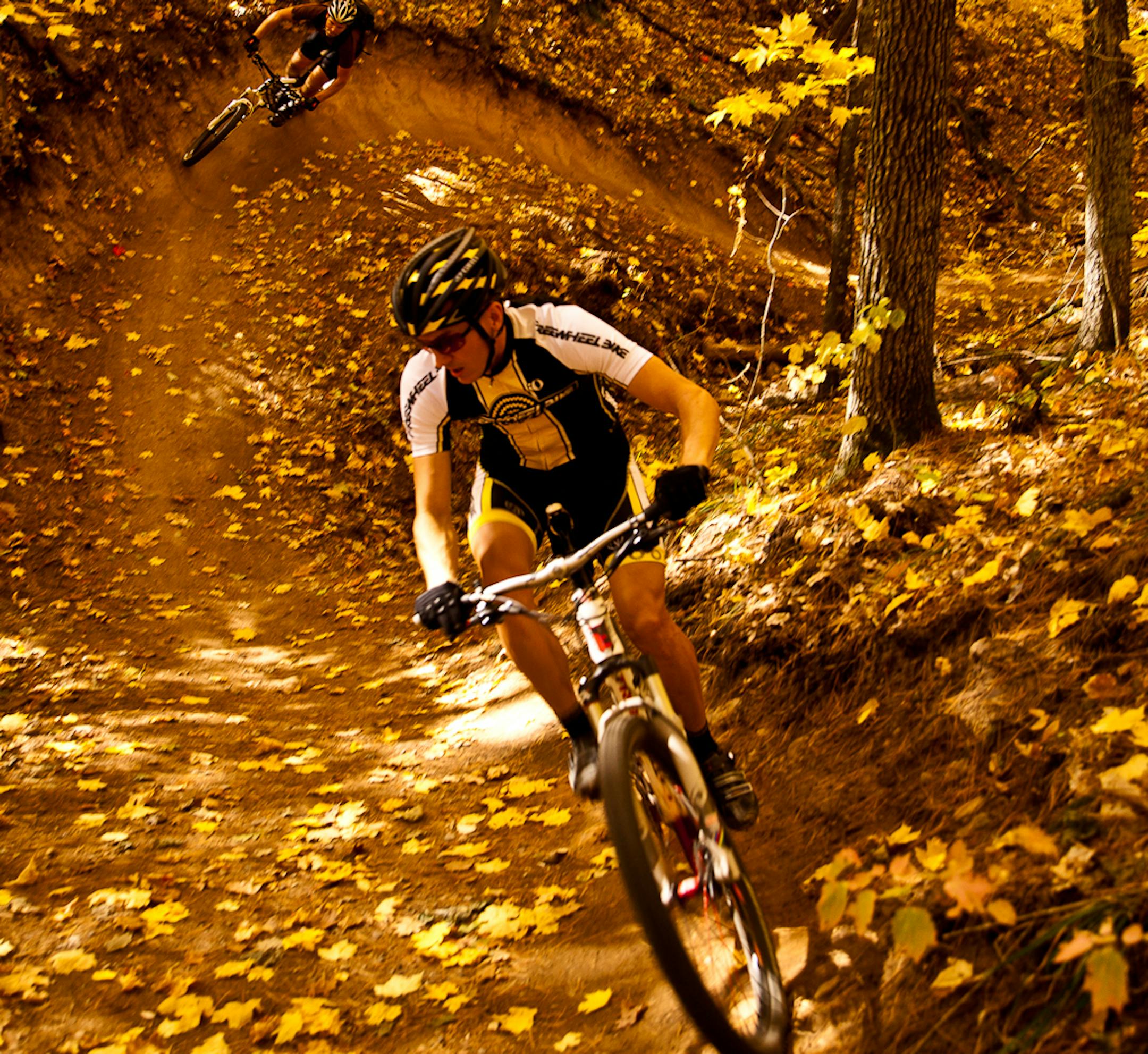
Photo by Hansi Johnson. Riders maneuver the "Gravity Cavity," a large gully offering roller-coaster-like rides along Wisconsin's Esker Trail.
Bikers maneuver the "Gravity Cavity," a large gully offering roller-coaster-like rides in northwest Wisconsin. (The Minnesota Star Tribune)

HAYWARD, Wis. — This Sat­ur­day, pas­sion­ate bi­cy­clists from across the coun­ty will line up el­bow to el­bow and about six blocks deep in this north­west­ern Wis­con­sin town.

To se­cure their place a­mong this col­or­ful sea of hel­mets and mois­ture-wick­ing clothes, the 3,100 rid­ers must first get through a lot­ter­y to earn a cov­et­ed spot at the Chequamegon ("Sha-wa-me-gon") Fat Tire Festival. It's America's big­gest mass-start point-to-point off-road bike race. And with 40 miles to go — most of them on the area's in­ter­na­tion­al­ly fa­mous Birkebeiner Trail — cyc­lists need to be well-trained and ready to ped­al hard.

"You can feel the wind push­ing in front of the rid­ers, and there's this buzz-of-bees sound of the gears," said race di­rec­tor Gary Cran­dall. "It's just charged with en­er­gy."

With ATVs guid­ing them and set­ting the pace, bik­ers will flow through town, down a high­way and across Ro­sie's Field where speak­ers blare "Flight of the Val­kyries" and "The Wil­liam Tell Over­ture" to launch them into the area's gor­geous forest trails.

For the small, e­lite group of bik­ers who've been part of this race since its launch with only 27 rid­ers in 1983, the fun be­gins and rid­ers can re­lax a little as they hit those wood­ed trails and thin out across the ter­rain.

"It's like an Au­to­bahn through the forest," said Den­nis Kruse, 69, who hasn't missed a year of the race and e­ven­tu­al­ly moved from his home in cen­tral Il­li­nois to Ca­ble, near the race's fin­ish, when he re­tired.

Par­tici­pants range from new­comers to top rid­ers who know the "knock­out punch" comes as they near the Seeley Fire Tower Climb, a five-tiered as­cent about eight miles from the fin­ish, Cran­dall said. Some walk it and oth­ers take com­fort in know­ing the last miles will be easi­er, with the course de­scend­ing into a nat­u­ral am­phi­the­a­ter at Tel­e­mark Resort stocked with cold beer, food and mu­sic. The slow­est rid­ers will need about six and a half hours to fin­ish.

"The re­cord time is a cou­ple of clicks over two hours," said Cran­dall.

Ski­ers, bik­ers flock to trails

The Fat Tire Festival helped popularize the Cable, Wis., area as a year-round des­ti­na­tion for si­lent sports. The bike race grew to prom­i­nence by piggy­back­ing on the in­ter­na­tion­al suc­cess of the famed American Birkebeiner 51K Nor­dic ski race while fu­el­ing ad­di­tion­al in­ter­est in moun­tain biking through the local forests.

The Chequamegon Area Mountain Bike Association (CAMBA), which formed 22 years ago, helps bik­ers navi­gate more than 300 miles of trails, from forest roads and double tracks to al­most 90 miles of sin­gle-track trails spe­cif­i­cal­ly en­gi­neered for moun­tain bik­ers who seek adrenaline-pump­ing fea­tures and chal­len­ges.

Trails are mapped into six clus­ters an­chored by the towns of Hayward, Ca­ble, Drum­mond, Delta, Seeley and Namakagon, with most clus­ters of­fer­ing 40 to 100 miles of rid­ing. Now a na­tion­al audi­ence of moun­tain bik­ers is noticing the area, with the International Mountain Bi­cy­cling Association (IMBA) re­cent­ly dub­bing the Rock Lake Area trails in the Namakagon clus­ter a­mong its "Epic" rides. Last year the Chequamegon area was even giv­en the pres­tigi­ous des­ig­na­tion of of­fi­cial IMBA Ride Center.

There are only three oth­er ride centers in the Upper Midwest, in­clud­ing Minnesota's Cuyuna Lakes and Mich­i­gan's Cop­per Harbor and Mar­quette.

"It's a real val­i­da­tion of what we've known all along," said Ron Ber­gin, ex­ec­u­tive di­rec­tor of the CAMBA. It re­mains to be seen wheth­er the honor will boost the num­ber of rid­ers in the re­gion, currently es­ti­mat­ed at 25,000 per sea­son. (For per­spec­tive, note that there are fewer than 900 peo­ple liv­ing in Ca­ble and 2,300 in Hayward.)

Biking for ev­er­y­one, year-round

What makes this part of the coun­try stand out from oth­er re­gions is the way an­cient glaci­ers moved and melt­ed in fin­gers, carv­ing a roll­ing, oc­ca­sion­al­ly ridged and potholed land­scape that also hap­pens to be avail­able for trails thanks to large swaths of public land in Bay­field and Sawyer Counties and with the sur­round­ing 1.5-mil­lion-acre Chequamegon-Nico­let National Forest.

"You have this con­stant­ly chan­ging to­pog­ra­phy of up and down, twist­ing and turn­ing through this beau­ti­ful forest," Kruse said. "That makes skiing and moun­tain biking re­al­ly fun."

Some of the rides are con­sid­ered easy en­ough for fami­lies, such as the Patsy Lake Trail or Wild River Trail, a 5-mile route from Ca­ble that con­nects to an a­ban­doned rail­road bed with views of the Namekagon River from a tres­tle bridge, said Ber­gin.

The al­most 7-mile Esker Trail from Tel­e­mark Resort Trailhead re­wards ex­peri­enced rid­ers who've climbed its knife-ridge esker with views of a spring-fed lake.

With­in the same trail sys­tem, white-knuckle rid­ers can ne­go­ti­ate a 90-foot-long "No Hands Bridge" over a bog­gy area near Hildebrand Lake, ma­neu­ver a dra­mat­ic 60-foot down­hill drop at "Wall Street," and test their bal­ance with an 80-foot se­ries of halved pine logs that cre­ate a rus­tic bik­er's bal­ance beam called "The River Pig," a nod to long-ago lumber­jacks who could nim­bly jump tree to tree as logs were float­ed down rivers. Plenty of whoops and hol­lers can be heard near the Flow Mama Trail where the trail banks up and down a large gul­ly dubbed the "Grav­i­ty Cav­i­ty" for its roll­er-coast­er-like ride.

Any­one visit­ing in mid- to late-Sep­tem­ber can catch the peak of fall color. Trails u­su­al­ly stay open through No­vem­ber, with some re­main­ing open dur­ing the win­ter for rid­ers with wheels at least 3.75 inch­es wide.

Green Bay res­i­dent Jeff Austin, who like Kruse is con­sid­ered an hon­or­ar­y found­er of the Fat Tire Festival race as one of the in­au­gu­ral and con­tin­ual par­tici­pants, has biked all over the coun­try. He still con­siders north­west Wis­con­sin one of his favorite des­ti­na­tions.

Austin bikes about 3,000 to 3,500 miles a year. Yet he's u­su­al­ly found to­ward the back of the pack dur­ing the Fat Tire race, of­ten to help his fel­low rid­ers ad­dress me­chan­i­cal troub­les or oth­er race-day hitch­es.

"It's a loos­er group of folks in the back," he said. And if he has any ad­vice for new­comers to the Fat Tire Festival, it goes back to what made the sport ap­peal­ing to him.

"Don't race it," he said. "Ride it."

Lisa Meyers McClintick (www.LisaMcClintick.com) is a St. Cloud-based freelance writ­er and pho­tog­ra­pher.

about the writer

about the writer

Lisa Meyers McClintick Spe­cial to the Star Tribune

More from No Section

See More
FILE -- A rent deposit slot at an apartment complex in Tucker, Ga., on July 21, 2020. As an eviction crisis has seemed increasingly likely this summer, everyone in the housing market has made the same plea to Washington: Send money — lots of it — that would keep renters in their homes and landlords afloat. (Melissa Golden/The New York Times) ORG XMIT: XNYT58
Melissa Golden/The New York Times

It’s too soon to tell how much the immigration crackdown is to blame.