

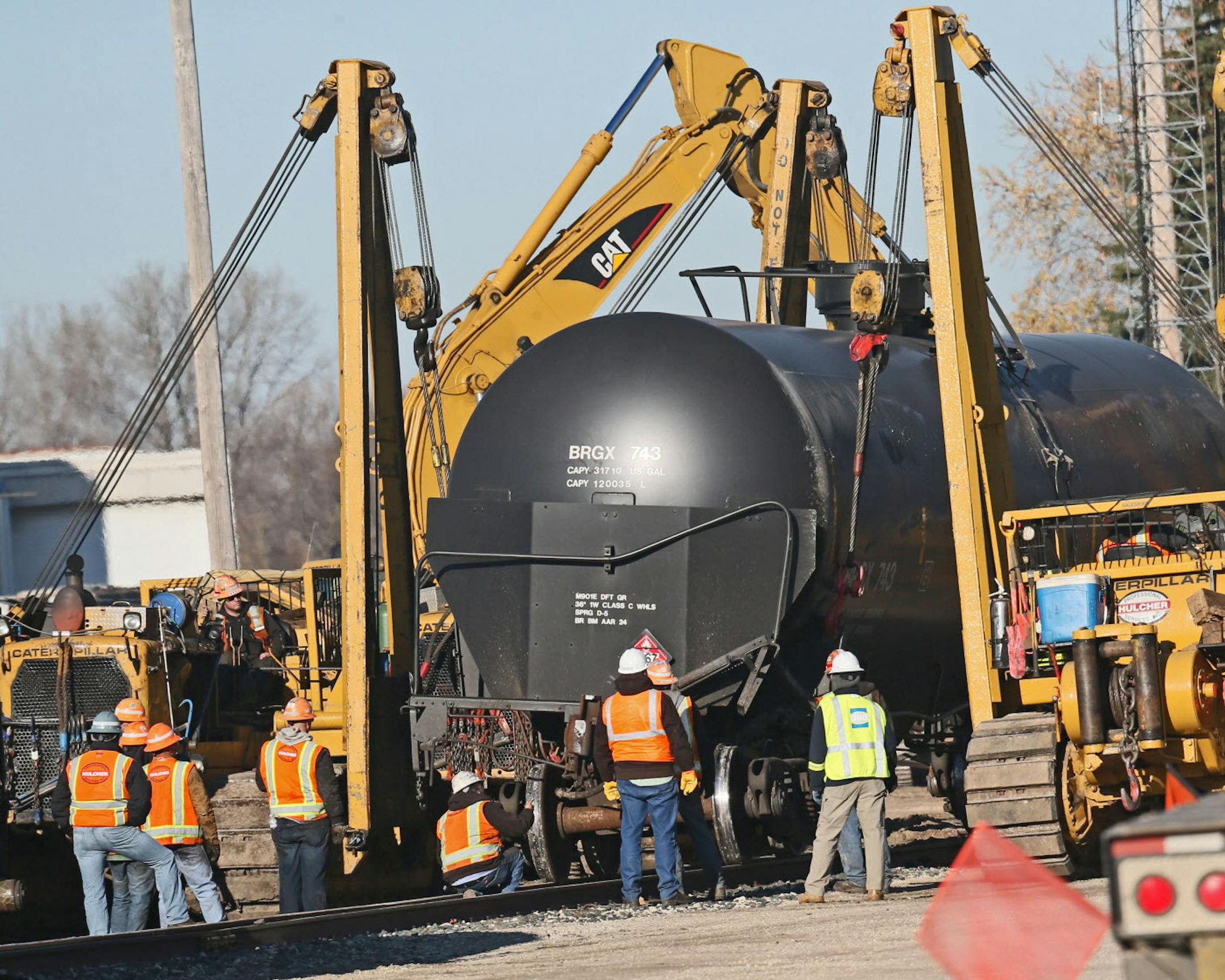
Thankfully, no one was hurt when trains went off the tracks last weekend in Watertown, a city in southeastern Wisconsin, and in Alma, a small town just across the Mississippi River from Wabasha, Minn. But the two derailments underscore the public safety and environmental risks posed by trains carrying crude oil and other hazardous substances that are in constant motion across this region, including routes that go directly through the Twin Cities.
In an age where cynicism about politicians abounds, it's important to note that Minnesota is being well-served by local, state and federal political leaders who are clearly making rail safety improvements a priority. A news conference held Tuesday by Minneapolis City Council members Kevin Reich and Linea Palmisano spotlighted rail safety concerns after the Wisconsin accidents. Gov. Mark Dayton has been a vocal advocate for improving rail crossings and, more recently, publicly called out BNSF Railway CEO Carl Ice for poor communication about changes in oil train routes. Also on Tuesday, U.S. Sens. Amy Klobuchar and Al Franken sent a letter to Ice highlighting similar concerns. They've also championed crude-by-rail safety measures now included in the U.S. Senate transportation bill that would require upgrades on certain tank cars and force railroads to share bridge inspection information, oil emergency-response plans and other information.
Friday's announcement of a $10 million U.S. Department of Transportation grant to improve a Willmar, Minn., freight bottleneck is also an example of exemplary teamwork. The grant is to a private-public partnership that includes local, regional and state agencies and BNSF. The federal dollars will be combined with money from the state, railroad and local groups to upgrade rail infrastructure in the area and reduce rail congestion that halts car traffic.
Dayton's proposal to enlist railroads to help pay for other rail crossings in Minnesota is still necessary. Railroad lobbyists derailed it this past legislative session, but Minnesotans would be well-served by industry and political teamwork in 2016 to make it a reality.


