If you start eavesdropping at the Mississippi River's headwaters during the summer, you can hear the surprise in visitors' voices as they reach the humble beginning of the world's fourth-greatest river system.
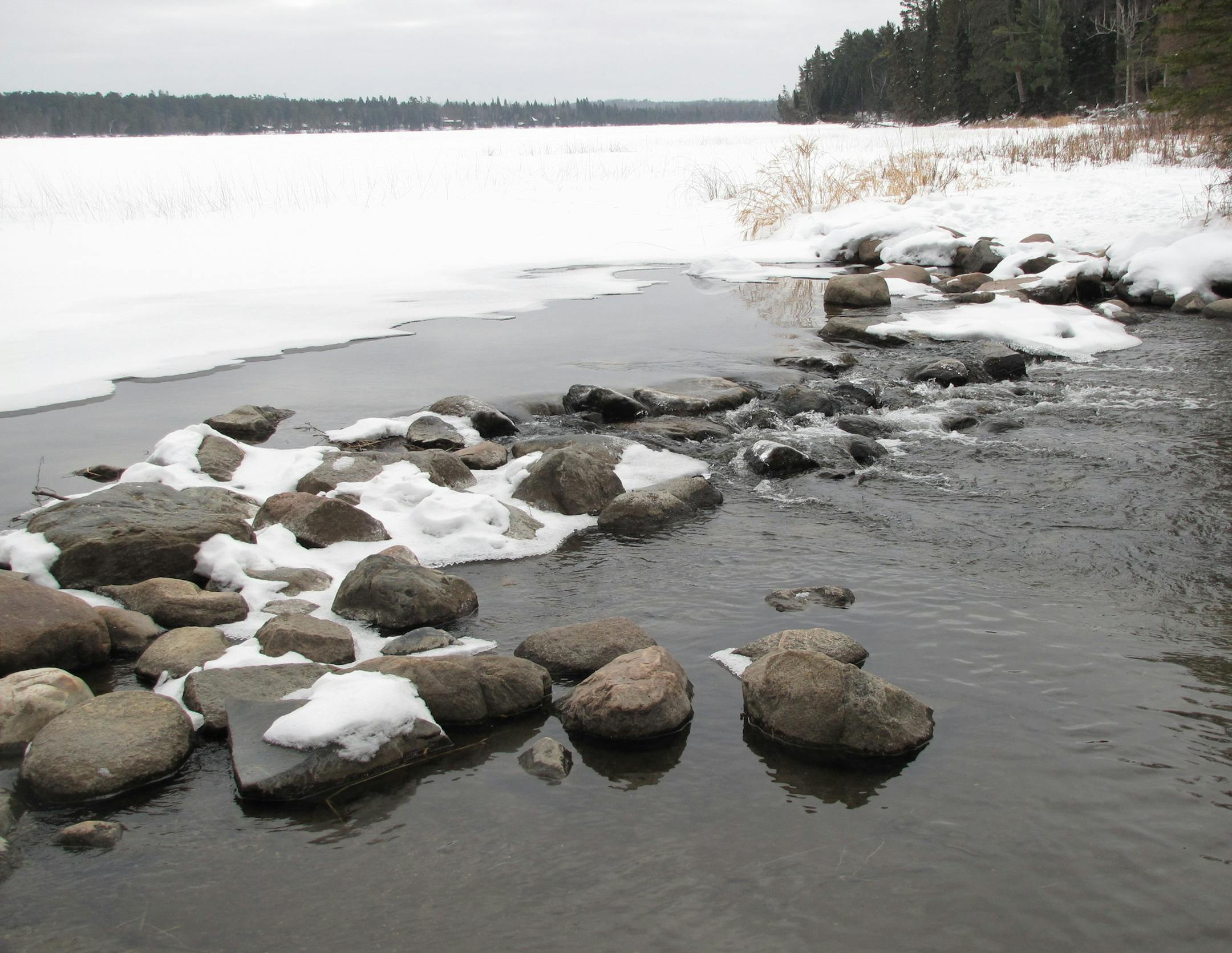
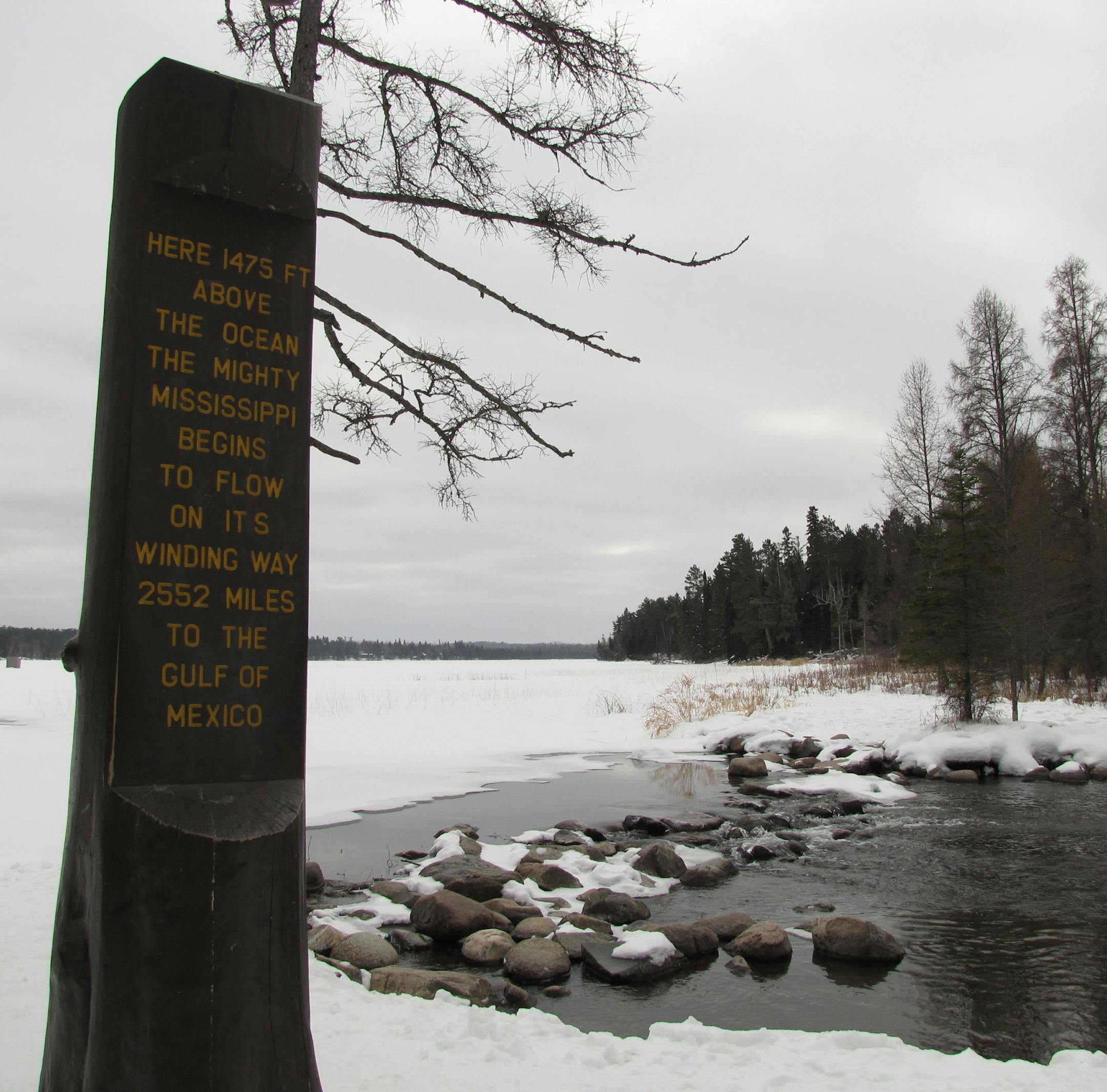
Many expect something dramatic. Instead they find a 20-foot-long line of rocks separating Lake Itasca and the start of the Mississippi. The scene is gentle and clear enough to lure toddlers into August-warmed waters.
Last January, after record-breaking temperatures froze Minnesota lakes and rivers — even Lake Superior was nearly frozen — the small-but-mighty Mississippi headwaters still burbled across rocks. Take that, polar vortex.
Animal tracks could be seen in clusters, crossing the banks of the open river. The chicka-dee-dee-dees of birds and the scolding kuk-kuk-kuk of red squirrels kept getting louder. But all in all, the park was quiet and peaceful on a winter weekday. Snow-globe snowflakes drifted down and landed delicately on black gloves.
The winter air blew crisply when I visited Itasca State Park last January, with nary a whiff of the park's signature pines. It was nonetheless enchanting. Spruce boughs umbrellaed above snow-packed snowshoe trails. Red and white pines towered upward, stoic and sturdy, graceful and grand. I paused to gaze upward at the soft-needled cathedral.
If it's quiet enough, said longtime Itasca naturalist Connie Cox, "You can actually hear the sound of the snowflakes falling through the pine needles."
Gone are summer's buzz of bugs, full chorus of birds and the chatter of crowds that can bring as many as 3,000 people into the park on a busy day. That's roughly equivalent to the winter population of Park Rapids, a resort town 23 miles south of Itasca State Park.
Trees and shrubs stripped of summer foliage give visitors their clearest view of Itasca's unusual landscape, a combination of rolling knob (or glacial mounds of debris) and kettle (glacial depressions) terrain. Bird and animal populations are lower during the coldest months, but they are easier to spot — or at least you can spot clues to where they've been.