

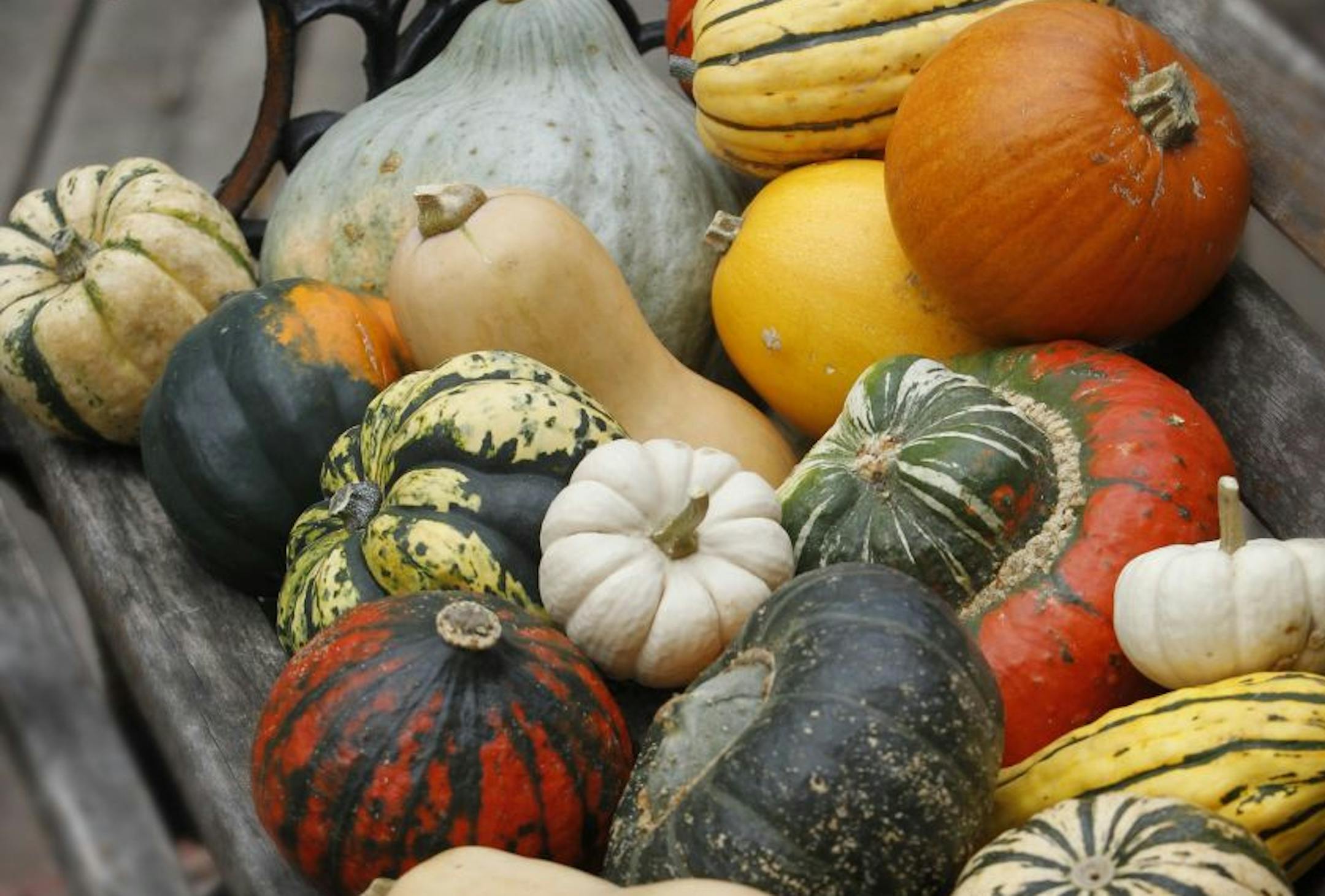
Even on the grayest days, the bright orange, silvery blues and moon-colored squashes light up market stalls. "Make steamy soup, spicy stew, lush pie," they seem to say. I can never decide among the colors, shapes and sizes and usually end up buying more than I can haul. And why not? They'll keep. Unlike the delicate, demanding crops of summer -- fragrant tomatoes, sugary corn and tender peas -- these hearty characters will wait patiently for me, decorating the table or front stoop.
Given its generally neutral flavor and creamy texture, winter squash is one of the most flexible and adaptable vegetables. It's great in Indian curries, African stews, Asian stir-fries, Italian ravioli, Mexican soups and good old American pie. And it makes a terrific serving container for any dish.
At the farmers markets you'll find a large selection of heirloom varieties with interesting though subtle variations in flavor and texture. Know that a squash's skin toughens as it ages, so the fresher it is, the easier it will be to peel, the more quickly it will cook, and the more distinct its taste will be.
Here is a partial list of the types of squash being harvested now:
Acorn: This old standby, in green or pale gold, is especially good when fresh from local farms. It's easy to slice, seed and roast with a little butter, chopped apples and craisins.
Ambercup: Related to the buttercup, this looks like a small pumpkin with its bright orange skin. The equally bright flesh has a sweet-potato-like flavor. It's easy to peel, cube and roast.
Autumn cup: Dark green and round with bright yellow-orange flesh that is moist and flavorful, this squash is easily peeled and cubed.
Buttercup: A member of the "turban" family, this thick-skinned, dark green squash sports orange flesh that's very creamy and among the sweetest tasting.


