

A young, first-time homeowner might have chopped at ice dams with an ax, putting shingles and gutters at risk. He just might have first climbed a ladder planted precariously on ice and snow below, putting himself at risk. Fortunately, he lived to tell the tale.
A few years ago, the first-time homeowner's brother somehow avoided serious injury when a ladder slid out from under him while he took on an ice dam, although another brother liked to joke that he was never the same after the fall.
Some 20 Minnesota winters later, the homeowner is a grizzled vet in his second home. So he knows when the first ceiling brown spots appear almost every year that they signal the beginning of a winter war: homeowner vs. ice dam.
The experts advise better insulation and proactive roof-raking. But who thinks about insulation before it's cold? And the homeowner never seems to get around to roof-raking until after the brown spots emerge.
Lesson finally learned on ladders, the homeowner instead rigs up a poor man's safety harness — a rope with one end tied around his waist and the other to a stair railing — before crawling out of a second-story window onto a snow-covered roof with a slight angle to it. Bold North indeed.
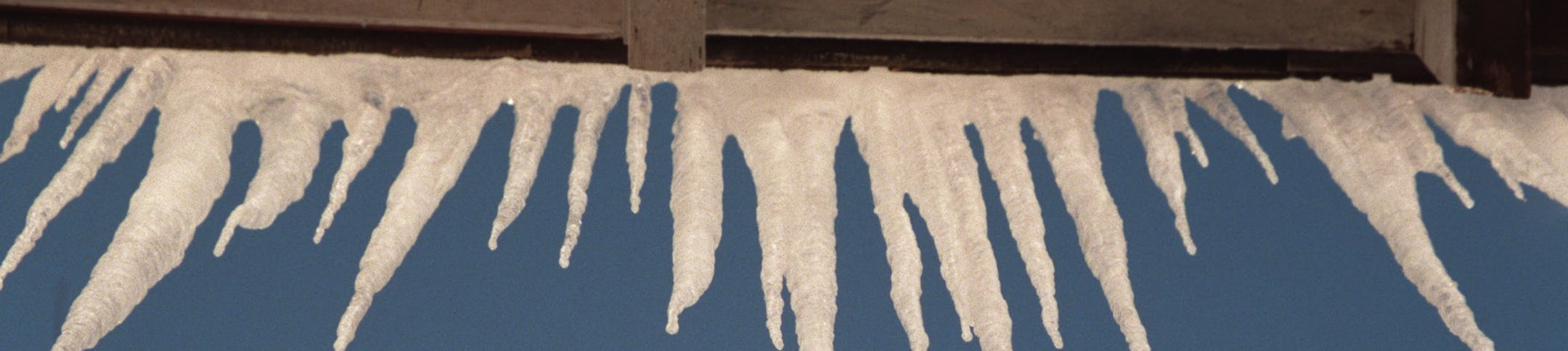
Just above, a solid ridge of ice has formed along a gutter on what must be a poorly insulated dormer. Under the ridge, the water-stained stucco — like the petroglyphs in the Boundary Waters — tells a story. In the living room below, the dreaded brown spots.
The homeowner considers his options. He no longer trusts himself with an ax. Hiring a local contractor at $375 an hour to steam off the source of the trouble? Too pricey.
Instead he'll depend, once again, on salt-filled hosiery. Placed strategically on the offending ice dam, pantyhose packed with pet-safe (roof-safe? doubtful) salt, can melt the ice and create a drainage channel. And that along with more consistent roof-raking, the homeowner has found, stops brown-spot expansion.


