

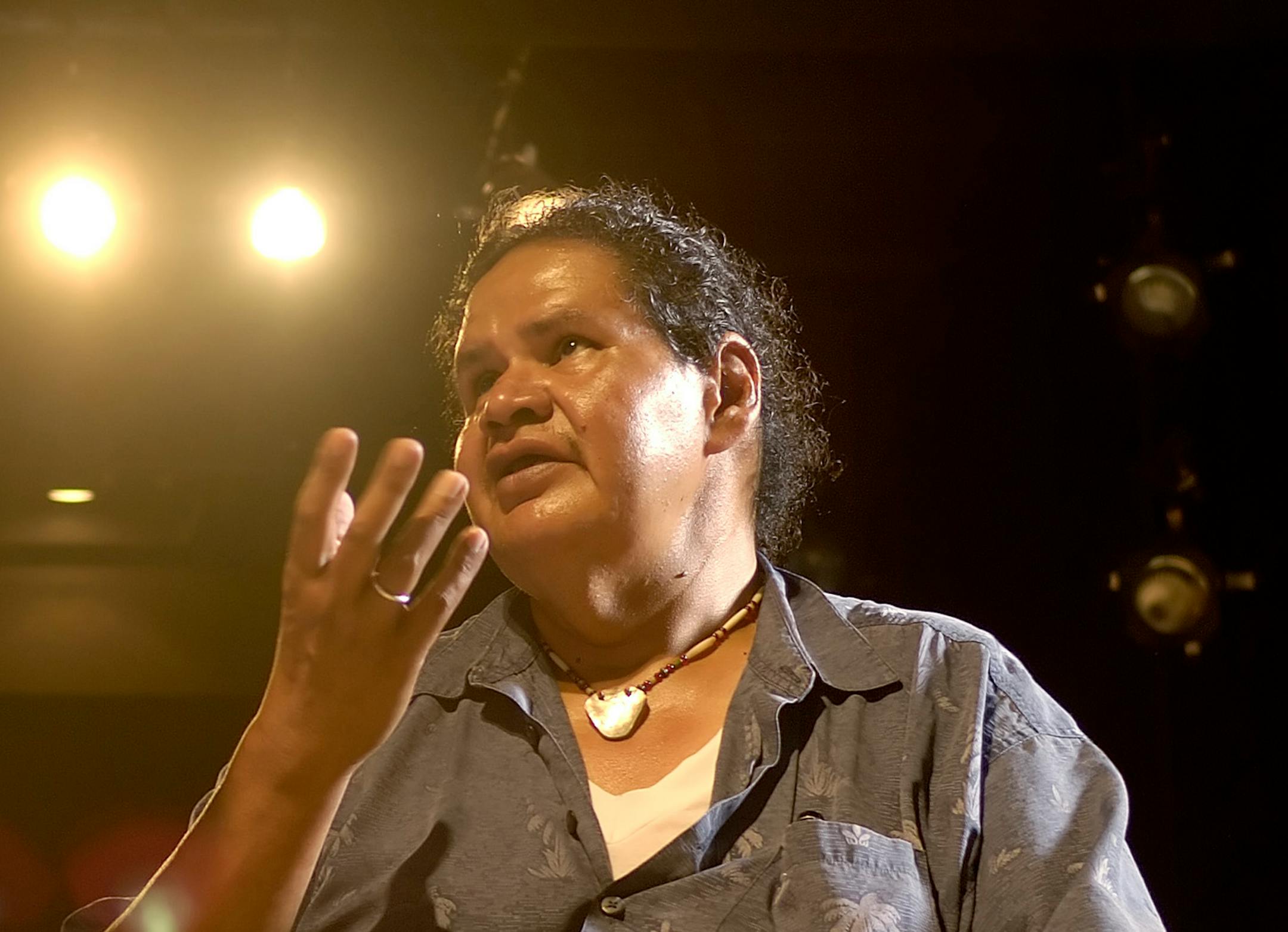
Playwright William S. Yellow Robe Jr. was often likened to August Wilson for his uncompromising artistic vision and his fidelity to Native arts and culture. But the comparison carried only so far. Yellow Robe was not as well known but was highly respected in theater circles.
The professor, director and longtime company member of Penumbra Theatre died July 19 in Bangor, Maine, where he had been teaching. He was 61 and had long battled health issues, including diabetes and congestive heart failure.
"Bill believed there should be 574 Native theaters — one for each federally recognized tribe," said Rhiana Yazzie, founder of the New Native Theatre in St. Paul. "Each tribe should have its own theater in its own voice and right to tell its own story."
Yellow Robe lived that ethos, writing insightful, witty plays that plumbed the historical trauma and contemporary aches of Native American life alongside the joys.
He published his dozens of full-length and short plays in anthologies such as "Where the Pavement Ends" and "Restless Spirits."
Yellow Robe is best known for titles such as "The Independence of Eddie Rose," about a teenage boy facing the family demons of alcoholism and domestic abuse; "The Council," a children's play featuring animal characters; and "Grandchildren of the Buffalo Soldiers," about the all-Black regiment that fought in the Indian Wars. "Grandchildren," which drew on his own biography, was produced at Penumbra, directed by theater founder Lou Bellamy, who took it on a national tour to Trinity Rep in Providence, R.I., and to Native American reservations.
Born into an Assiniboine family Feb. 4, 1960, on the Fort Peck Indian Reservation in Poplar, Mont., Yellow Robe was educated at reservation schools. He found his calling early and left the reservation for the University of Montana in Missoula, where he developed his acting and writing but found barriers to his success. He would only be cast in "Indian" roles, often one-dimensional stereotypes.
His solution was to improve his playwriting and craft his own plays, which he did with the help of a fellowship to the Playwrights' Center in Minneapolis in the 1980s. That's when he first met Bellamy.


