

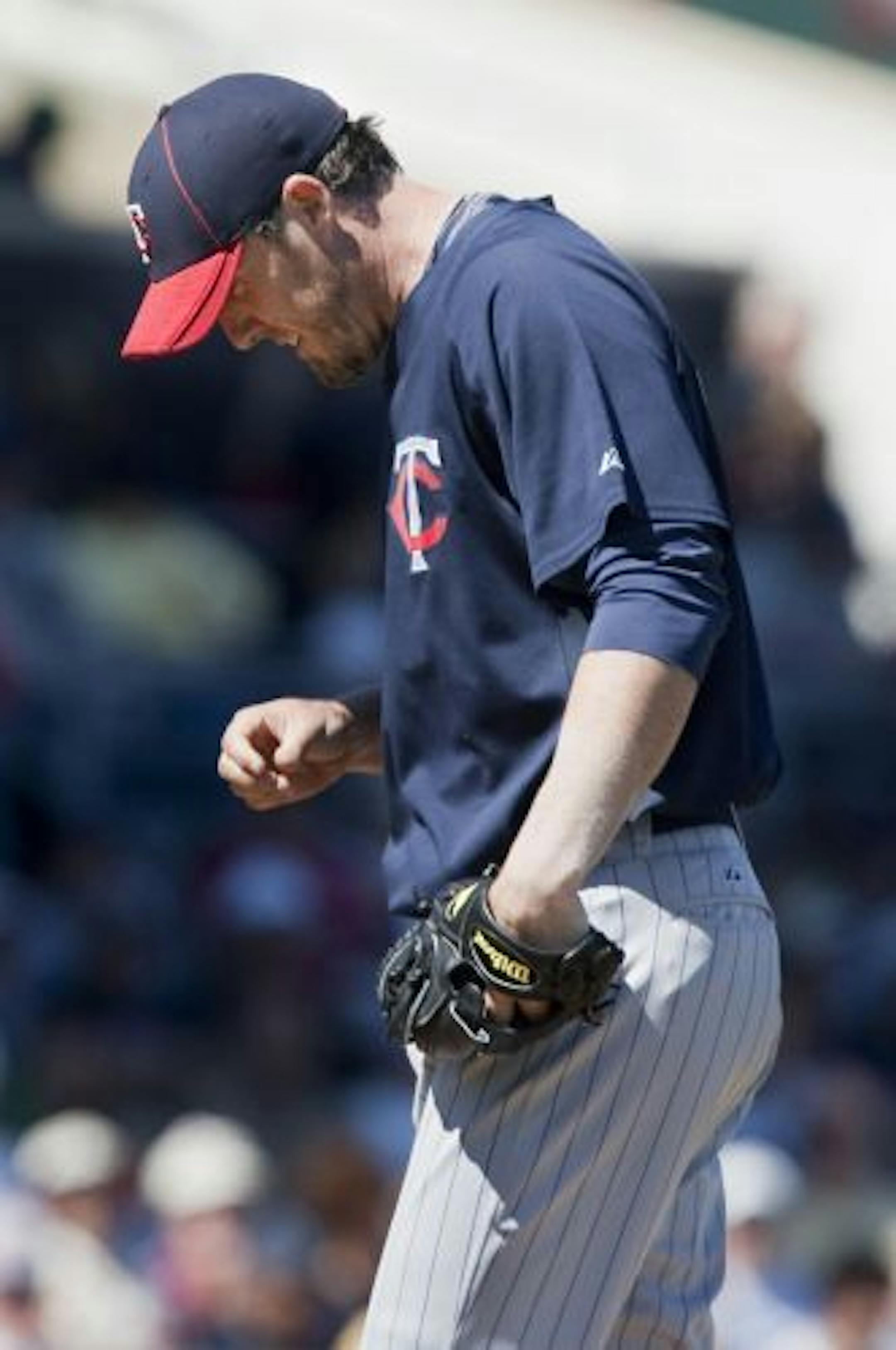
The Minnesota Twins and their fans are awaiting the answer to one crucial detail before the launch of the new season -- the status of an elbow ligament just a few inches long.
After injuring his throwing elbow, pitcher Joe Nathan will soon decide whether to opt for the audacious surgery that not only could save his career but also is credited for revolutionizing baseball.
Tommy John surgery has left a telltale scar on the arms of an estimated one in nine major league pitchers, along with many other players. Now the surgery is becoming common even among high school ballplayers, which indicates that many coaches and parents are relying on it as a safety net for kids whose arms are breaking down long before they get to college or the minor leagues, a trend that worries many.
Even more alarming, say surgeons, is that there are players who are so good post-surgery that some of those kids, and their parents, believe it could make them better pitchers.
"Which of course is not the case," said Dr. Terry Michael, an expert on sports orthopedics at Northwestern University in Illinois.
It began with Tommy John, a lefthander for the Los Angeles Dodgers, who was on his way to pitching his team into the pennant race in 1974. He threw one pitch too many and walked off the mound with a "dead arm." The same ailment dogged legendary pitcher Sandy Koufax before he stopped playing in 1966. John had torn his ulnar collateral ligament (UCL), the tiny piece of tissue that acts as a hinge between the two major bones in the arm. It's an injury that occurs almost exclusively in athletes who throw over their heads - javelin throwers, a few football players, squash players and, most of all, baseball players.
But unlike the dozens of pitchers who preceded him, John did not walk away from the game.
"He could not envision himself without baseball," said Tim Wendel, a professor at Johns Hopkins University and the author of a new book on the history of the fast ball called "High Heat." In a now famous story, John instead turned to the team's doctor, Los Angeles surgeon Dr. Frank Jobe, and asked him to come up with something.


