

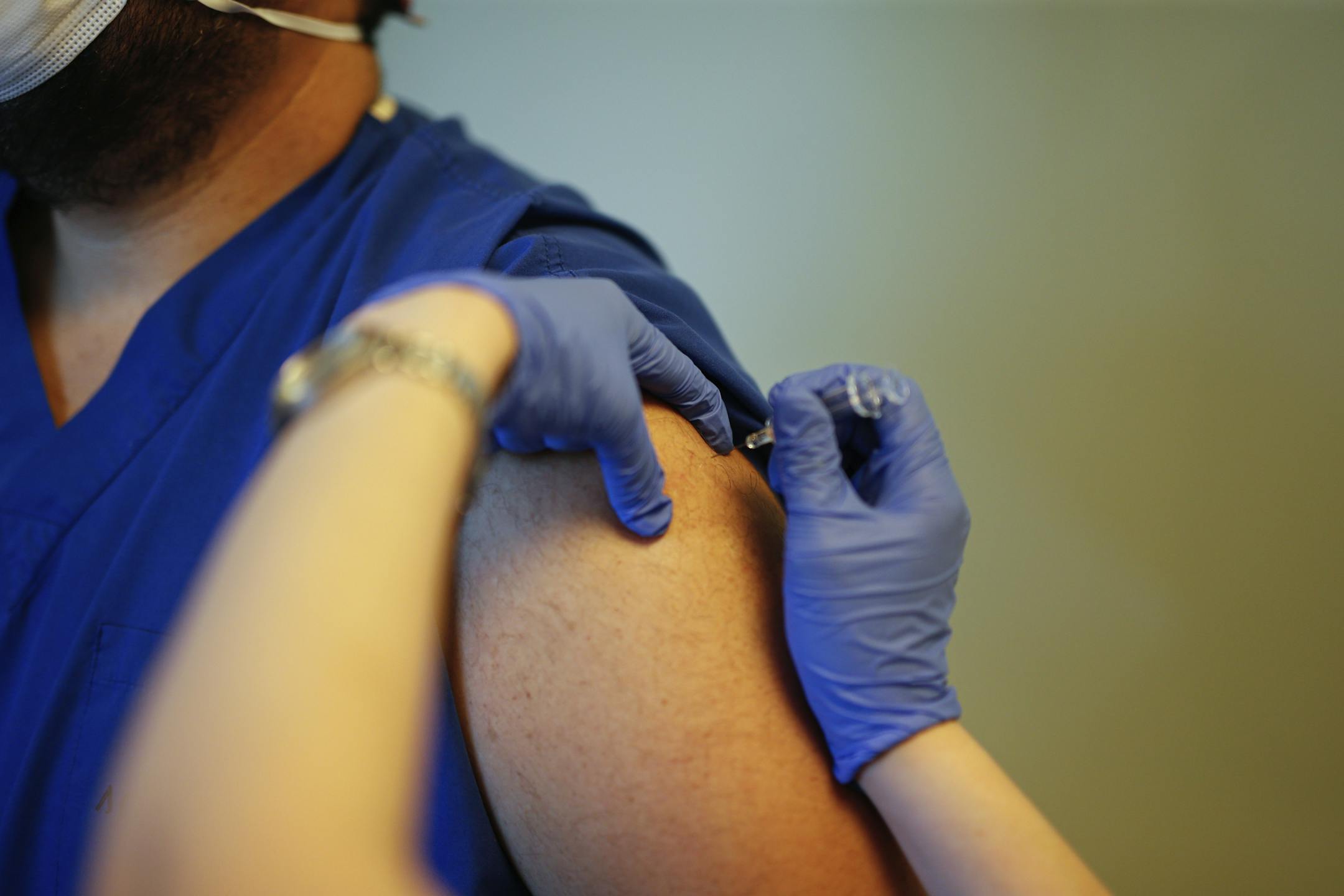
In early September, officials in South Korea announced an ambitious plan to vaccinate 30 million people against the flu — 10 million more than last year, an increase aimed at keeping down rates of the flu while the country battled the coronavirus.
But as the New York Times recently reported, the internet soon got in the way. As the vaccine was distributed, a few logistical problems popped up, and South Koreans began circulating grave stories online — pictures of vaccine boxes that looked like they had been stored unsafely, reports of vaccine contaminated with mysterious white particles.
Then things got more serious. A 17-year-old died after getting the vaccine. Stories of more deaths began to pour in. "By Oct. 22, the reported death count had reached 28 and it was rising by the day," the Times reported. "Singapore briefly suspended the use of a South Korean vaccine after the deaths were reported."
Health officials were confident that the vaccine was safe, and they eventually determined that the deaths were coincidental. People die every day from a wide variety of causes, so it's not surprising that among millions of people receiving vaccinations, some would die soon afterward for unrelated reasons. But online, the fear would not bend to rational explanation.
As the government took the time to thoroughly investigate the cases, "anxiety grew, trust fell and the vaccination program suffered," Dr. Ki Mo-ran, an epidemiologist, told the Times.
This, I worry, is a taste of things to come in the United States.
In the last few weeks we've been blessed by spectacular news. "Operation Warp Speed," the Trump administration's program to expedite coronavirus vaccines, has been an amazing feat of science and public policy. Clinical trials suggest that vaccines made by Pfizer and Moderna are each safe and effective at preventing infections of the coronavirus; a third company, AstraZeneca, has also reported positive results with its vaccine, though scientists are less confident about its findings.
The three vaccines were all created in less than a year, a blistering pace for vaccines.


