

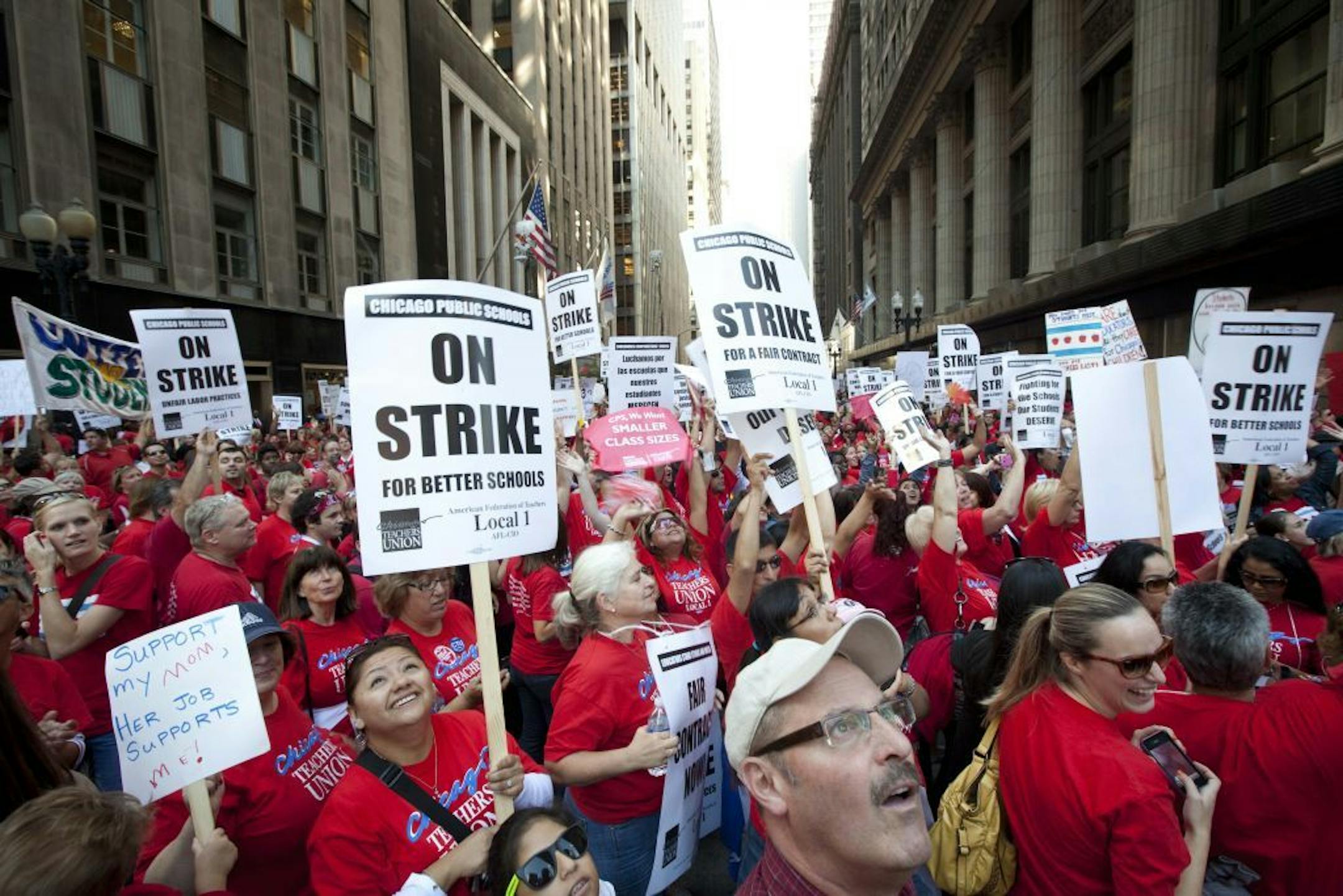
An old truism about feeding bears seems to apply to the strike by 26,000 Chicago teachers. You can feed a bear regularly without incident until one day you forget or don't give him as much as he wants and he eats you.
That's where Democrats find themselves after years of feeding the bears -- in this case the powerful teachers unions -- in the nation's third-largest school district and elsewhere.
The result is that Mayor Rahm Emanuel, the former White House chief of staff, is in a fight that could devour him -- and who knows how many of his party's candidates who rely on campaign volunteers from the big American Federation of Teachers and the National Education Association.
At least initially, Rahm's former boss, President Barack Obama, has opted out of the fight. Avoiding the extensive ripple effect of Emanuel's dilemma may not be possible for long, considering that both Obama and his education secretary, Arne Duncan, hail from the Windy City, and Emanuel's efforts follow Obama's initiatives for education.
Emanuel believes that extending Chicago's notoriously short school day by 90 minutes and offering to pay the educators, who already average $72,200 after 13 years experience annually, about 16 percent more over four years is a fair deal for everyone, teachers, taxpayers and especially children. Increasing the hours would up the cost.
Well, who can argue with that? Obviously the teachers, who also dislike having their success evaluated on how well their students perform on government-required exams. But when one gets right down to it, how else can one judge a teacher's performance?
Athletic coaches understand that completely. If their teams lose, their job security also fails. Emanuel and his contemporaries in many other locations also want an end to the policy of last-hired, first-out in necessary cutbacks, a standard doctrine of the entire union movement. It aims to protect not only longevity but also necessarily must appeal to the lowest common denominator.
The sad fact is that tens of thousands of students in Chicago and elsewhere are caught in the middle, especially in inner cities where the public schools already are hard pressed to do more than they were created to do. Those schools must make sure students are fed, often beyond just lunch, and protected afterward. Huge numbers of Chicago's kids are economically deprived, and many live with one struggling parent with a job that has no daycare alternative. It is tragic.


