0:33
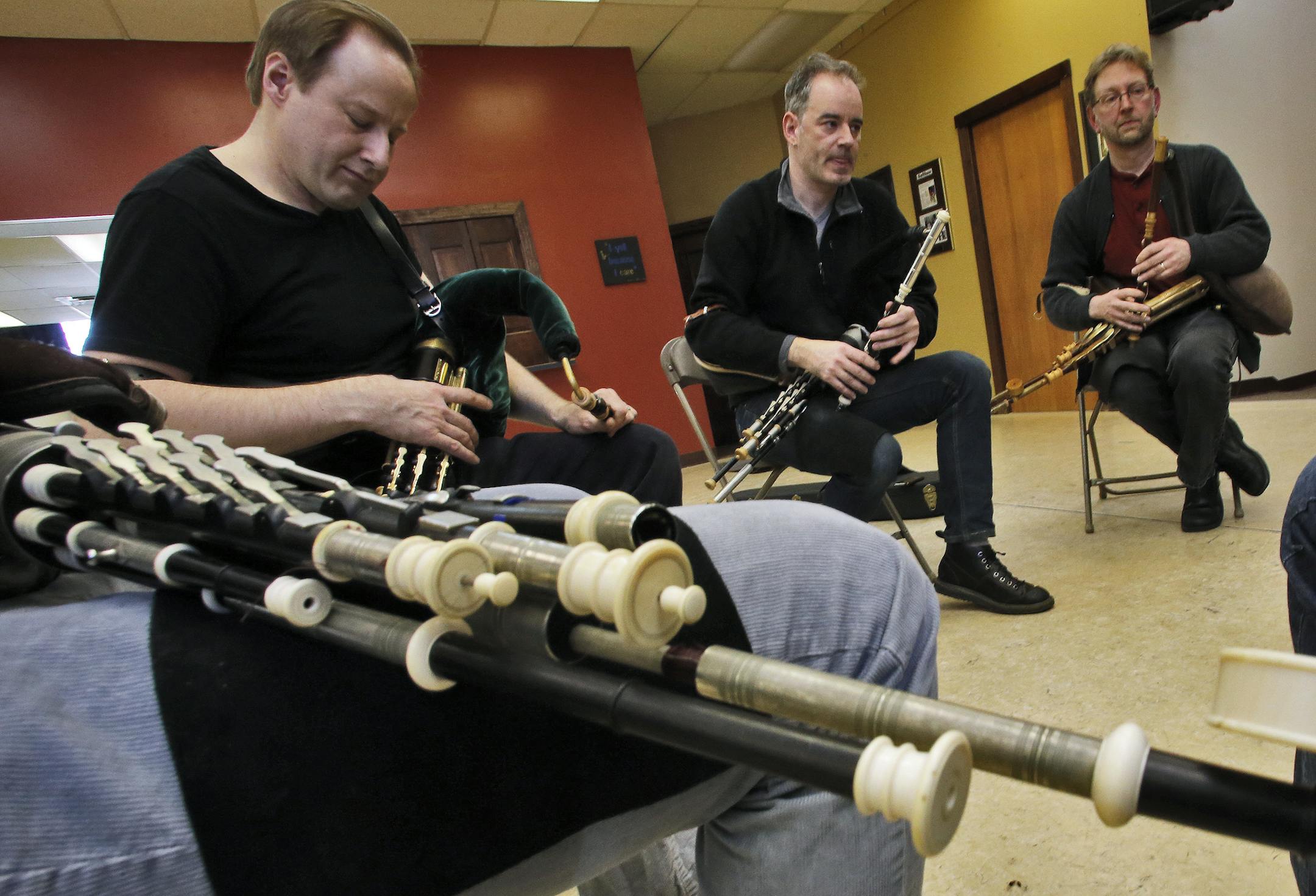
0:33The Great Northern Irish Pipers Club was in the midst of a discussion when one of the members picked up his bagpipes and started playing a spirited jig.
Rude? Brazen? At the very least, out of order?
Actually, it was business as usual at the monthly meetings, which inevitably turn into jam sessions.
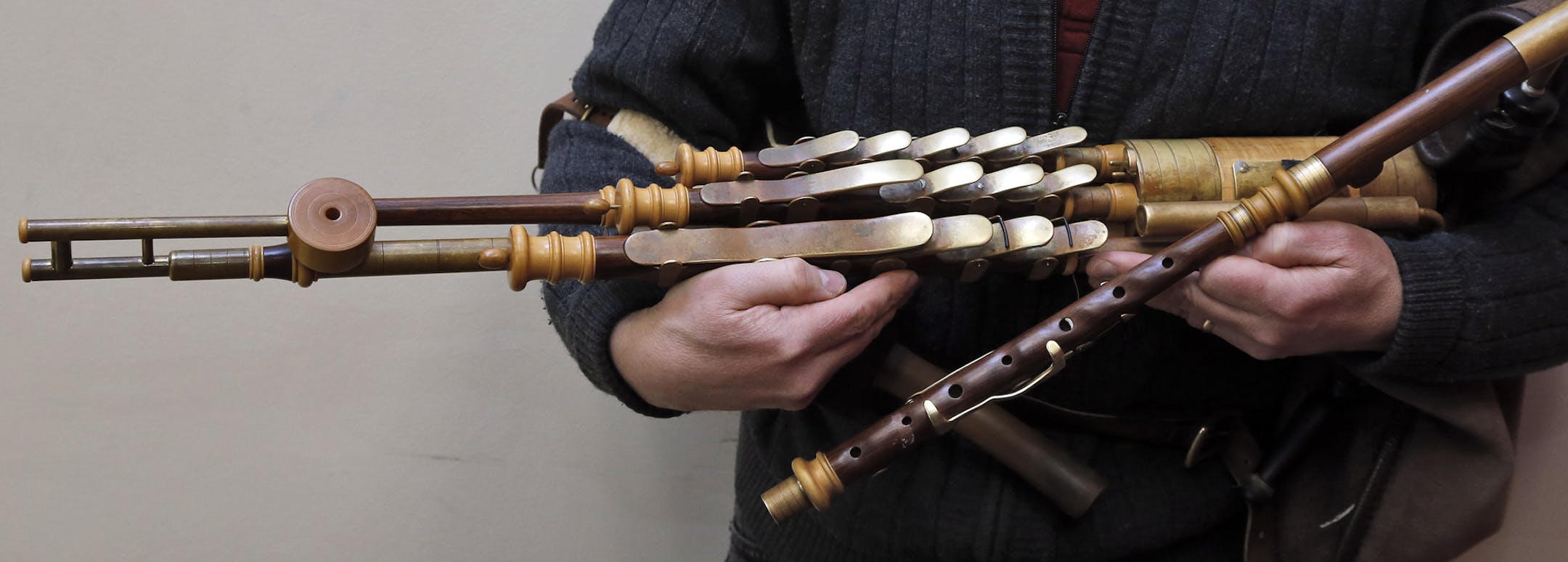
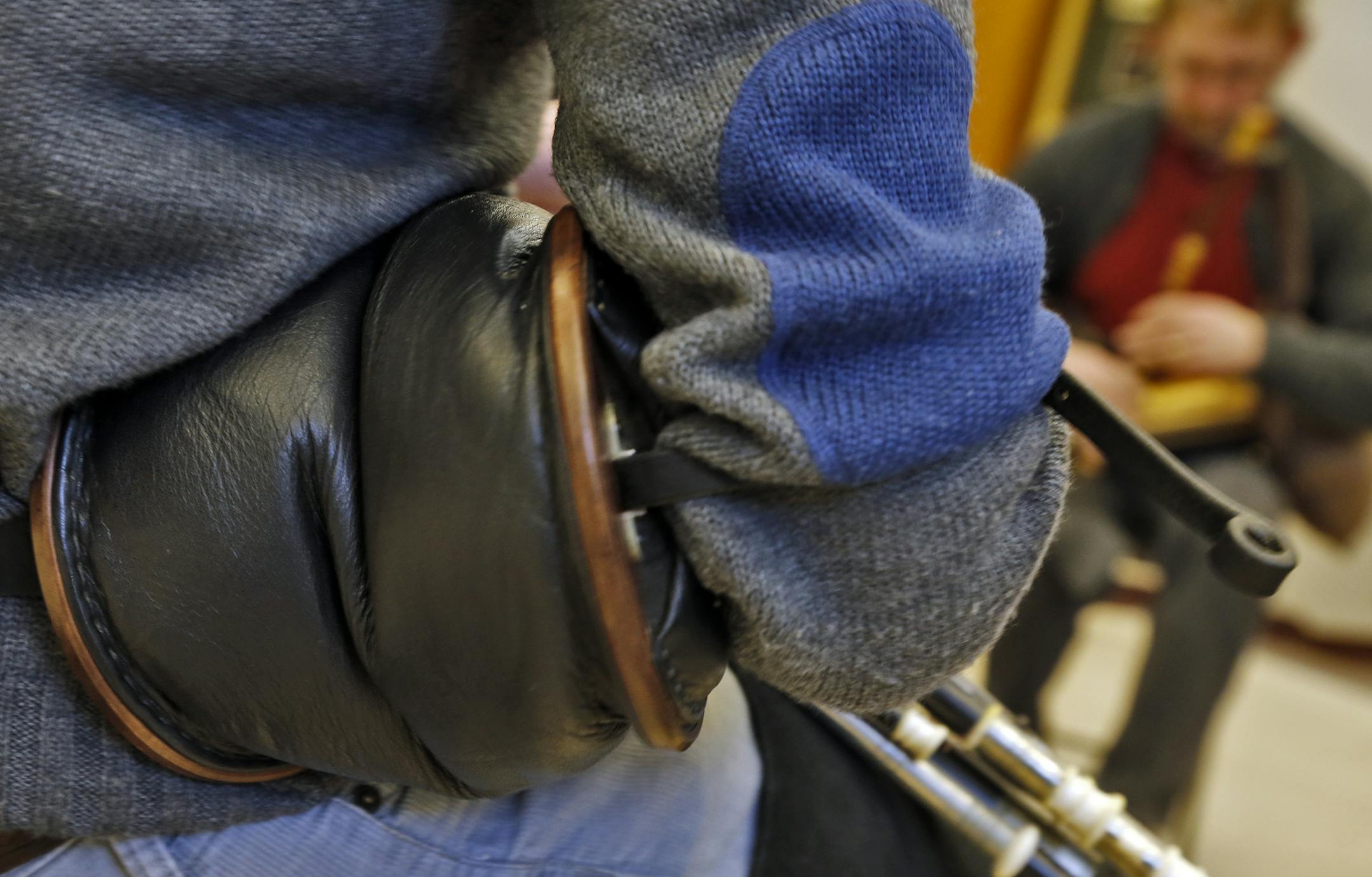
The club is part of a small but dedicated cadre of musicians who will celebrate St. Patrick's Day in what they insist is true Irish tradition: playing uilleann bagpipes, the smaller, quieter and more versatile cousin of the better known Highland bagpipes. But unlike the Highland pipes, which are rooted in Scotland, these are 100 percent Irish.
"There's nothing wrong" with the Highland pipes, said Tom Klein, one of the more accomplished uilleann pipe players in the region. "But the fact is that there is a real, bona fide Irish instrument — the uilleann pipes — that captures the heart and soul of Irish traditional music like the Scottish pipes never will."
Nonetheless, it's the Highland pipes that get all the attention. Especially on St. Patrick's Day.
"Now it's become part of the Irish-American experience to have a Highland pipe band come marching through your bar," Klein said. "Don't get me wrong: I love the Highland pipes, and I have many, many friends who play them. But they are essentially Scottish bands, wearing Scottish gear, playing Scottish instruments and performing some Irish — and a good deal of Scottish — music."
Uilleann pipers don't march — the instrument is played while seated — they don't wear flashy outfits that lend themselves to ribald jokes, and their pipes aren't nearly as loud; in fact, they often are played to accompany other instruments or even singers. But even though the history of uilleann pipes in Ireland predates the arrival of the Highland pipes by centuries, it's the marching bagpipers who have become synonymous with St. Patrick's Day in this country.