

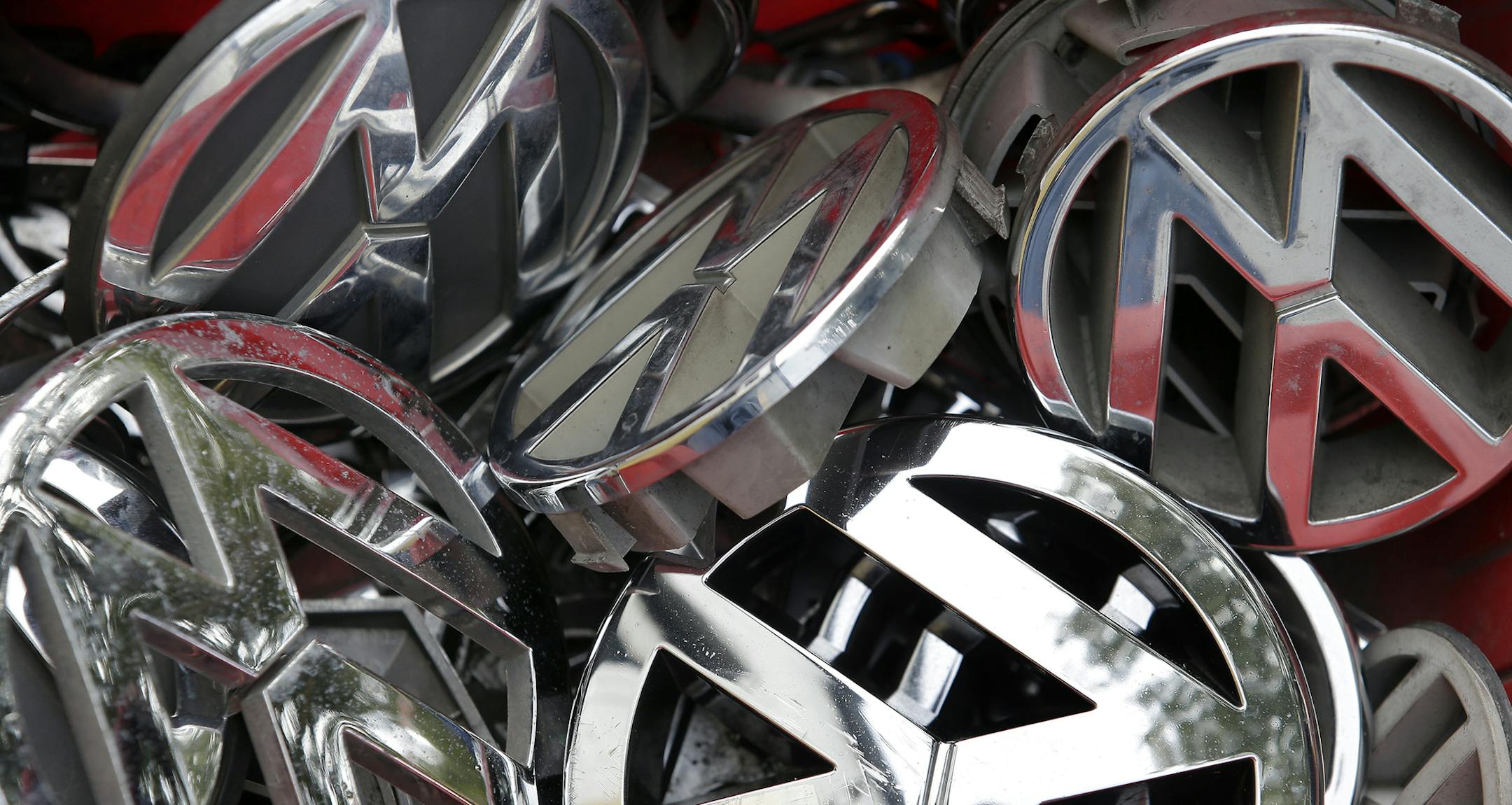
Hundreds of thousands of Volkswagen diesel cars on the road in the United States with "defeat devices" are spewing 10 to 40 times the allowed amount of nitrogen oxide into the air — and will never be repaired. Because most recalls are optional, many owners won't bother to comply.
From 2000 to 2008, the Government Accountability Office found on average that about 30 percent of defects were not fixed within 18 months of a recall. For some recalls, the failure-to-fix rate rose above 70 percent.
Volkswagen diesel owners are particularly likely to forgo repair of the emission problem because the solution will actually reduce their cars' fuel efficiency. Sure, in the abstract, they care that nitrogen oxide is linked to serious respiratory problems, including emphysema. But the concrete hassles and certain miles-per-gallon degradation make it easier for the manufacturer's recall notice to slip their minds.
We can do better.
To increase cooperation rates, Volkswagen could compensate only those owners who have repaired their cars. What's more, the federal government could make it harder for owners to keep driving faulty vehicles. Some states will not allow a car to pass its emissions test if it has not completed all emission-related recalls; the National Highway Traffic Safety Administration (NHTSA) could mandate that all states follow suit.
The Volkswagen scandal presents us with an opportunity to revise our recall regulations more generally. When I failed to take in my Prius to repair a sudden-acceleration defect, I wasn't just putting my family at risk; I was also endangering other people that my accelerating car might hit. Yet nothing in our current law stops me from driving a car with a well-known safety defect year after year.
With today's technology, it should not be difficult to block owners from reselling or reinsuring cars that have not received recall repairs. Dealerships should have the right to complete any outstanding recall repairs whenever a car is brought into a shop — without asking the owner's permission. As a last resort, police could be empowered to "boot" cars with substantial safety defects.
At a minimum, when the NHTSA finds that a defect represents an "imminent hazard" to public health or safety, it should have the authority to require that owners receive compensation for the annoyance of a trip to the dealership.


