

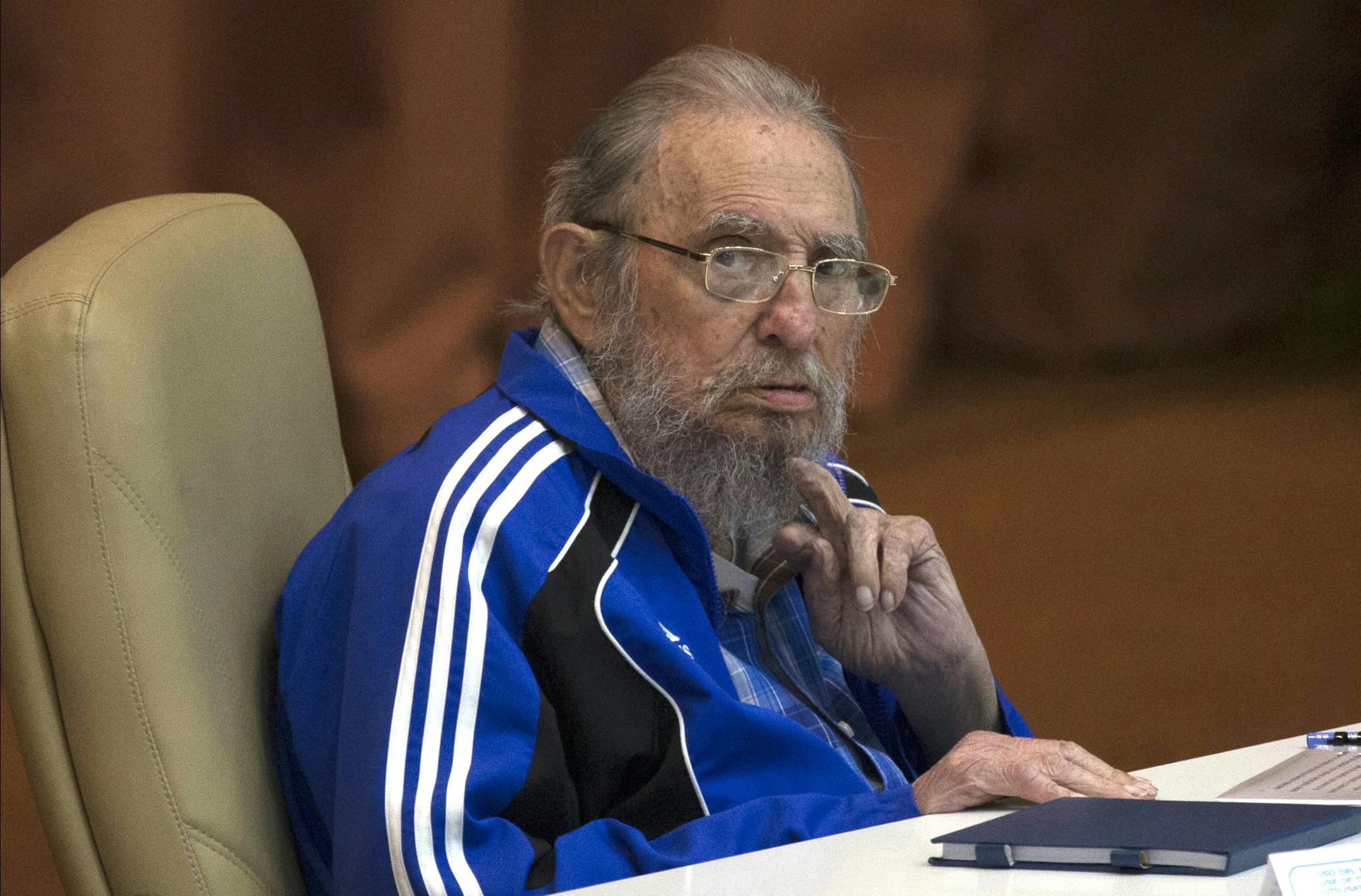
On trial in 1953 for leading a rebel attack on the Moncada military garrison in Santiago de Cuba, Fidel Castro, then a young lawyer, concluded his own defense by declaring, "Condemn me. It does not matter. History will absolve me." Now that the 90-year-old patriarch of Cuba has died, the time for history's judgment has arrived.
It's tempting to echo Zhou Enlai, who, when asked in 1972 what impact the French Revolution had on Western civilization, famously replied, "It is too early to say." Certainly, in Fidel's case — and everyone called him Fidel, even his enemies — the broad outlines of his legacy are clear enough. By his own account, he made a revolution in pursuit of two goals: to gain real independence for Cuba, freeing it from the political and economic tutelage of the U.S., and to introduce a measure of social justice to Cuba's deeply corrupt and unequal social order.
Somewhere in his intellectual development — his own accounts of when varied over the years — he decided that the only road leading to these goals was socialism. He kept that insight to himself as he led a nationalist, anti-authoritarian revolution to triumph over the Batista regime in 1959. Perhaps he was mindful of his hero, Cuba's founding father José Martí, who once wrote, "To achieve certain objectives, they must be kept under cover; to proclaim them for what they are would raise such difficulties that the objectives could not be attained." When the revolution's early reforms brought Cuba into conflict with the U.S., as Castro knew they would, he decided that the revolution's survival depended on forging an alliance with the Soviet Union.
In the revolution's early decades, Castro appeared to achieve his two goals. He purged Cuba of U.S. influence by nationalizing over $1 billion in U.S. investments and thumbing his nose at Washington's often ham-fisted attempts to rein him in. Assassination, invasion and covert war all proved unequal to the task of dislodging him, to the chagrin of Washington policymakers, who could neither understand nor tolerate such defiance in their own backyard. Buoyed by the public's nationalist cheers, Fidel "hit the Yanquis hard," and they could never devise an effective way to hit him back. Even today, the residue of Washington's frustration with him continues to fuel the animus of policymakers who oppose President Obama's opening to the island.
Beginning with radically redistributive economic reforms and culminating in the nationalization of the entire economy, right down to the mom and pop stores on the corner, Castro transformed Cuba into the most egalitarian society in Latin America. Health care, education and social security were declared human rights and provided free to everyone. Income disparities shrank as wage differentials narrowed and basic consumer goods were provided to all through rationing at prices heavily subsidized by the government.
But all this came at a cost. With link between workers' compensation and productivity shattered, growth stalled. And in the service of creating a socialist economy, Castro crushed Cuba's bourgeoisie. Once the direction of the revolution became clear, the upper and middle classes began a historic migration north into exile. In just the first decade of revolutionary government, more than 250,000 Cubans fled their homeland. Over the ensuing decades, nearly a million more would follow.
Castro was a keen politician, appealing to deep currents in Cuban political culture, most especially the nationalism born of Cuba's repeated failure to win its independence, first from Spanish colonialism and then from U.S. neocolonialism. A charismatic leader par excellence, he harbored a deep distrust of institutions, believing he was a better judge of the desires and aspirations of the Cuban people than any formal structure. More than once, he tore down institutions that he himself had built when they worked in ways that endangered his vision for Cuba's future.
In so doing, he left a legacy of institutional weakness which his brother Raúl has spent the past decade trying to repair. Fidel was, as social scientists say, a "minimum winning coalition" all by himself. When he decided on a policy, the rest of the leadership dutifully fell into line. Political power, then, was directly correlated with proximity to Fidel. It was no accident that the principal path to power for an aspiring young politician led through Castro's personal staff. During the last two decades of Castro's leadership, a series of young heirs apparent rose and fell based on their personal relationships with him. Their meteoric ascendance afforded them no institutional base of support, denied them the political savvy only experience can provide, and imbued them with the hubris of Icarus. None lasted more than a few years. Raúl Castro has implicitly acknowledged the polity's institutional shortcomings by calling for a major renovation of the Communist Party, empowering local political institutions and proposing 10-year term limits for all senior officials. Strengthening institutions has been a constant theme in his public addresses.


