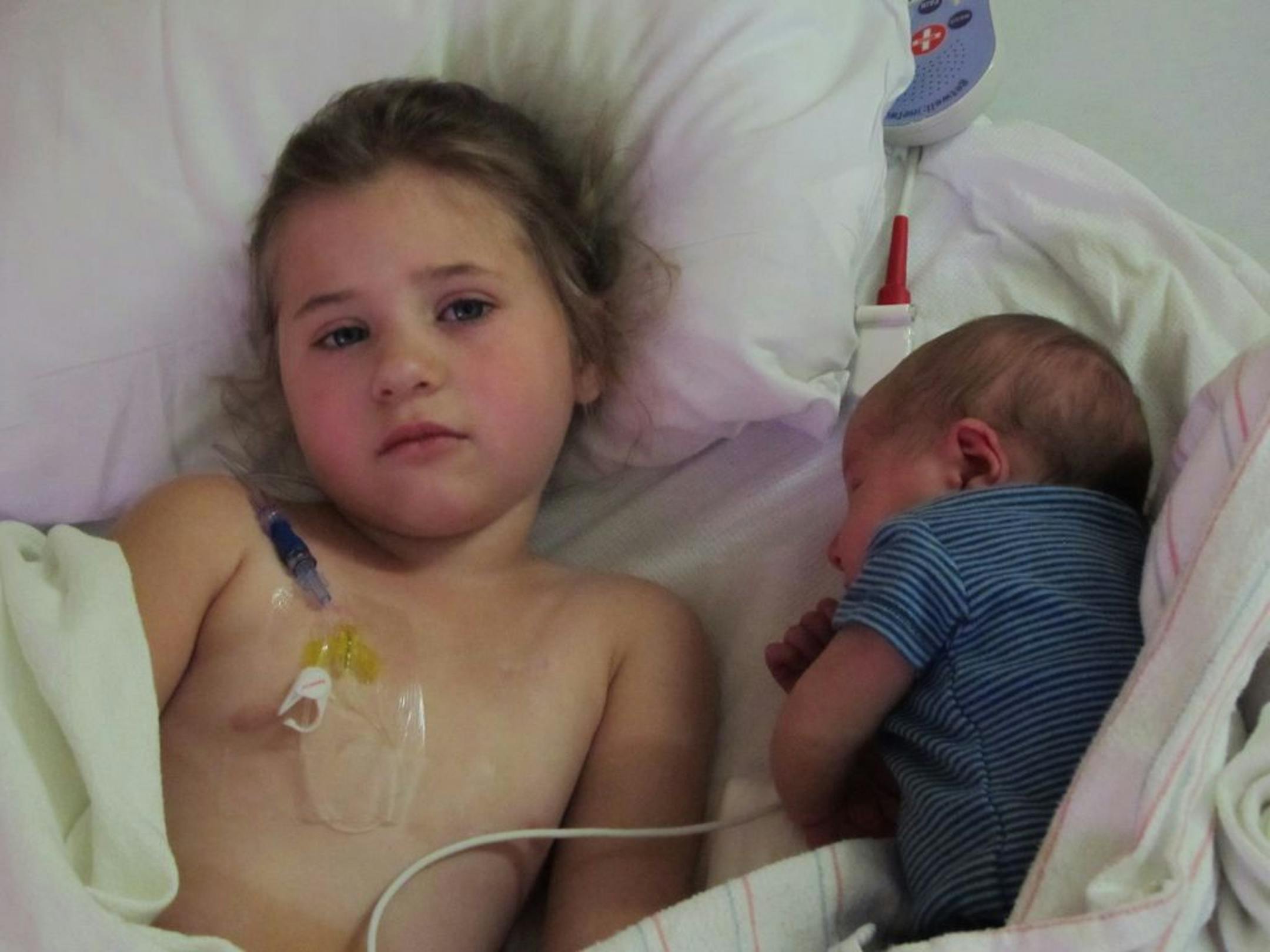
Five-year-old Jocelyn Dickhoff, who loves books and baby dolls, has only a slim chance of surviving the rare and aggressive muscular cancer she's spent most of her life battling.
Whether she'd be healthy today if the cancer had been discovered sooner is at the heart of a Minnesota Court of Appeals ruling that permits her family to sue the doctor who failed to make an early diagnosis.
The ruling also points to a peculiarity of state law -- the legality of medical malpractice lawsuits in Minnesota is linked to the patient's chances of survival.
Under Minnesota law, medical malpractice claims resulting from misdiagnosis require that the patient's odds of survival drop from likely to unlikely. For instance, if a misdiagnosis lowers a patient's chances from 70 to 60 percent, it's not a cause for action. In contrast, other states allow lawsuits for the loss of "chances."
In Jocelyn's case, experts hired by her family say the yearlong delay in diagnosing her cancer reduced her chances of survival from 60 to 40 percent, or below the threshold of likely survival.
Her chances of survival now are 5 percent, her mother said.
The unanimous appellate opinion filed Tuesday reverses a Kandiyohi County judge's earlier order that tossed out the suit filed by Jocelyn's parents, Kayla and Joseph Dickhoff of Belgrade, Minn., against Dr. Rachel Tollefsrud and Family Practice Medical Center of Willmar, Minn. The lower court judge reasoned that the Dickhoffs were making a "reduced-chance" medical malpractice claim, the kind not recognized in Minnesota.
The Appeals Court determined that Jocelyn would have been more likely to survive had it not been for the doctor's alleged negligence, and permitted the family's lawsuit to proceed.