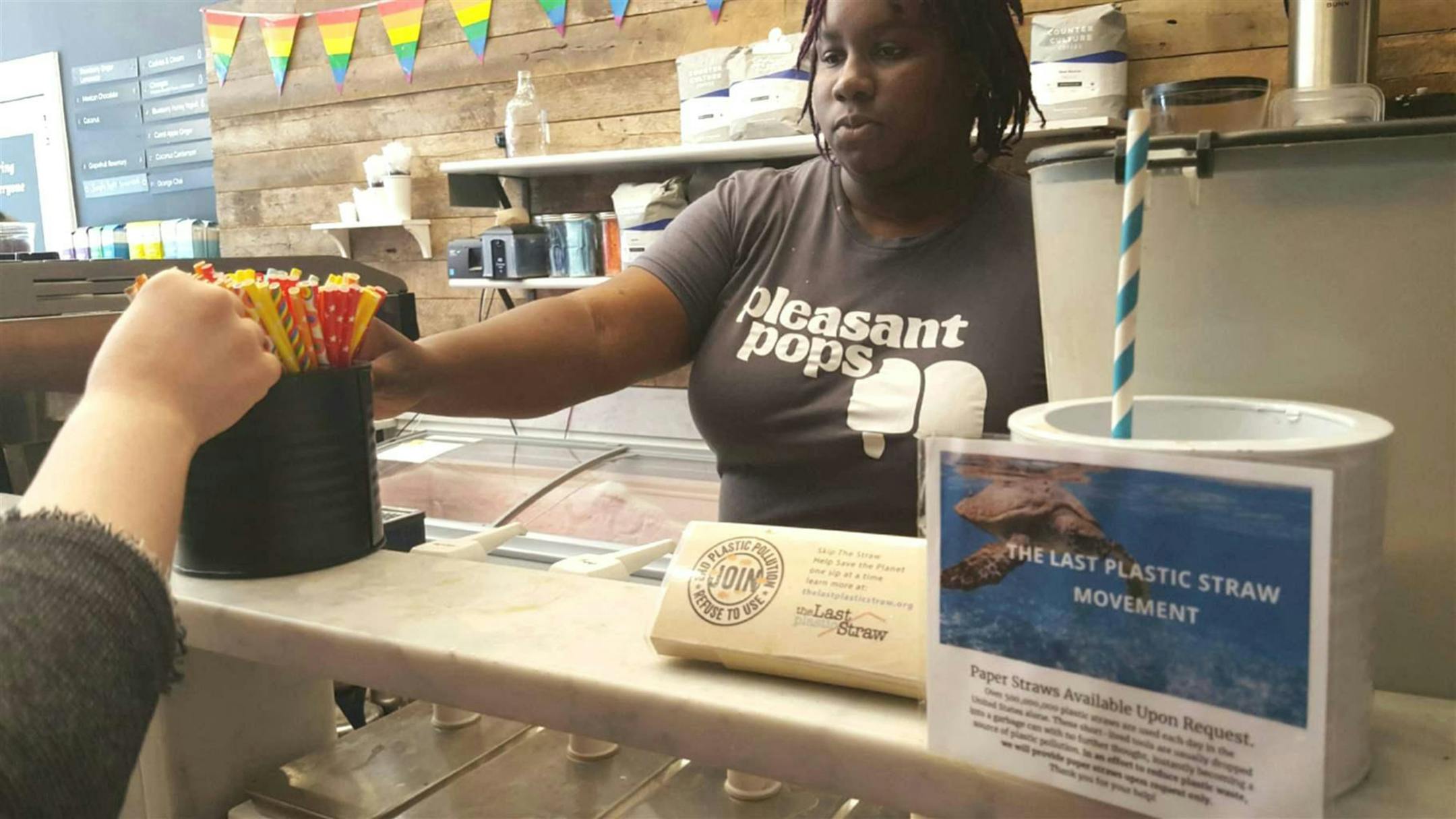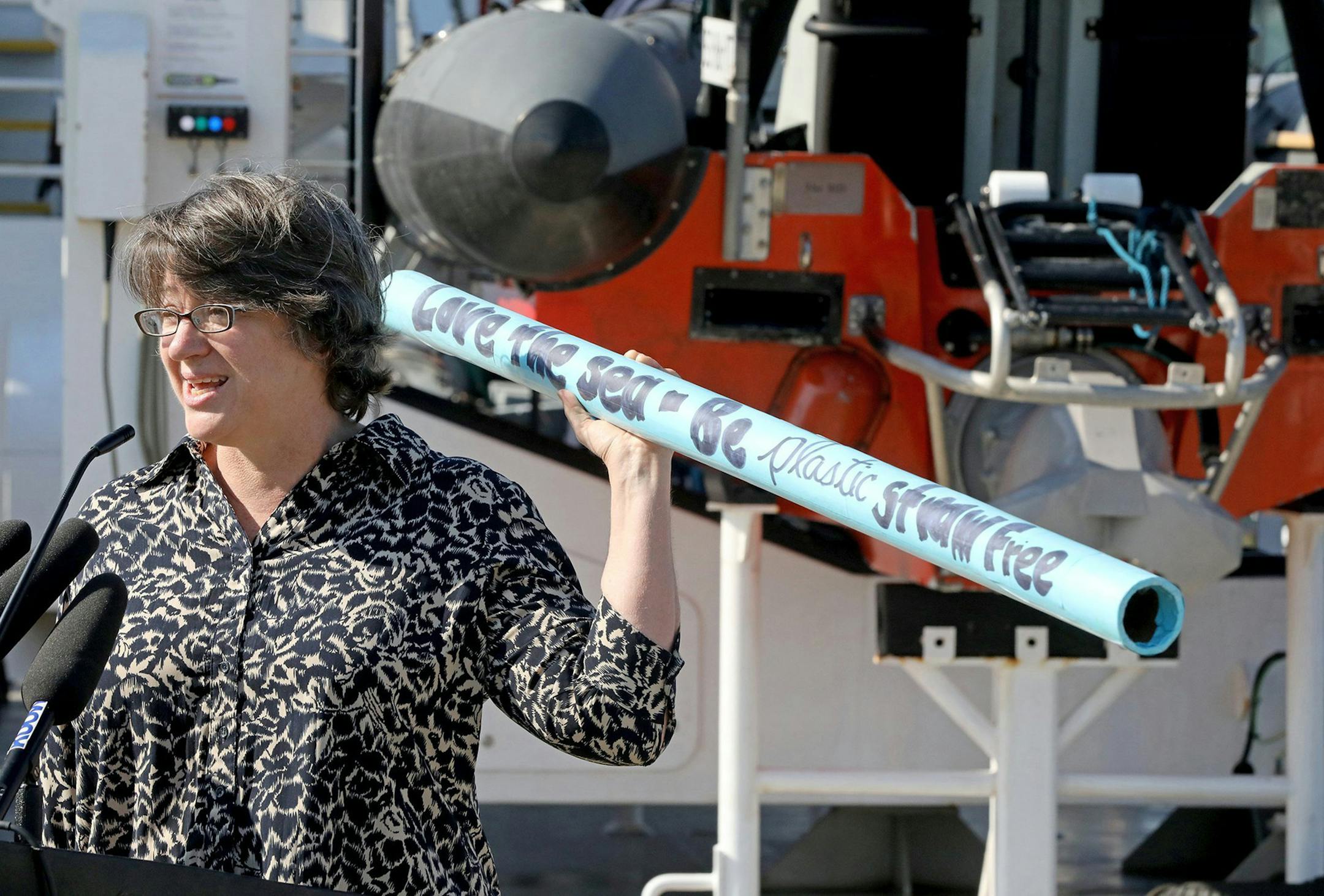
Hard on the heels of banning plastic bags, states and cities are being pressed by environmentalists to eliminate another consumer convenience — plastic straws. But objections from the plastics industry, restaurants and disability advocates have derailed or delayed some proposed straw bans.
Experts say cutting down on single-use plastic may be more about changing habits than changing laws. Three states — California, Hawaii and New York — have considered plastic straw legislation in 2018. Hawaii's died, and the other two are pending. Seattle, Miami Beach, Oakland and more than a dozen other cities have either banned plastic straws or required customers to ask for one. New York City is also considering a ban.
The bans are not frivolous, as plastic has been found in fish, in the bellies of seabirds and in fresh drinking water as well. A viral video of scientists removing a straw from a sea turtle's nostril has inflamed passions too. But at least one expert in the field of marine plastic suggests plastic straw bans may not make much of a dent in the problem.
Straws are an easy target for environmental change, though, because they're considered nonessential. Kara Lavender Law, a research professor of oceanography at the Sea Education Association in Woods Hole, Mass., said there's plenty of evidence that throwaway plastics are getting into the ocean, as cleanup efforts find lots of straws, bottles, bags and food wrappers. The world's largest accumulation of trash, dubbed the "Great Pacific Garbage Patch," is more than 600,000 square miles, said a study in the journal Nature.
"Bans on straws are perceived as sort of low-hanging fruit, unnecessary items," Law said. "Whether a ban is the right way to approach it is arguable. I'm not sure it's the way we are going to solve the problem, but it's an indication of the public will and the political will."
Law and several others wrote a 2017 research paper on plastics for the journal Science Advances, estimating that since the 1960s when consumer plastics started being widely used, approximately 6,300 million metric tons of plastic waste has been generated worldwide. Only 9 percent of that has been recycled, 12 percent incinerated, and the rest of it dumped in landfills or directly into the environment.
Hawaii seemed like a logical target for plastic straw bans. The state depends on beaches and tourism and touts its pristine coasts, hardly a place where anyone would want to see discarded straws scattered about.
A bill to ban distribution and sale of plastic straws was introduced in January by state Sen. Mike Gabbard, a Democrat, and the legislation sailed through the Agriculture and Environment Committee, which he chairs. It failed to clear the Judiciary and Ways and Means committees.