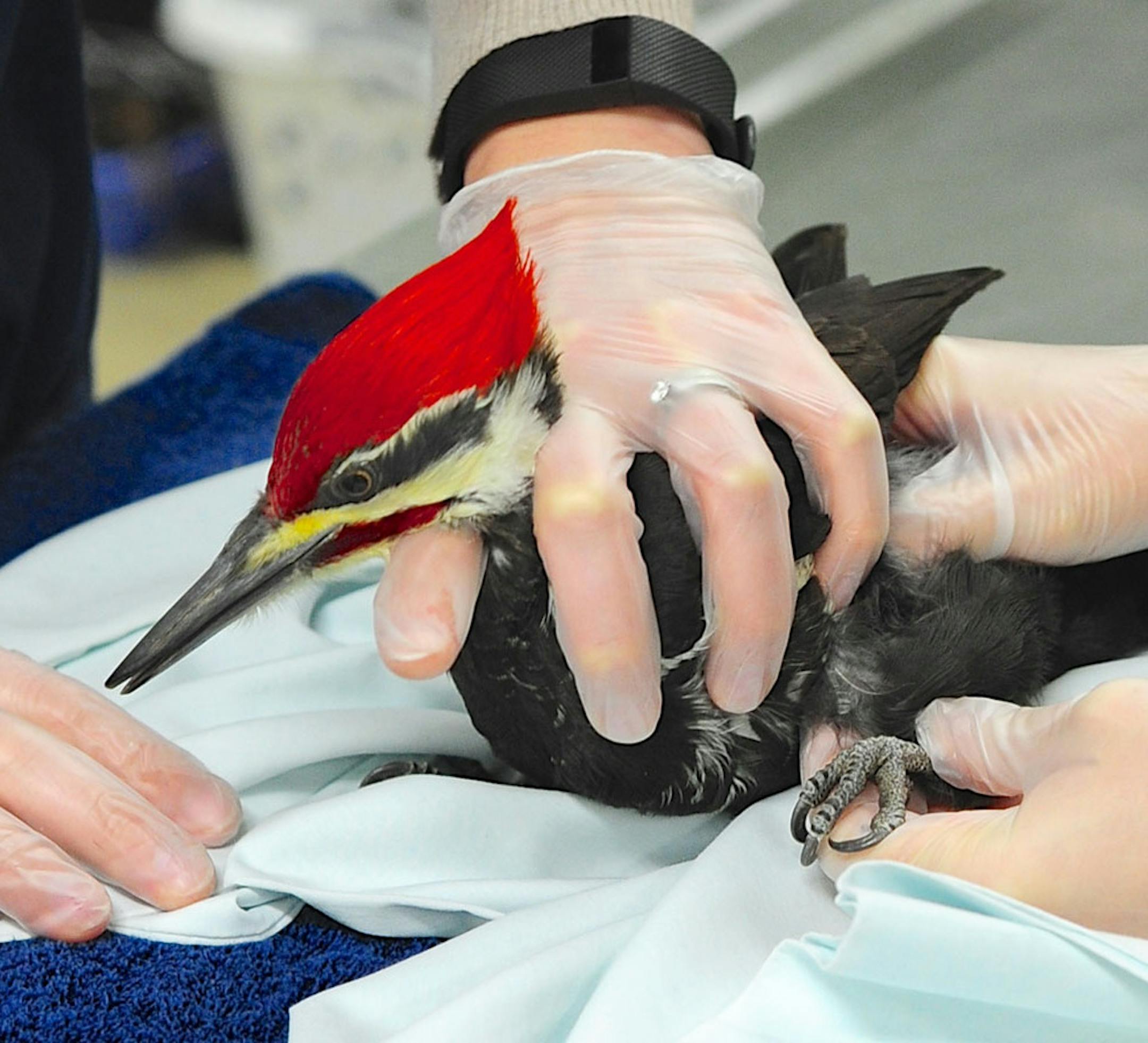
The woodpecker arrived in a box. It waited there while the veterinarians worked on the duck.
The duck, a lesser scaup, had been treated for a broken wing, now wrapped to support the healing bone. Drs. Agnes Hutchinson and Leslie Reed flexed the wing, then gave the bird a pain reliever and an antibiotic — routine stuff. A slight abrasion on the duck's foot got a smear of Bag Balm. The Wildlife Rehabilitation Center in Roseville is prepared for anything.
Now it was the woodpecker's turn. The doctors put on protective glasses — woodpecker bills are dangerous weapons. The bird, a pileated, had banged into something. It was found on the ground with a hawk nearby, either bystander or perp.
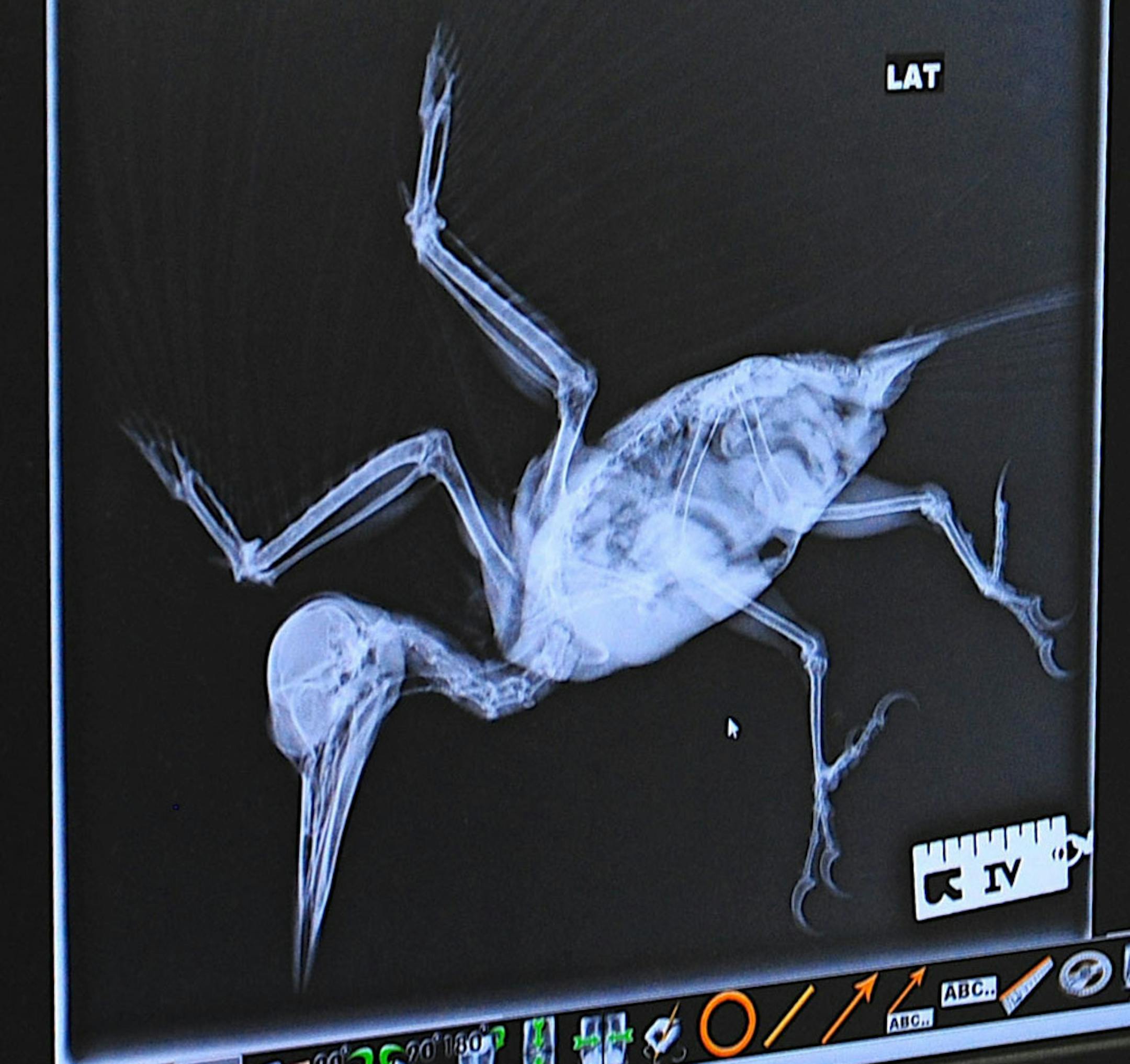
The large black and red bird was taken to the X-ray room, where mildly sedated, the woodpecker was spread-eagled on the X-ray deck. Pictures revealed a broken keel, the large bone that separates the breasts. It was a rest-and-recuperation injury.
In the X-rays, viewed on a large computer monitor, the woodpecker resembled an archaeological find, a small feathered dinosaur.
This was mid-December. The bird would spend the next four weeks as a recovering patient at the center before being returned to the wild at the place it was found.
The woodpecker was one of 11,991 animal intakes for 2015, a record year. The count included 109 bird species, 31 mammal species, and a mix of 12 turtles, newts, snakes, toads and salamanders.
There are three doctors at the center: the two tending the woodpecker plus Dr. Renee Schott. They are small-animal specialists, a career choice, one of them told me, based on the variety of the workdays, always something new arriving in a box or wrapped in a towel.