
Wildlife adapt to winter weather quite well

For the Minnesota Star Tribune
December 12, 2018 at 2:34AM
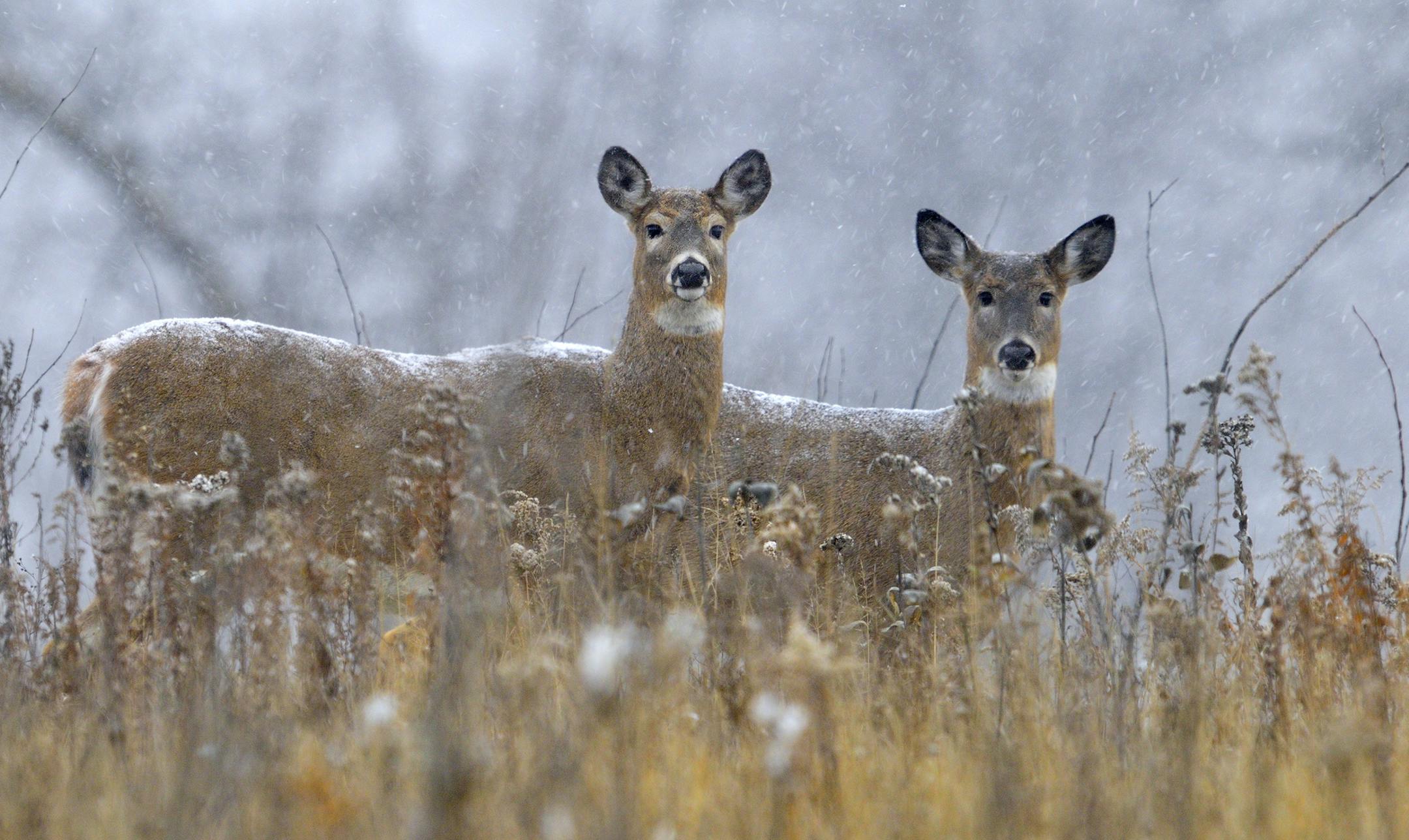
Pretty as white-tailed deer are, they're also tough. These two does paused while feeding in a meadow during a snow storm ó apparently indifferent to the white stuff coating their backs.
Pretty as white-tailed deer are, they are also tough. Two does, above, paused while feeding in a meadow during a snowstorm apparently indifferent to the flakes coating their backs. (The Minnesota Star Tribune)

BRAINERD, MINN.

Winter does not officially begin until next week, but we all know December 21 is merely a date on the calendar, and that the cold season started, well, pick a date. In response, we simply cranked up the thermostat, or added a layer of clothing, or both.

But staying warm isn't so easy for our wild friends who live outdoors. With our noses pressed to windows, we stare out and wonder "just how do they survive?"

The fact is, most wildlife can endure a "normal" winter very easily. Many species have developed unique ways to deal with the cold's onslaught.
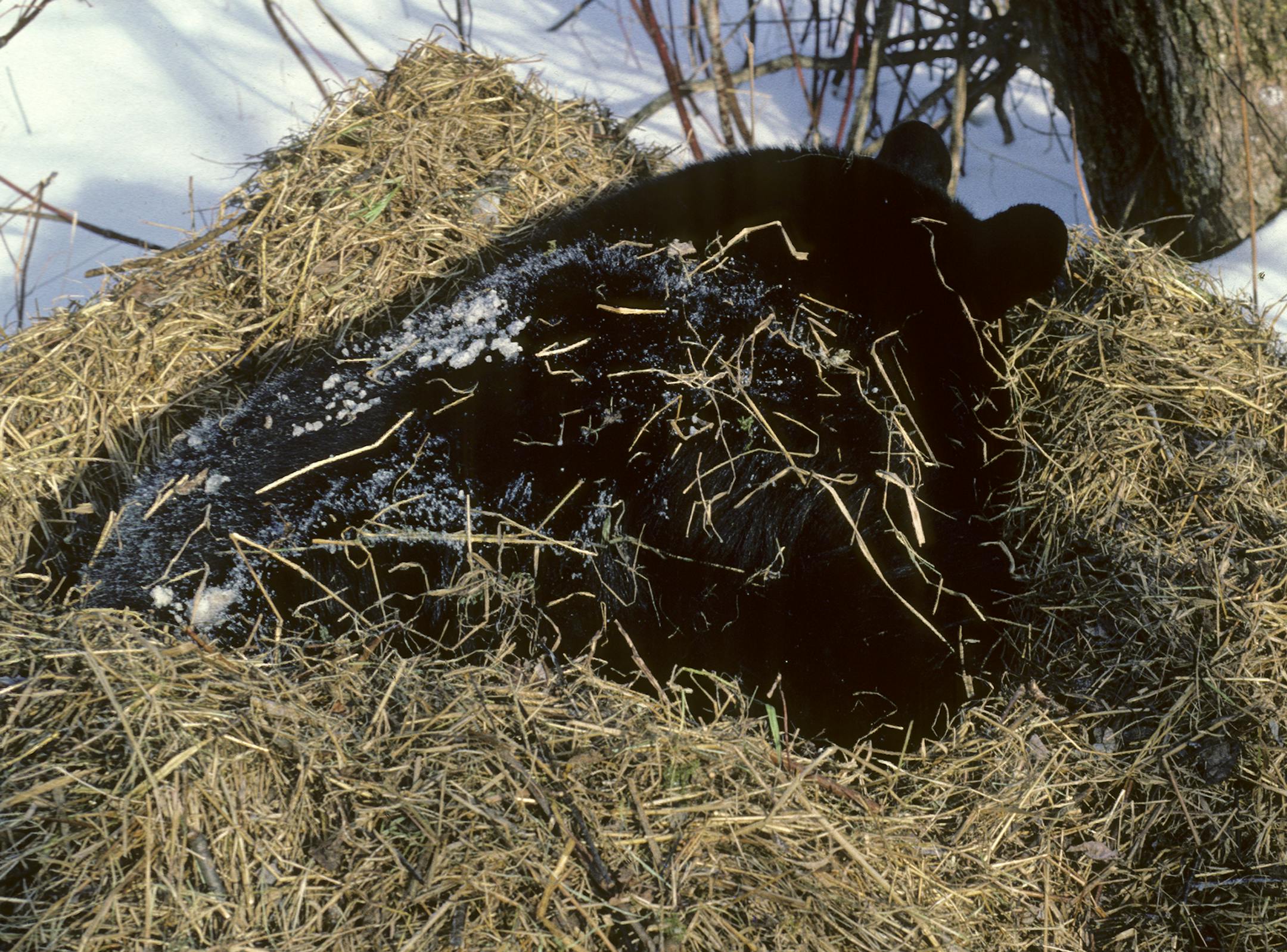
Some Minnesota black bears hibernate in cave-like lairs. But others sleep through the winter while relaxing on nests of grass they raked into piles. Such is the case here.
(The Minnesota Star Tribune)

Black bears, for example, while away winter tucked into a den, or some individuals merely rake grass and twigs into a pile and dig in, letting snow accumulate on top of them. Though not true hibernators, bears lower their metabolism dramatically during winter, allowing their fat reserves to sustain them until spring.

I am forever amazed by the insulating qualities of the coat of white-tailed deer. So impervious to the temperature are their winter hides that snow and frost gather on the animals instead of melting. Deer also adapt to winter by reducing their activity, preserving the fat they gained during summer and fall.
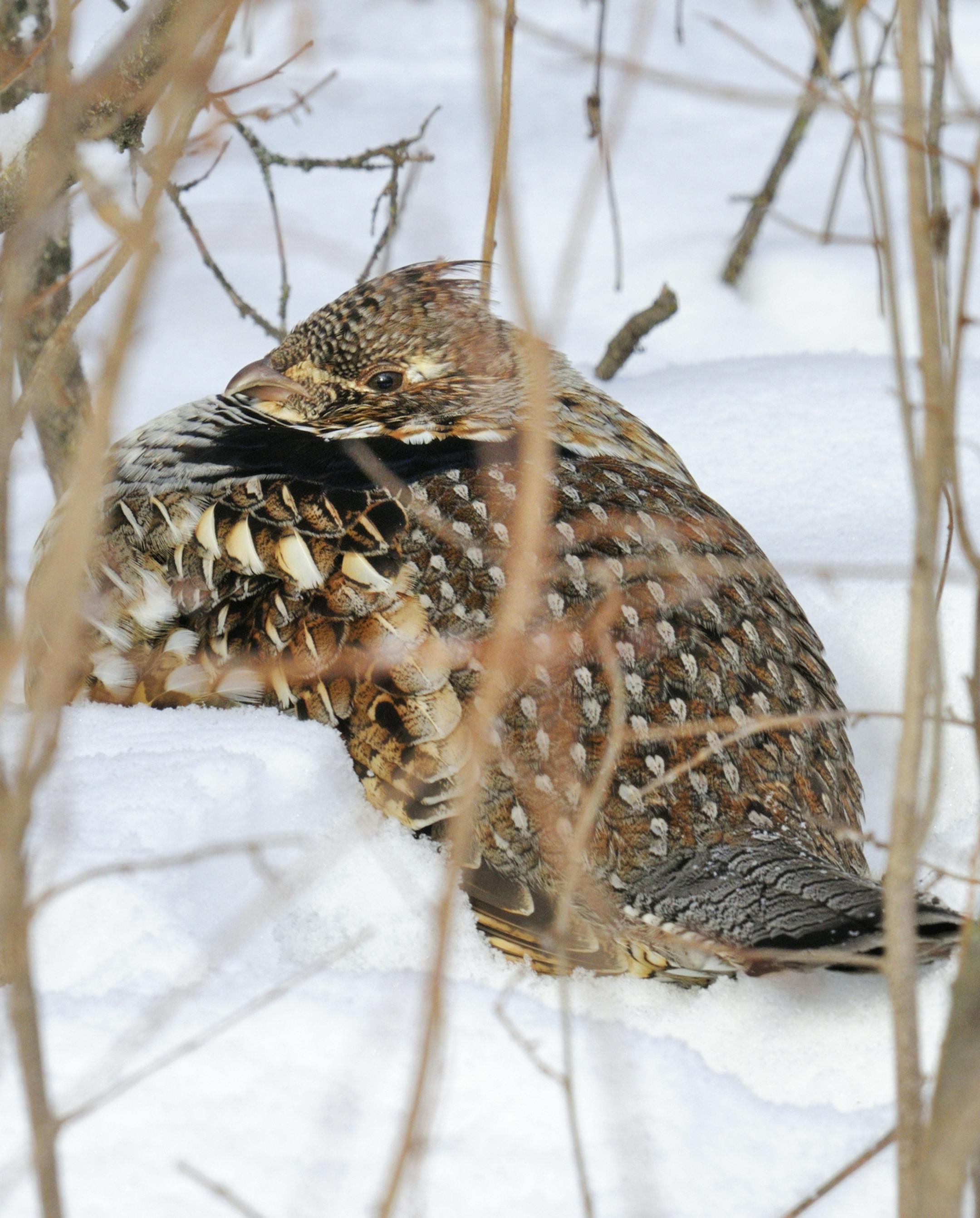
A ruffed grouse puffs its feathers against the cold as it sits in snow on a sunny winter day. To survive the cold, grouse often burrow deeply into snow, burying themelves entirely.
(The Minnesota Star Tribune)

Ruffed grouse deal with cold and snow in a way dissimilar to most birds. When deep snow blankets aspen forests, "ruffs'' dive headlong into the powder, covering themselves with a blanket of insulating snow. When temperatures are extremely cold, grouse might only emerge once a day to feed.

Most birds fluff their feathers during temperature extremes, which increases the insulating value of their plumage. Birds also tuck their legs and feet into their feathers for warmth, often standing on one leg for a bit before switching to the other leg.

And what about those mammals that transform from summer brown to white during winter, the two most common being snowshoe hares and weasels? How cool is that?

The list goes on.

When winter gets cold and nasty, it's comforting to know most wildlife species will survive utilizing their various remarkable adaptations.


about the writer

about the writer

Story

More from No Section

See More
FILE -- A rent deposit slot at an apartment complex in Tucker, Ga., on July 21, 2020. As an eviction crisis has seemed increasingly likely this summer, everyone in the housing market has made the same plea to Washington: Send money — lots of it — that would keep renters in their homes and landlords afloat. (Melissa Golden/The New York Times) ORG XMIT: XNYT58
Melissa Golden/The New York Times

It’s too soon to tell how much the immigration crackdown is to blame.