

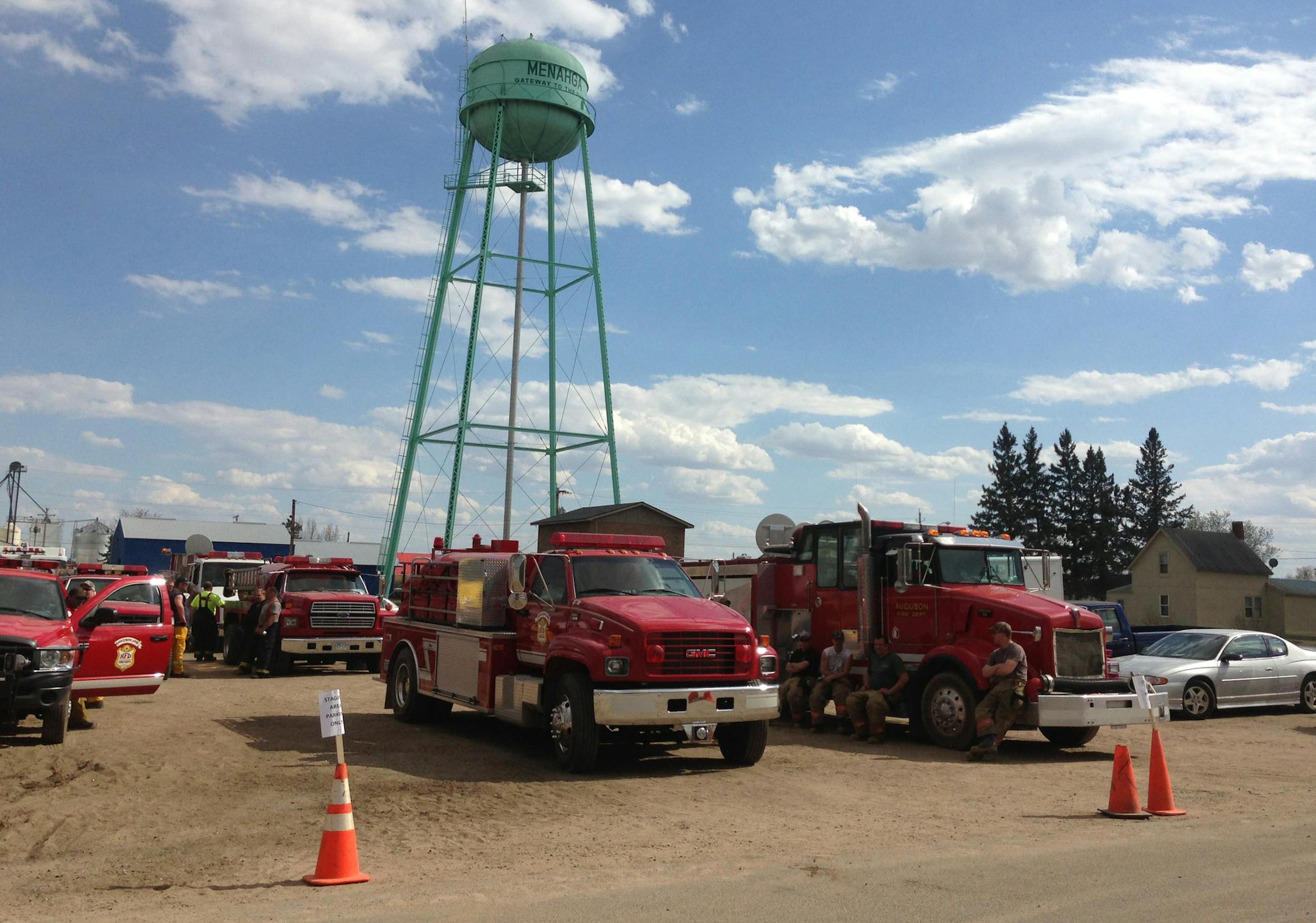
Fire and ice have crossed paths in northern Minnesota and Wisconsin, where wildfires destroyed several dozen homes and burned more than 32 square miles of forest and grass Tuesday and Wednesday, only two weeks after a major snowfall and amid some still-frozen lakes.
Near Solon Springs, Wis., an area south of Duluth where many Twin Cities residents own cabins, the Germann Road fire had taken out at least 17 homes, according to the Wisconsin Department of Natural Resources. The DNR reported Wednesday afternoon that the wildfire, which it said was the largest to hit northern Wisconsin in 33 years, was 95 percent contained.
Across northern Minnesota, at least 12 homes were lost in the Green Valley fire near Menahga, which had burned nearly 11 square miles, closed roads and prompted the evacuation of a nursing home. No injuries were reported.
The 6-mile-long fire was not considered contained, although it had been surrounded Wednesday by a firebreak made by bulldozers, said Carson Berglund, spokesman for the Minnesota Incident Command System. For comparison, the 2011 Pagami Creek fire in the Boundary Waters Canoe Area Wilderness burned more than 143 square miles.
Gov. Mark Dayton signed an emergency order Tuesday night activating the Minnesota National Guard, which deployed two helicopters and two large tactical trucks to help douse the Green Valley fire.
A tricky time of year
They joined aircraft, fire trucks and heavy equipment fighting nearly two dozen blazes from near Red Lake to Sandstone on Wednesday. Berglund added that with some lakes still ice-covered, some aircraft have had to fly farther than usual to scoop water.
"That's the trickiness of spring fire season," Berglund said. "It comes out dry right away. As soon as the snow goes, it really starts popping, and these warm and windy days really push it."
He also noted that clusters of normally fire-resistant aspen in boggy areas around Red Lake have burned in recent days, an indication that the effects of a dry late summer and fall have lingered even through a wet late winter and early spring.


