It would be an exaggeration to say that Patrick DeNucci's snoring endangered his marriage. But quieting his nightly rumble has saved him "a few elbows to the head."
"It's not eliminated," said DeNucci, 61, of Eden Prairie, who has been married for 28 years. "But Judy would tell you it's much better."
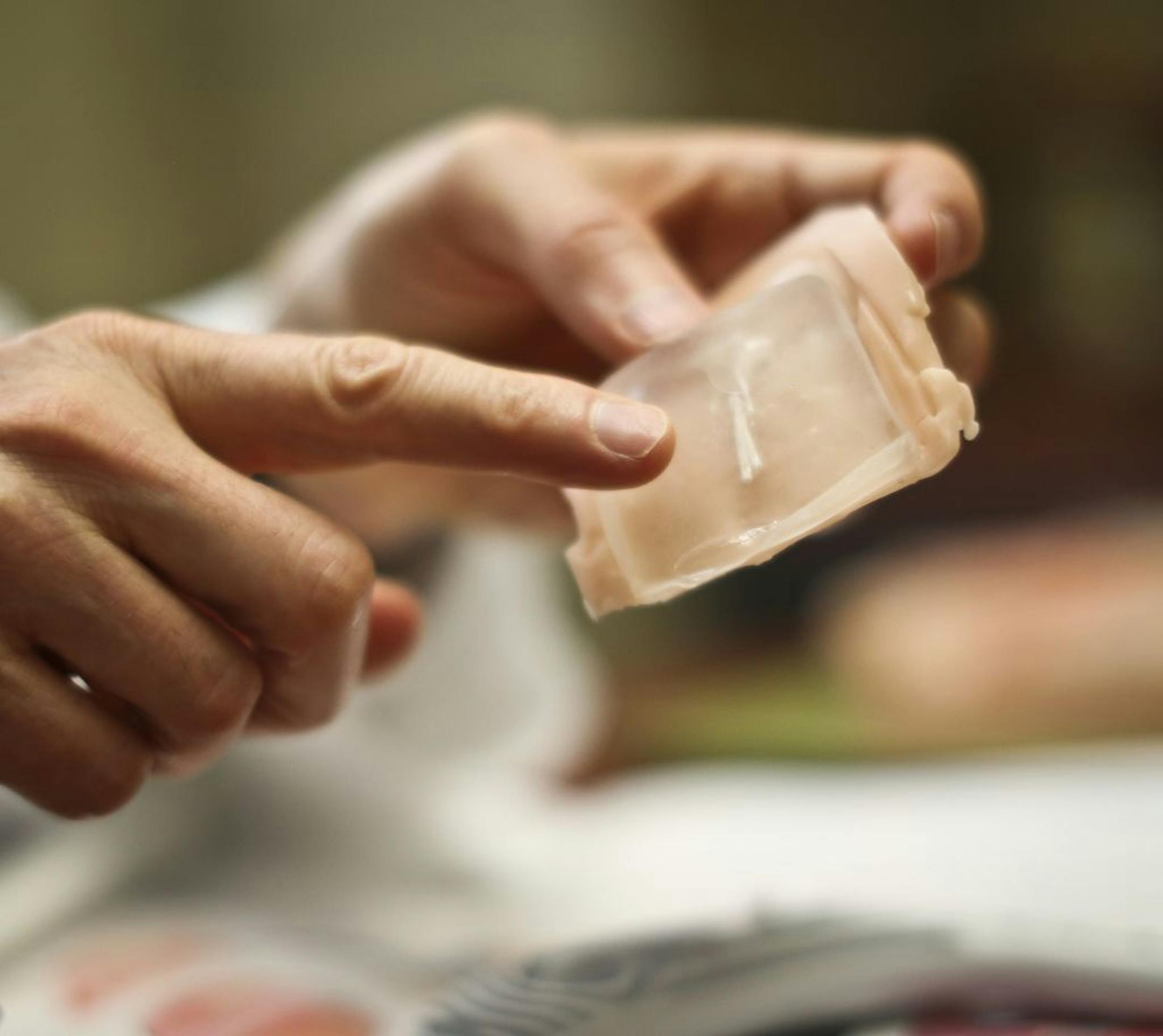
DeNucci's doctor, Philip Rapport, thinks life -- and sleep -- could also get better for more of the estimated 90 million snoring American adults now that the U.S. Food and Drug Administration has approved more extensive use of Medtronic's Pillar Palatal Implant System. The procedure, in which thin polyester implants less than an inch long are inserted into a patient's soft palate, stiffens the palate tissue and lessens the vibrations that result in snoring.
Doctors now can insert up to five Pillar implants into the soft palate to treat snoring. They had been limited to three. Rapport said this will allow patients with wider or thicker palates to potentially see better results.
"We have found that, for about two-thirds of patients, snoring intensity was reduced by 50 percent. And about 80 percent of bed partners reported satisfaction," Rapport said Tuesday at his Edina office. "But there were people who were not satisfied."
The Pillar implants are just one of many snoring remedies, from mouth guards to laser surgery, designed to give people desperately needed relief from the chainsaws in their heads. About 45,000 people worldwide have had the Pillar devices implanted, which takes about 20 minutes and requires only a local anesthetic. The doctor inserts the devices using a tool that looks a little like a toy gun with a long sterile metal tip at the end. Only a handful of ear, nose and throat doctors in the Twin Cities are trained to implant the device. Rapport has been performing the procedure for about a decade.
He said he has no financial connection to Medtronic and receives no money from the firm.
Medtronic officials didn't make any executives available to talk about the device. But information on the company website compared Pillar implants to other surgical procedures, calling it "minimally invasive. The Pillar Procedure is done in one brief office visit. Other palatal procedures may require multiple treatments over a series of visits, or an operating room procedure."