

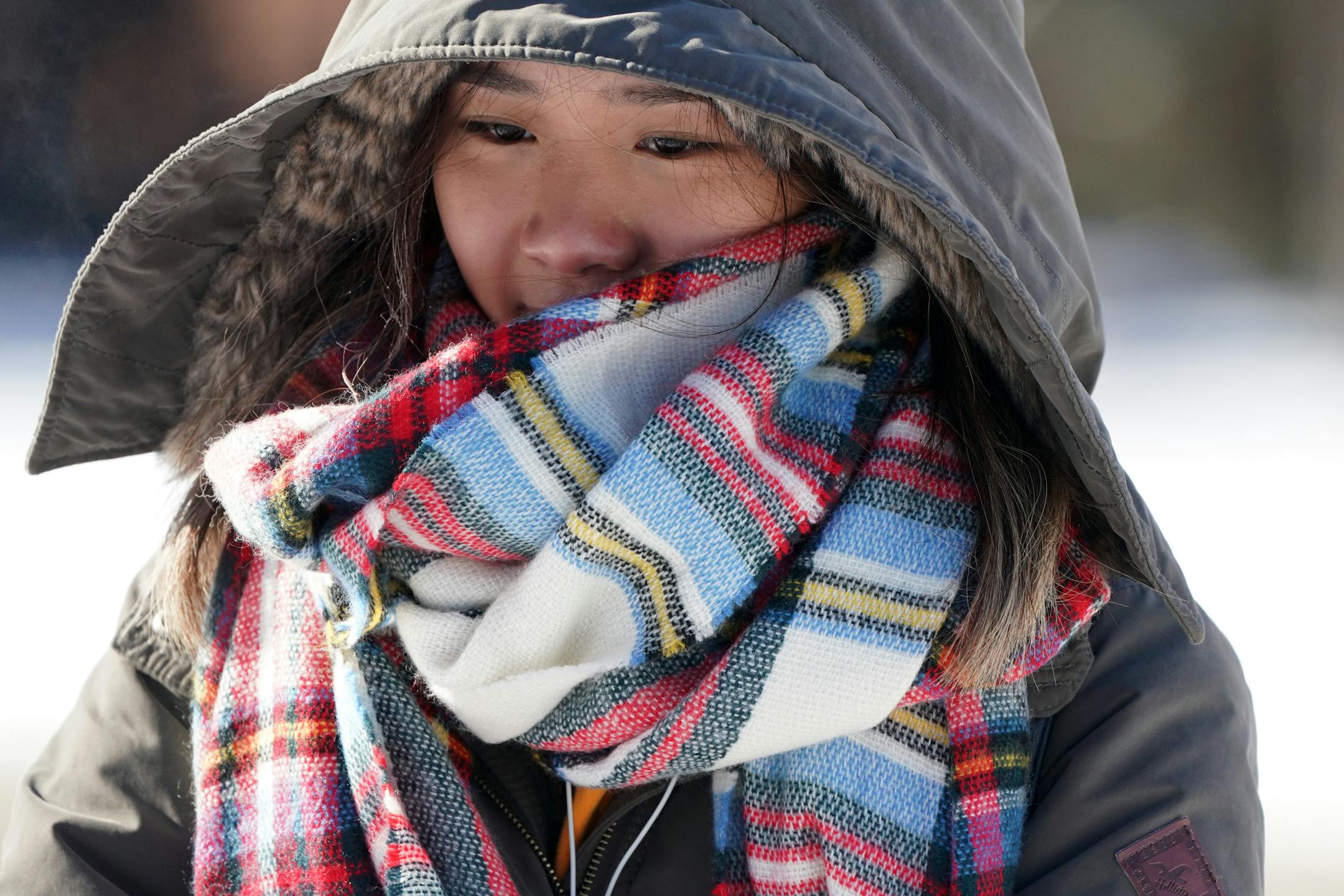
With a mass of frigid Arctic air descending on much of the United States this upcoming week, meteorologists and public health officials are well aware that a North Dakotan and a South Texan are unlikely to agree on what amounts to "extreme cold."
As such, the National Weather Service and the Centers for Disease Control and Prevention stress that there is no set definition for extreme cold, and the point at which forecasters will warn residents that the plunging temperatures are a danger to them is calibrated to the region's prevailing climate.
"Everyone's extreme is a different level," said Ketzel Levens, a meteorologist in the weather service's office in Duluth, Minnesota, where the average daily temperature in January is a crisp 9.4 degrees. "Folks up north might have better protection. They might have a lot more clothes and layers. Our houses, our water infrastructure, they're built to a different standard."
And so if you warned Minnesotans every time it is merely freezing cold, you would struggle to get their attention when it was dangerously cold. Levens' office issues a wind chill advisory only when the temperature reaches minus 25 and a wind chill warning when it reaches 40 below.
While it won't be historically cold in Duluth this week — temperatures are expected to reach as low as minus 7 degrees — Levens said that residents might still feel the bite of the cold as the city is coming off its second warmest December on record.
Roughly 1,000 miles south, the Dallas-Fort Worth region won't get as cold as Duluth this week, with a low temperature of 14 degrees. But the freezing temperatures there could pack a more significant punch, said Tom Bradshaw, a meteorologist in the service's office in Fort Worth, Texas, where the average high temperature for January is 56 degrees.
"We could be looking at as much as 80, 85 hours of below-freezing temperatures here," he said, "which for us is definitely on the colder side of what we normally experience."
His office sends out an advisory when wind chills are expected to fall below zero, while a wind chill warning comes when it's likely to plunge below minus 18, Bradshaw said.


