

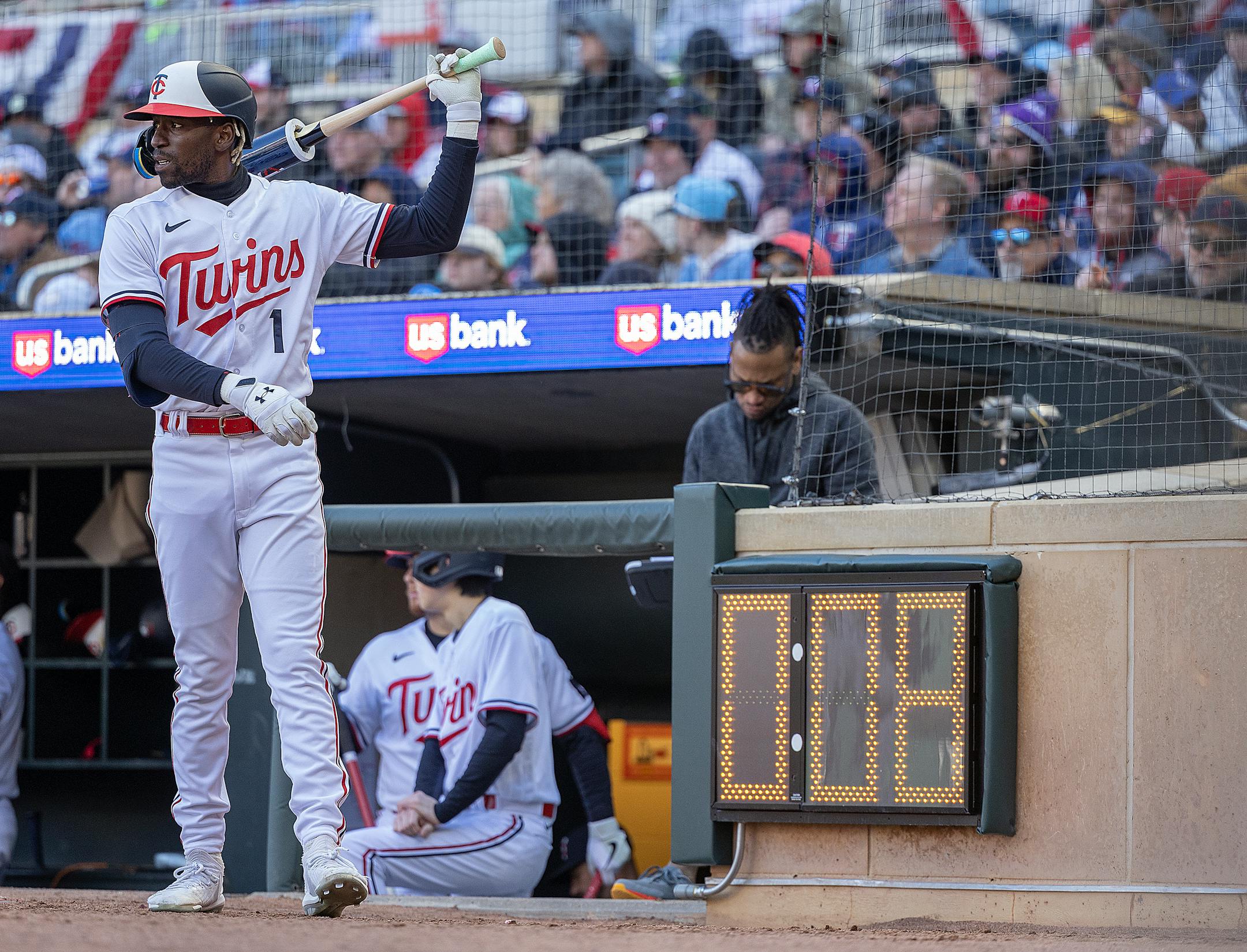
Baseball's new pitch clock is the greatest invention ever, with the exception of the wheel.
Check that. The wheel gave us two blights on American life: traffic jams and Pat Sajak.
There are no such negatives attached to Major League Baseball's adoption of the pitch clock, unless you miss egregious scratching, copious spitting, extended bouts of standing still, excessive Velcro adjusting and needing more than 20 hours a week to watch your team.
Thanks to analytics and Paul O'Neill, baseball had become something like chess — long bouts of staring interrupted by one arm moving.
The installation of the pitch clock has transformed the sport, making it look something like … a sport.
What's best about the pitch clock, which requires pitchers to begin their windup and hitters to be prepared to hit in the allotted time or face a penalty, is that it is both modern and nostalgic. It is a modern way to solve what had become an awful problem — three-and-a-half hour games in which nothing interesting happened — while providing a reminder of the way the game used to be played.
Pitchers used to pride themselves on working fast, to keep hitters off-balance and their own fielders literally on their toes. Former Twins manager Tom Kelly always believed that a crisp pace led to excellent fielding and a more entertaining game.
When modern analytics determined that long at-bats designed to wear down opposing pitchers were the best way to win, baseball became a slog. What might have occasionally been exciting when O'Neill, the former Yankees star, was filibustering in a big game at Yankee Stadium became excruciating when it was Rich Becker lollygagging in a meaningless blowout loss in the Metrodome.


