

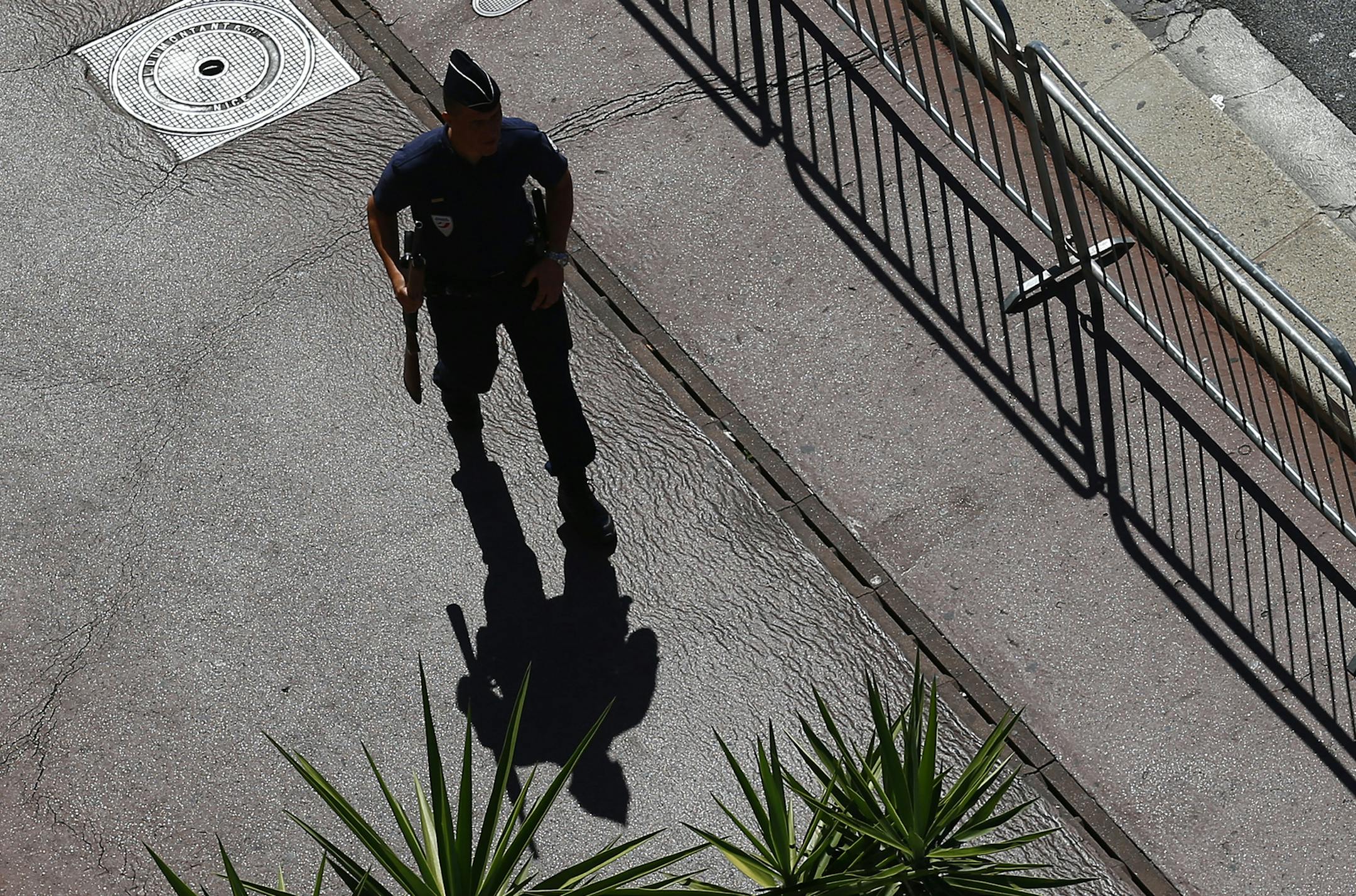
France is in the line of fire. Of the 16 terrorist incidents that took place in Western nations this year, five were in France, including the deadliest one — Thursday's apparent lone-wolf attack in Nice, which killed at least 84 people.
A little more than a week before the attack, a commission set up by the French parliament gave its version of the reasons for France's endangered state in a massive report. Apart from an objective threat the country faces thanks to its colonial past and a failure to integrate North African immigrants, it also suffers from inadequate policing.
"All the French citizens who struck within the nation's territory in 2015 were known, in one capacity or another, to judicial, penal or intelligence services," the report says. "They have all been on file, watched, listened to or incarcerated along their path of delinquency toward violent radicalization."
As in the case of Orlando shooter Omar Mateen, the French security services watched several of the terrorists who later committed the worst attacks of 2015 — such as the Kouachi brothers, who massacred the staff of satirical weekly Charlie Hebdo. They failed to put any surveillance on Amedy Coulibaly, who took hostages in Paris directly after that attack.
Samy Amimour, who last November fired into a crowd of concertgoers in Paris, had traveled to Syria, had been questioned and had been placed under administrative surveillance. But nothing was done after he missed several weekly checks in a row, and a lack of coordination between police and intelligence services made sure he wasn't tracked. Another shooter from the Bataclan theater, Omar Mostefai, had been identified to the French authorities by Turkish intelligence as a dangerous radical. He wasn't watched, either.
The list goes on. It's not that the French security agencies lacked the resources to watch the suspected terrorists: According to the report, in 2015 the services had a quota for 2,700 people whose communications could be intercepted, but actual monitoring never even approached that number.
French law enforcement agencies have prevented nine terror attacks since the beginning of 2015, mostly by watching known suspects with ISIL sympathies, but they have missed too many others. The French law enforcement bureaucracy is in a permanent state of reform, but the services still often work in their own silos.
For example, there is a cooperation gap between the gendarmerie, which polices rural France, and domestic intelligence. Many of the future terrorists are radicalized in the French prisons, but only a "prison intelligence" force of 114 people is supposed to monitor such developments in a prison population of 68,000 and among 235,000 parolees.


