

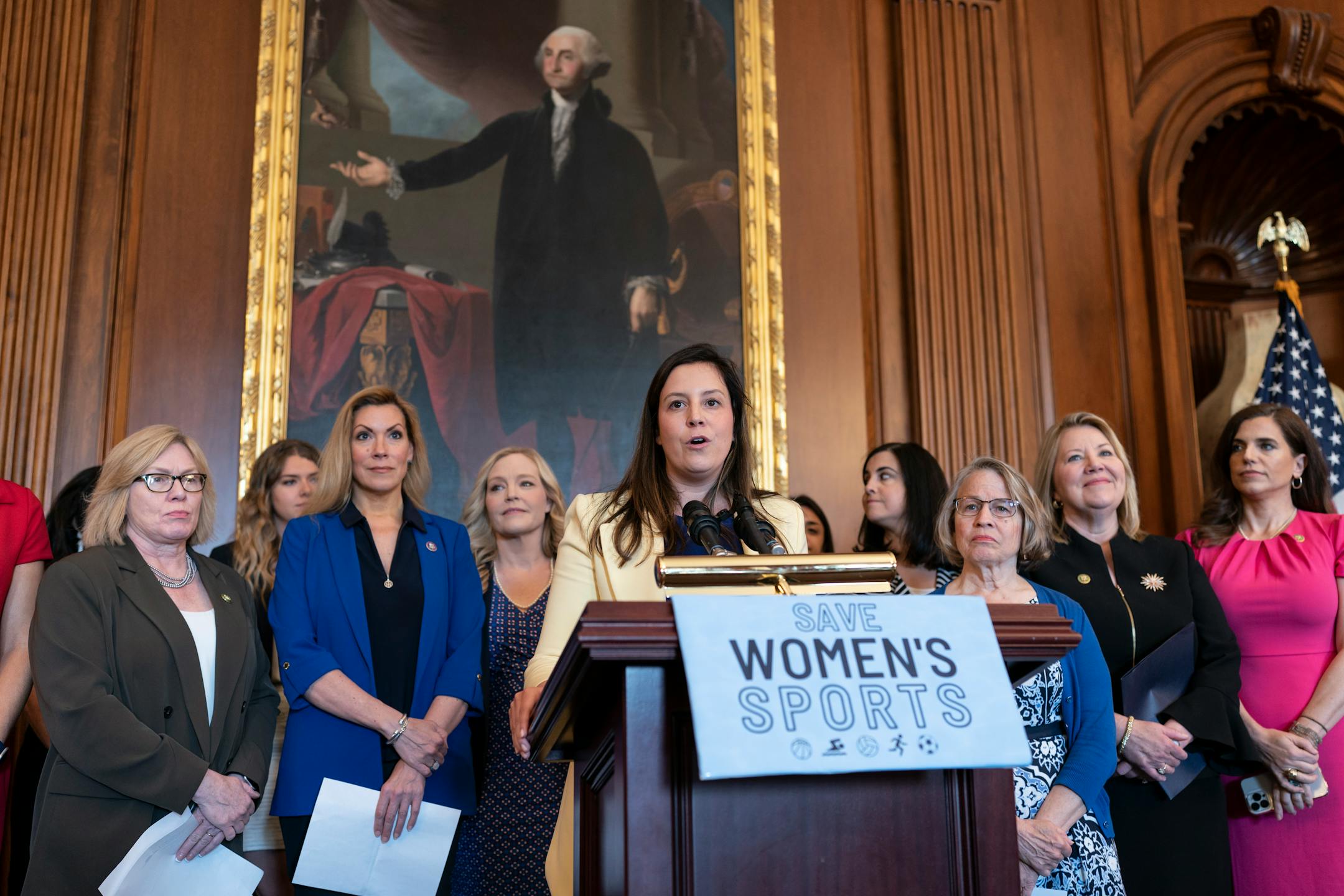
Opinion editor's note: Star Tribune Opinion publishes a mix of national and local commentaries online and in print each day. To contribute, click here.
•••
What is the legal foundation for women's sports? It's a simple question with a surprisingly complex answer. After all, the most potent federal statute supporting parallel men's and women's sports leagues would appear — on its face — to also prohibit separate leagues.
Title IX of the Educational Amendments of 1972 states, "No person in the United States shall, on the basis of sex, be excluded from participation in, be denied the benefits of, or be subjected to discrimination under any education program or activity receiving federal financial assistance."
The act contains a few exceptions, but its language tracks that of Title VI of the Civil Rights Act of 1964. Title VI prohibits race discrimination in federally funded educational programs using virtually identical language.
In the realm of athletics, however, these two statutes have traditionally worked in remarkably different ways. Race segregation in athletic programs is a legal and cultural taboo. There are no legally segregated white and Black football leagues, for example.
But this is not the case when it comes to sex. The result of Title IX was not the large-scale creation of coed sports leagues, where men and women have an equal opportunity to compete in the same events, where the best man or woman makes the team, and the best man or woman wins the race. Instead, Title IX has resulted in the expansion of women's sports into an enormous, separate and parallel apparatus, where women by the millions compete against one another, winning women's titles in women's leagues.
Why have two statutes with such similar language created such different realities? Because sex is different from race, and treating sex the same as race would be a profound injustice for women in sports.


