

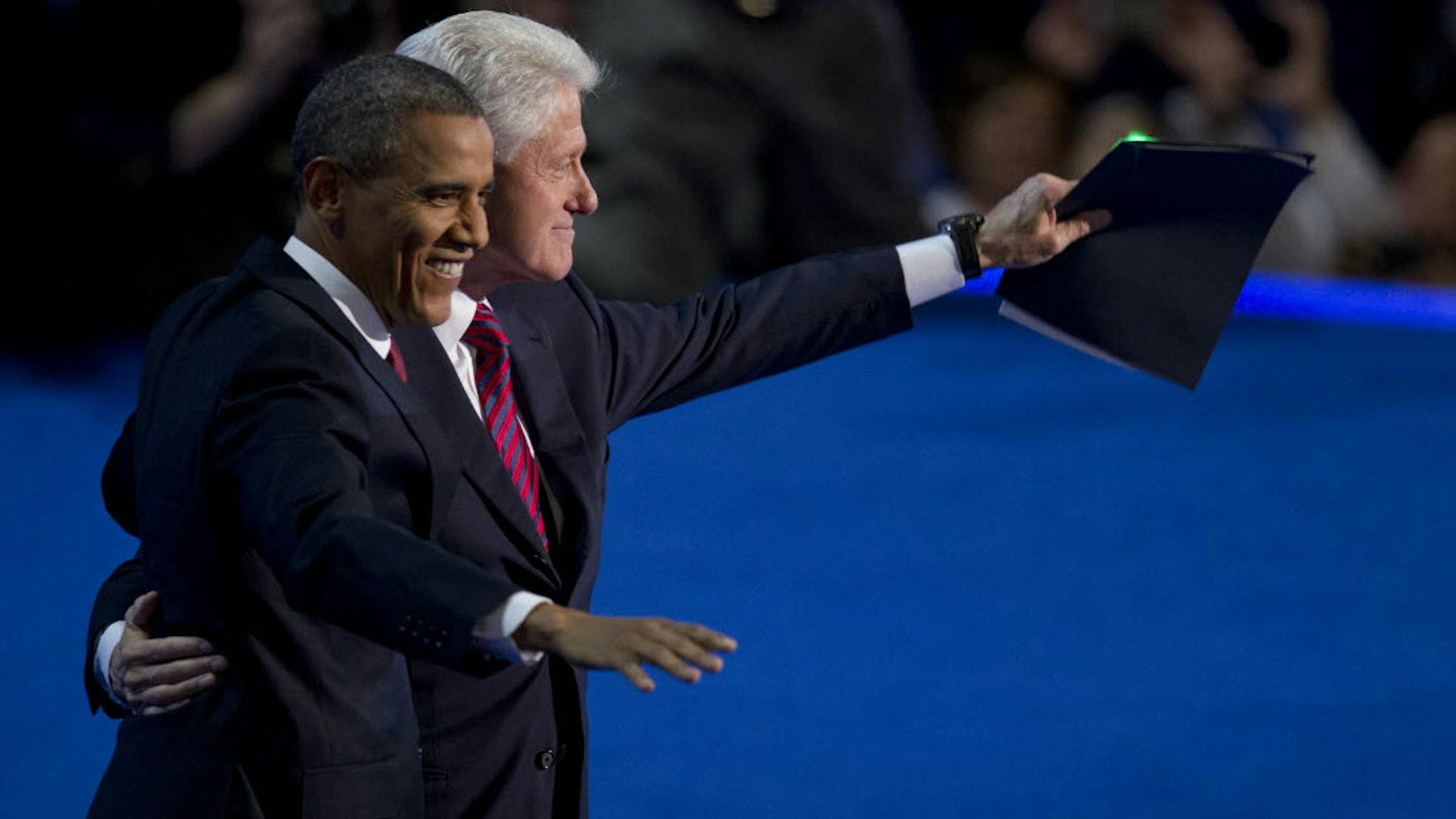
Bob Woodward's new book, "The Price of Politics," makes him the latest in a string of Washington cognoscenti to compare Barack Obama's personality unfavorably with Bill Clinton's and to suggest that Obama's presidency would be more successful if he were less introspective and aloof, more outgoing and more of a schmoozer.
Although Woodward and other pundits acknowledge the head winds that Obama has faced - an implacable Republican opposition, a surfeit of sulfurous anti-Obama rhetoric, racism sometimes only thinly disguised - they still lament Obama's failure to return phone calls or to buddy up to business leaders or to have beers with members of Congress, traits that never would have been attached to Clinton.
The stylistic differences between Obama and Clinton are stark. But the comparison ignores larger realities about both presidencies. The first is how well Clinton's open and enveloping approach worked to improve his presidential performance. And the answer is . . . not much, if at all.
From the beginning of his presidency, Clinton was under an all-out assault from Republican leaders and their acolytes and mouthpieces in the conservative media. He was also remarkably accessible to a wide range of allies and adversaries - constantly in contact with a mind-boggling collection of people to get ideas and gauge performance - just the kind of thing that Woodward and Cohen suggest should have a payoff.
But Clinton's engagement did not stop or even temper the attempts to delegitimize him. "Slick Willie" was perhaps the nicest epithet applied to him; the Wall Street Journal editorial page suggested several times that the president might have been an accessory to murder while governor of Arkansas. When Vince Foster wrote in his suicide note about how politics in Washington was a blood sport, he referred to the personal attacks not only on him but also on the president and the first lady.
Of course, many of those attacks flowed from self-inflicted wounds, but in most cases the Clinton missteps were amplified into huge errors or crimes by the anti-Clinton wind machine, which was not deterred by the president's warm style.
At the same time, Clinton tried tirelessly to reach out to Democrats in Congress as well as Republicans. But all of the phone calls, flattery and schmoozing did not stop Republicans in both houses from voting in unison against the Clinton economic plan, and for almost eight months of humiliation and deadlock he did not have enough votes from his own Democrats.
When the plan finally passed, by a single vote in each house, it came across as more of a setback than a triumph. And the schmoozing on the health-care plan did not stop Republican Senate leader Bob Dole from blocking action on any compromise reform, nor did it bring together enough Democrats to avoid the devastating defeat of the signature Clinton effort that led to the Republican sweep in the 1994 midterms.


